Floating Pavilion Reconfigures Rijeka’s Waterfront Public Space
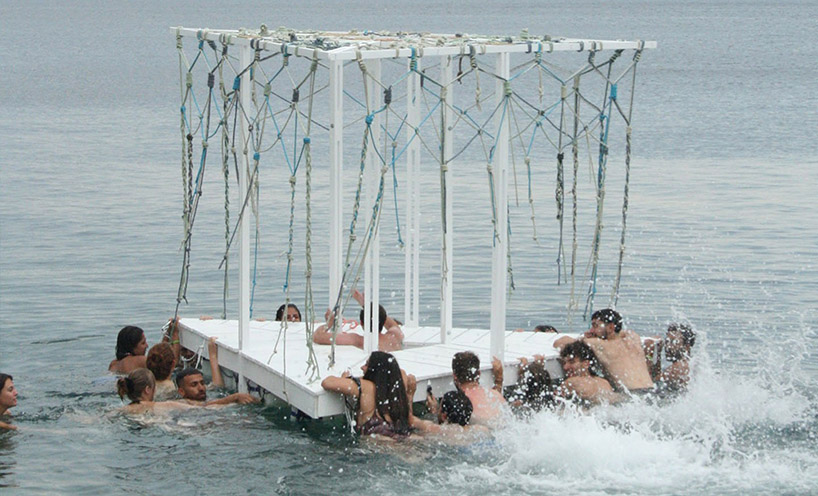
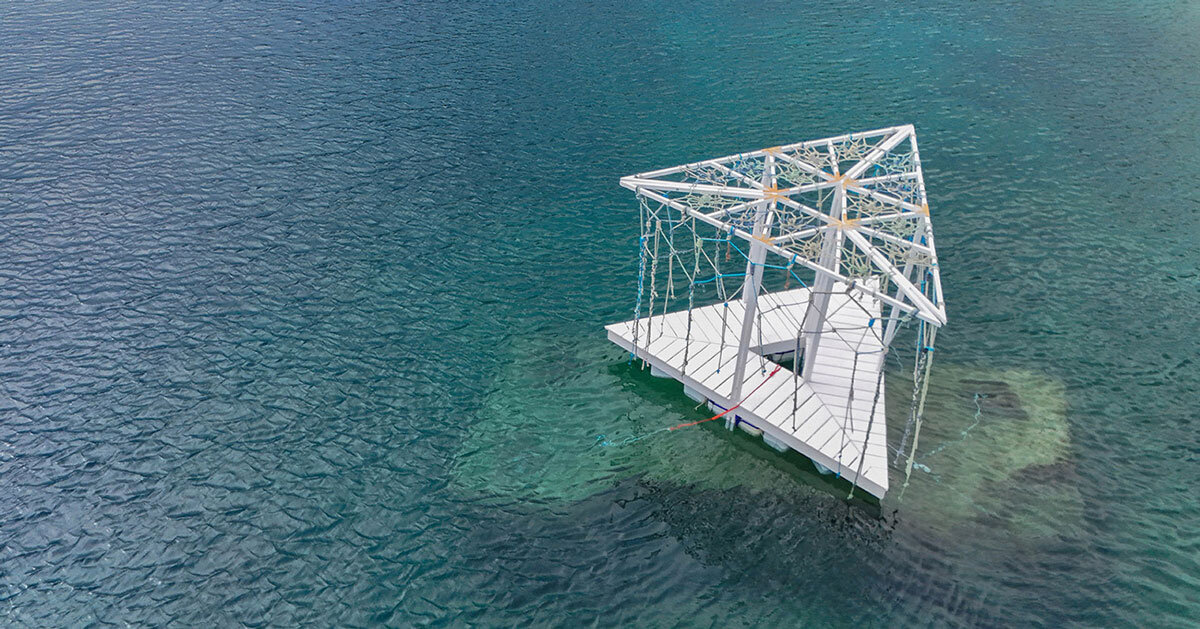
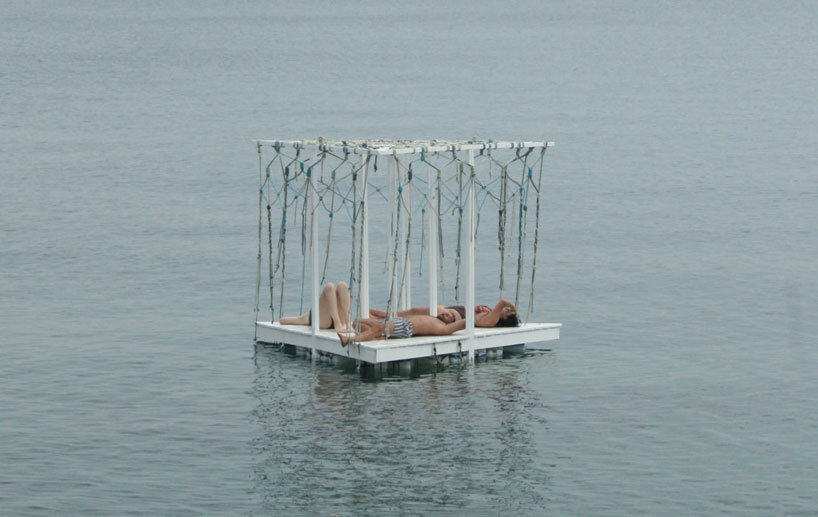
PlivaTri is a floating triangular pavilion situated off the coast of Rijeka, Croatia, and realized as part of the MEDS Design Workshop 2025. Designed to address the scarcity of comfortable beachfront areas, the pavilion introduces a striking geometric presence within the Adriatic seascape. Its triangular layout surrounds an open central void, featuring a walkway along the edge that accommodates activities such as swimming, relaxing, and small group gatherings. This configuration establishes a tangible connection between the water, city, and port, offering framed views and a variety of spatial experiences that change with movement, light, and the tides.
Built using recycled gallons, reclaimed ropes, and other locally sourced materials, the project demonstrates sustainable building practices while referencing Rijeka’s rich maritime and industrial heritage. The design process was participatory, incorporating feedback and ideas from workshop participants, resulting in a structure that evolved through collaborative input and shared decision-making.
all images courtesy of Pegi Pika Lešnik
Collaborative Design Shapes PlivaTri Reconfigurable Pavilion
PlivaTri is composed of three modular units, each constructed from five elements: floating gallons, a supporting base frame, vertical columns, a ceiling structure, and a system of decorative ropes. The modular design allows for reconfiguration, ensuring adaptability for future uses. A comprehensive cutsheet was developed to guide material selection and maximize the efficient use of limited resources throughout the workshop.
Two collaborative sessions were organized to incorporate participant ideas: one session focused on redesigning the pavilion’s central area, while the other developed the decorative rope system. Although the main structural design was prepared in advance by the tutors due to its technical requirements, these workshops enabled participants to influence and refine important aspects of the pavilion.
To ensure the pavilion’s continued use beyond the 15-day workshop, the design team partnered with the Rijeka-based NGO Urbani Separe, known for its work in community-driven cultural and spatial projects. The structure is intended for ongoing public programs, both on land and afloat, reaffirming its role as a flexible, accessible installation within Rijeka’s waterfront environment.