
Aalto University Installs Outdoor Stage in Rural Finland
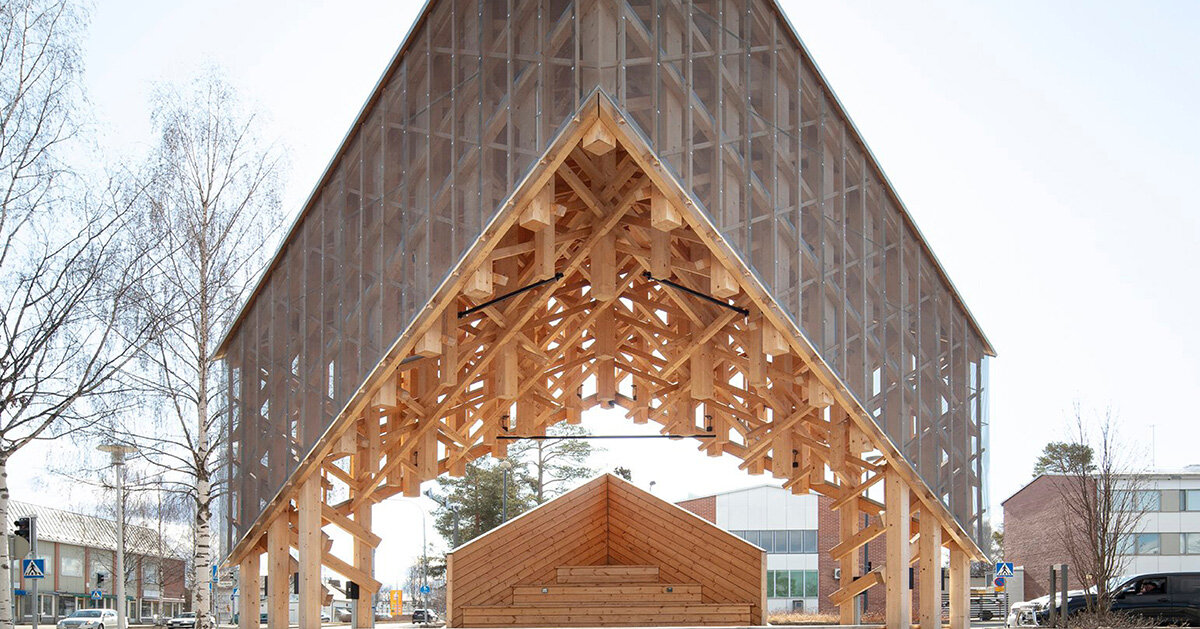
In Kuhmo, a small town in eastern Finland known for its timber industry, Aalto University’s Wood Program has introduced Kide—a crystalline outdoor stage that also serves as a civic gathering space. This pavilion addresses the town’s need for a versatile cultural venue, translating the intricate geometry of snowflakes into a functional, wooden canopy. Supported delicately at two corners, the structure creates a sheltered environment for performances, markets, and everyday gatherings, enriching the social and cultural experience for the community’s 8,000 residents.
Composed of eight interlocking glulam trusses wrapped in a translucent metal mesh and capped with prefabricated LVL (laminated veneer lumber) roof panels, the pavilion’s design is laid bare for all to see. This approach gives the town square a distinctive new identity while ensuring a minimal physical footprint on the site.
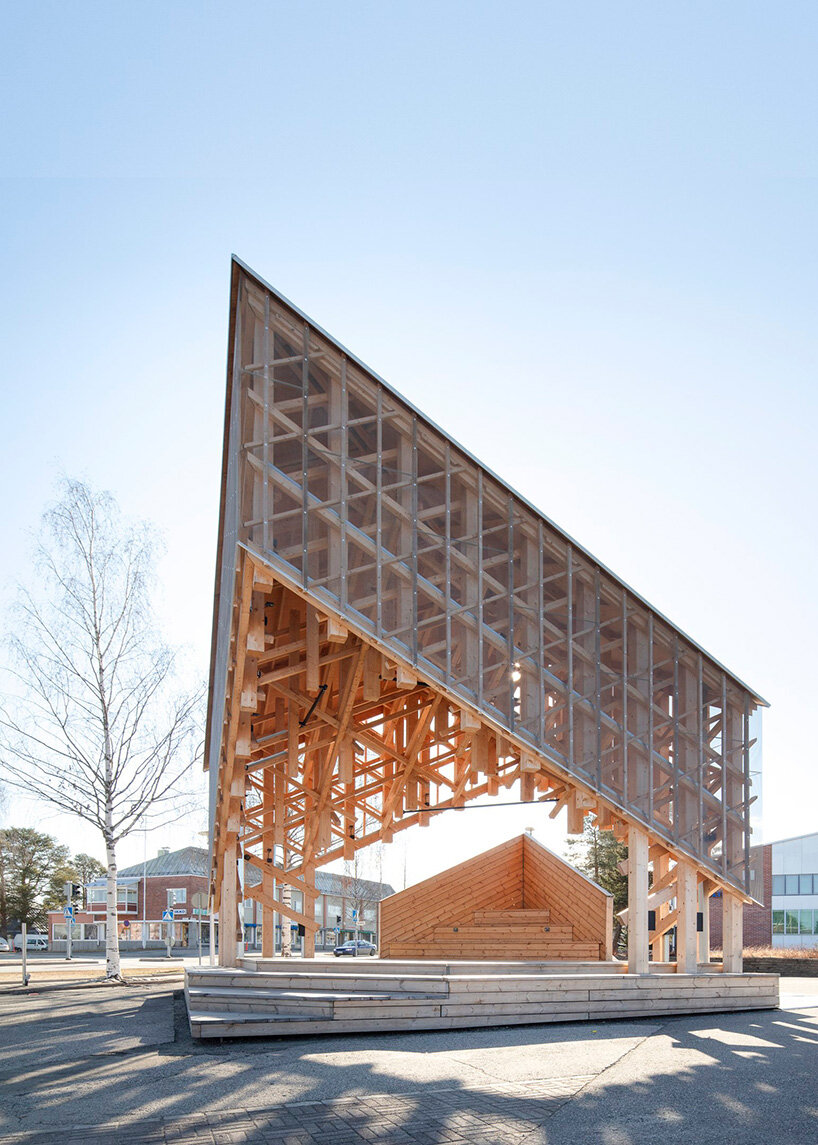
image courtesy of Aalto University’s Wood Program
A Timber Canopy Inspired by Snow and Forest
The team rooted the design in the crystalline patterns of snow and the spatial qualities of Finnish forests—two core elements of the country’s natural landscape. The name Kide, which means “ice crystal” in Finnish, reflects the geometric clarity that defines the pavilion’s form. Inside, filtered daylight, slender timber members, and a gentle sense of enclosure conjure the tranquility of woodland interiors, creating an atmosphere that shifts with the seasons and adapts to different events beneath the canopy.
The pavilion’s square footprint is formed from eight interwoven glulam trusses, joined mechanically to provide both strength and a compelling visual rhythm. The surrounding translucent metal mesh reveals the structure’s geometry, making the construction itself an integral part of the architectural experience, with depth and shadow adding richness without heaviness.
All principal timber elements, including the glulam trusses and LVL roof panels, were prefabricated at Aalto University and then transported to the site in Kuhmo for assembly. This method aligns with the Wood Program’s educational focus on precision, material efficiency, and hands-on building experience. Prefabrication also enhances sustainability, as controlled workshop conditions help minimize waste, improve structural accuracy, and reduce on-site construction time. The project utilizes almost exclusively renewable, bio-based materials—especially timber sourced locally—reflecting both environmental responsibility and a deep connection to regional identity.
Sustainability is evident not just in the materials but also in the construction approach. The simple assembly, use of durable timber species, and honest detailing contribute to the pavilion’s longevity while keeping maintenance requirements low.
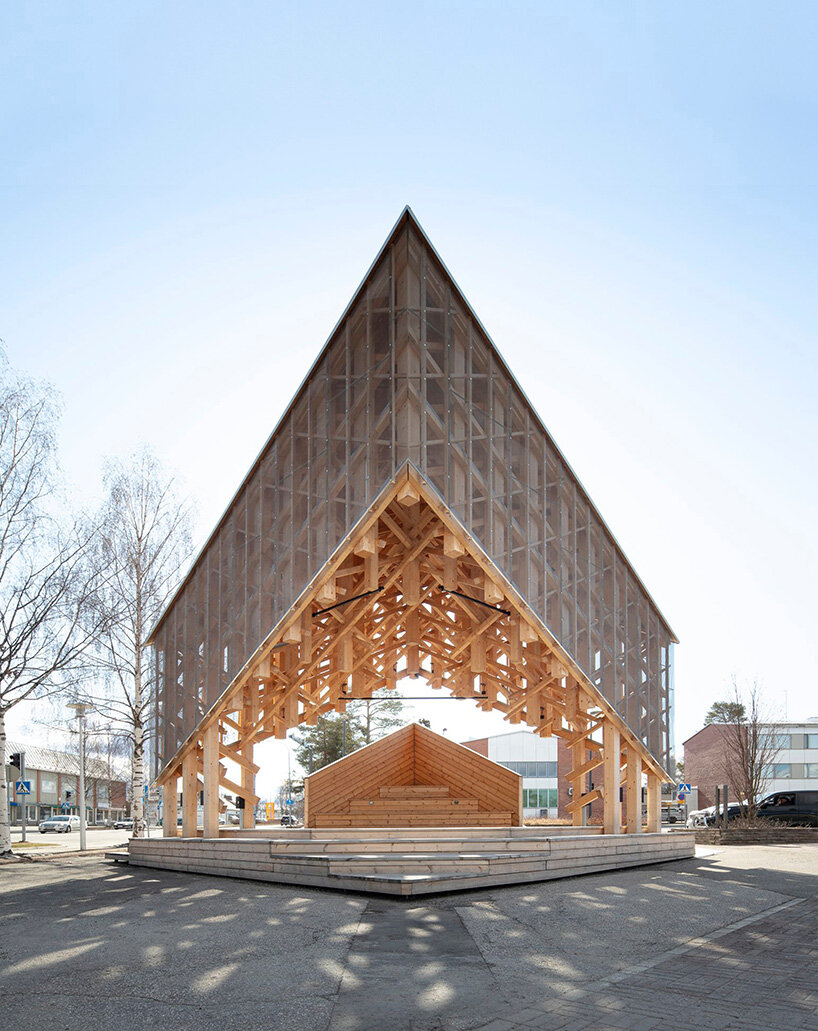
Aalto University’s Wood Program installs a crystalline outdoor stage that doubles as a civic gathering point
A Snow-Inspired Structure Transforming the Town Square
Kuhmo, renowned for its annual music festivals and heritage of timber architecture, previously lacked a dedicated outdoor venue suitable for both cultural events and daily community use. Kide addresses this with its raised pine-wood stage and timber backdrop, providing a setting for performances such as folk music, choirs, dance, rock concerts, and award ceremonies. The pavilion is also a focal point for local markets, informal gatherings, and seasonal celebrations.
Residents have embraced Kide, inviting people to gather beneath its warm wooden canopy. By revitalizing the town’s central square, the structure not only supports cultural tourism and strengthens community identity but also improves everyday life. Its significance reaches beyond aesthetics or programming, providing durable infrastructure for a wide range of public activities and traditions.
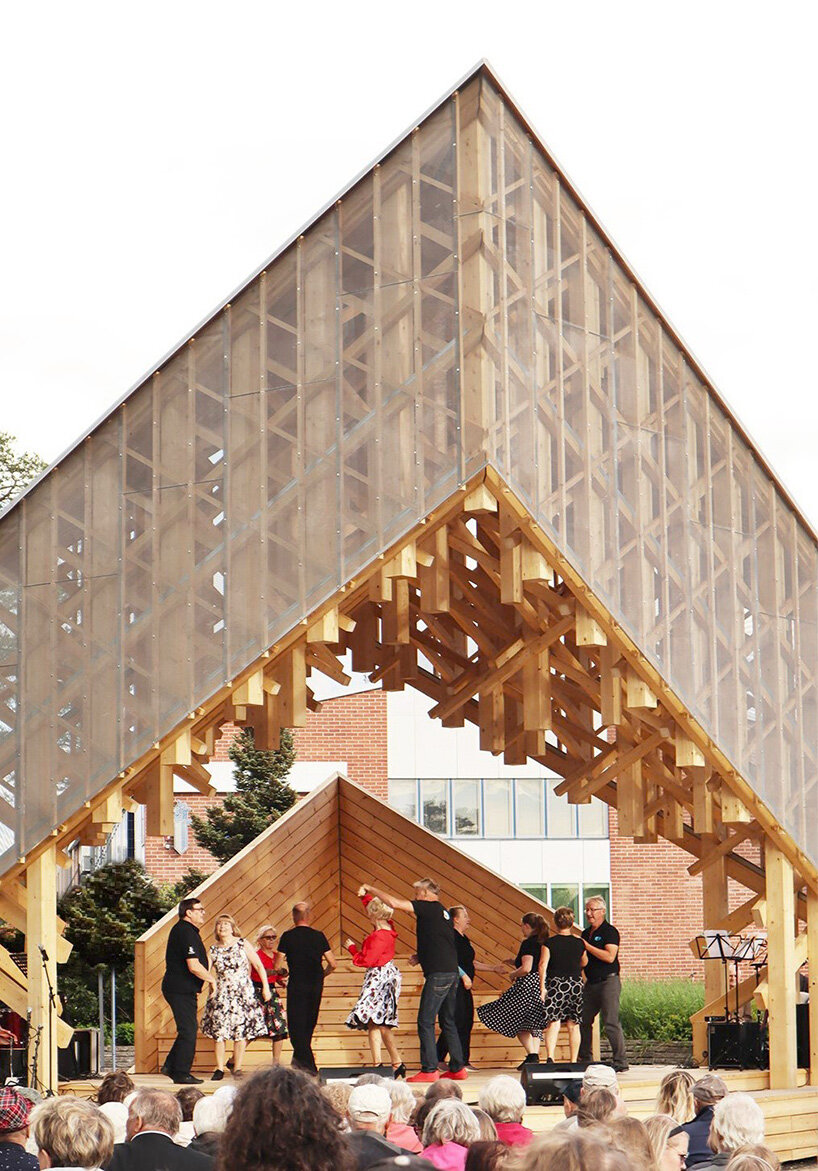
the pavilion responds to the need of the town for a flexible cultural venue
<img decoding="async