MAD completes Lishui Airport in china
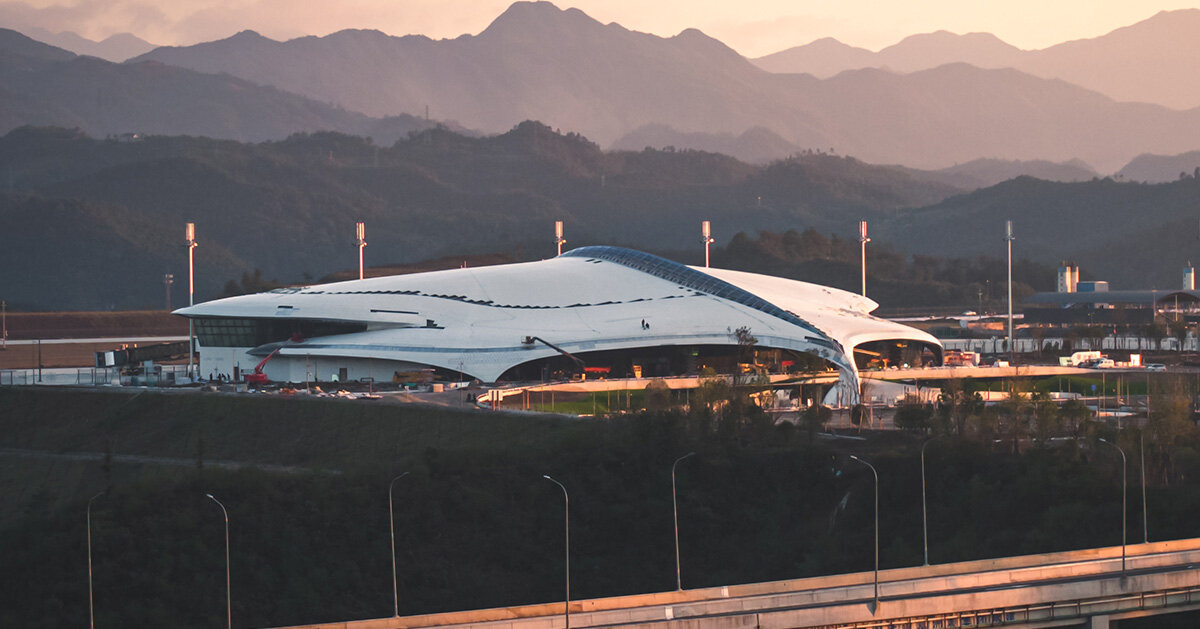
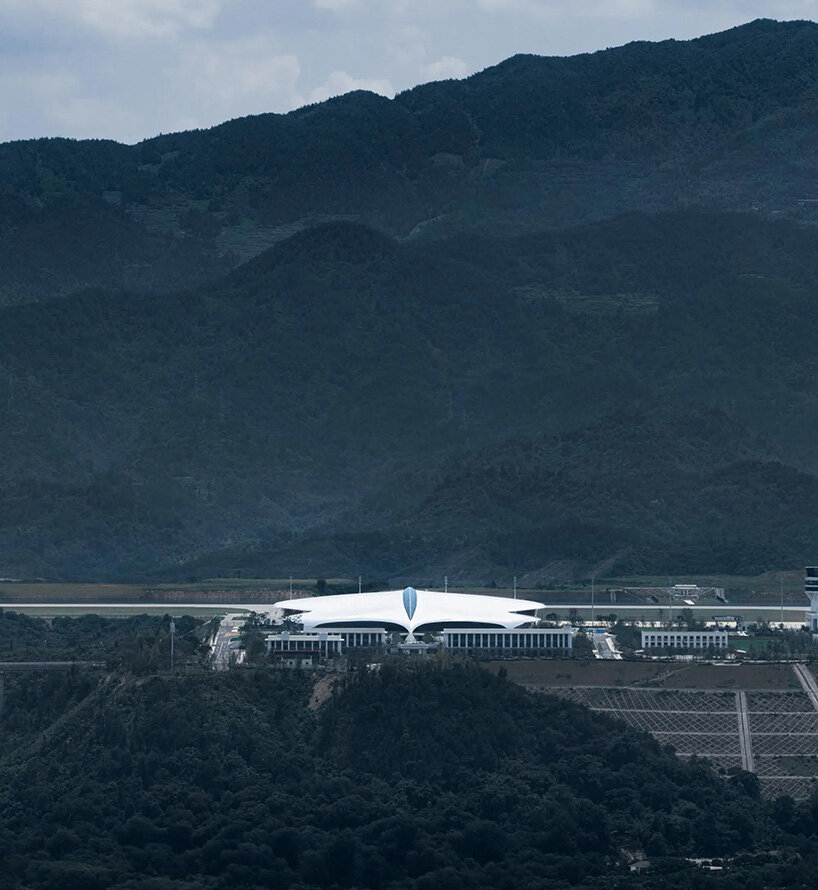
MAD completes Lishui Airport in China, with newly released images revealing the full realization of the project. Set within the foothill valleys of Lishui’s ‘forest city,’ the 2,267-hectare airport is defined by a vast silver-white roof that reads as a white-feathered bird poised for flight, absorbing nearly 100 meters of elevation change and embedding the terminal into the surrounding mountains (see designboom’s previous coverage here).
The architectural language of the terminal embodies a deep connection to its environment. A feather-like roof, composed of lightweight aluminum panels, is supported by 14 umbrella-shaped columns, inspiring a sense of lightness and flow. Extending 30 meters, a dramatic cantilever frames the entrance, creating a spacious and naturally illuminated concourse that welcomes travelers with openness.
all images courtesy of MAD
fluid, feather-like roof in harmony with contours of the land
MAD’s terraced design, shaped by leveling nearly 100 meters of elevation, organizes the terminal, parking, and office areas into descending platforms, respecting the natural contours of the land. A central skylight floods the interior of the Lishui Airport with natural light, while the silver-white roof features bold characteristics that embrace fluidity. Inside, wood-toned finishes and a ‘one-and-a-half-story’ layout create a human-scaled, efficient space. Passenger areas transition from 4.5 meters to 13 meters in height, offering options for intimacy and spaciousness, with the compact arrangement integrating arrival and departure zones for facilitated movement.
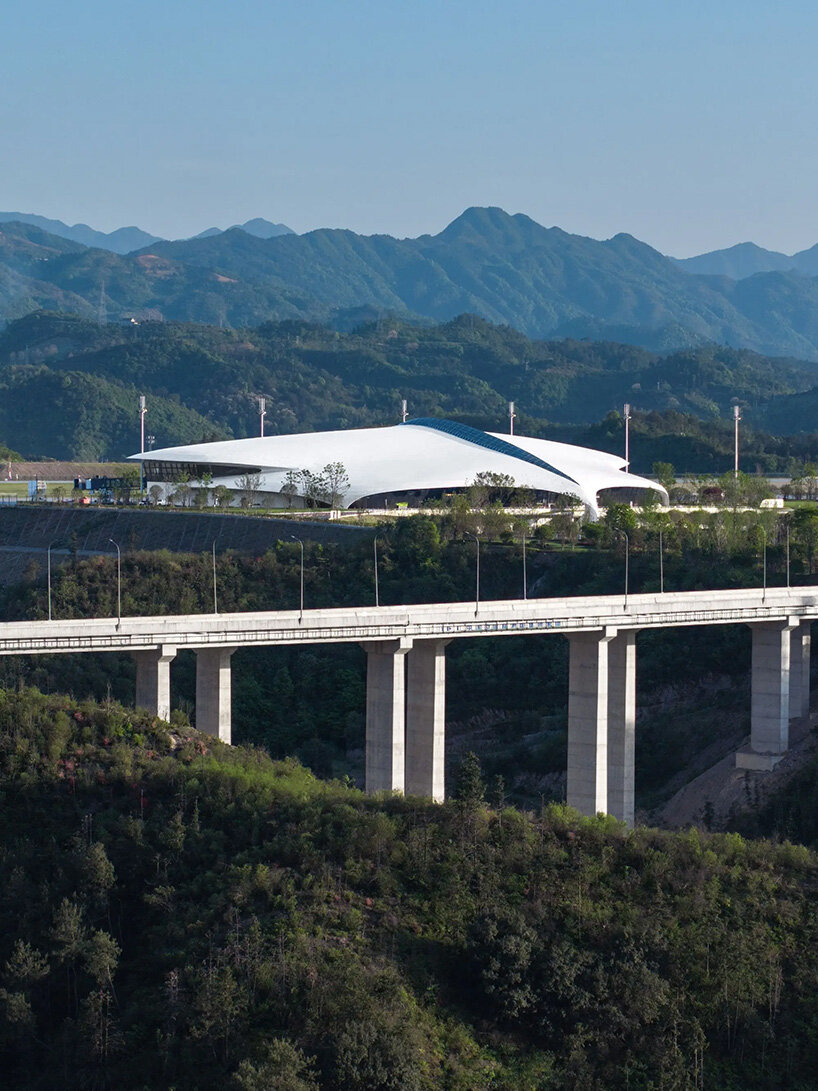
a feather-like roof, composed of lightweight aluminum panels
future expansion to accommodate up to five million passengers
A landscaped walkway connects the parking area with the terminal, enhancing accessibility and maintaining the airport’s dialogue with its natural surroundings. Lishui Airport is equipped with three boarding bridges, five remote stands, and an initial capacity to serve one million passengers annually. It is conceived as a domestic regional airport, prioritizing convenience and human-centered design over monumental scale. ‘As a feeder airport, Lishui Airport shows another attitude as a public transportation facility in the city: not greedy for big, but pursuing convenience and humanity, and pursuing a dialogue with the natural environment,’ Ma Yansong, founder of MAD explains.
Future expansion is embedded in the structure of the airport, anticipating growth to accommodate 1.8 million passengers by 2030 and up to five million by 2050. Provisions for an international terminal ensure that Lishui Airport can evolve alongside the development of the region.
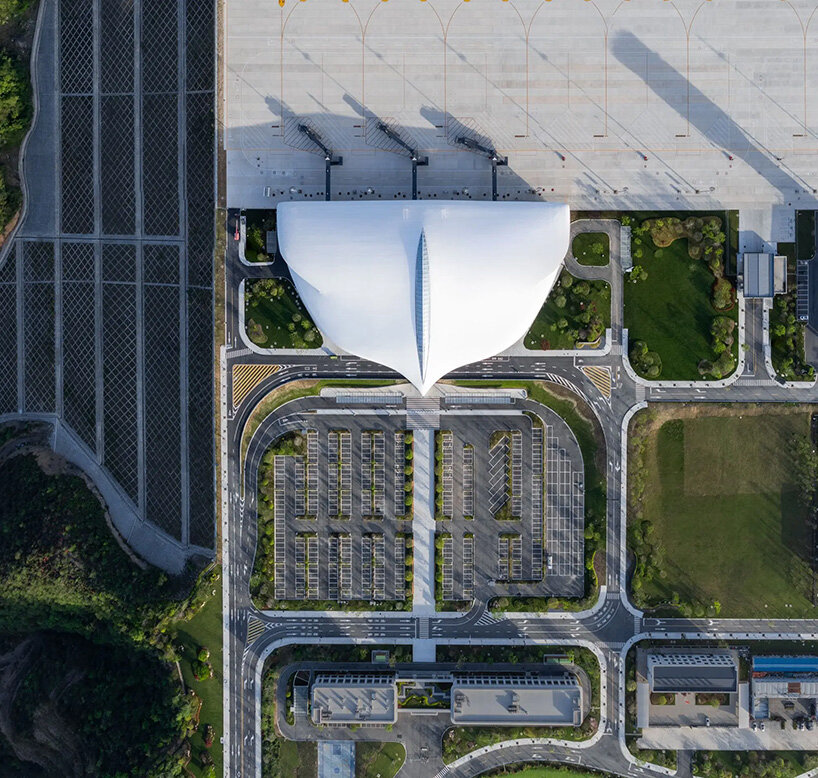
the architectural language of the terminal embodies a deep connection to its environment
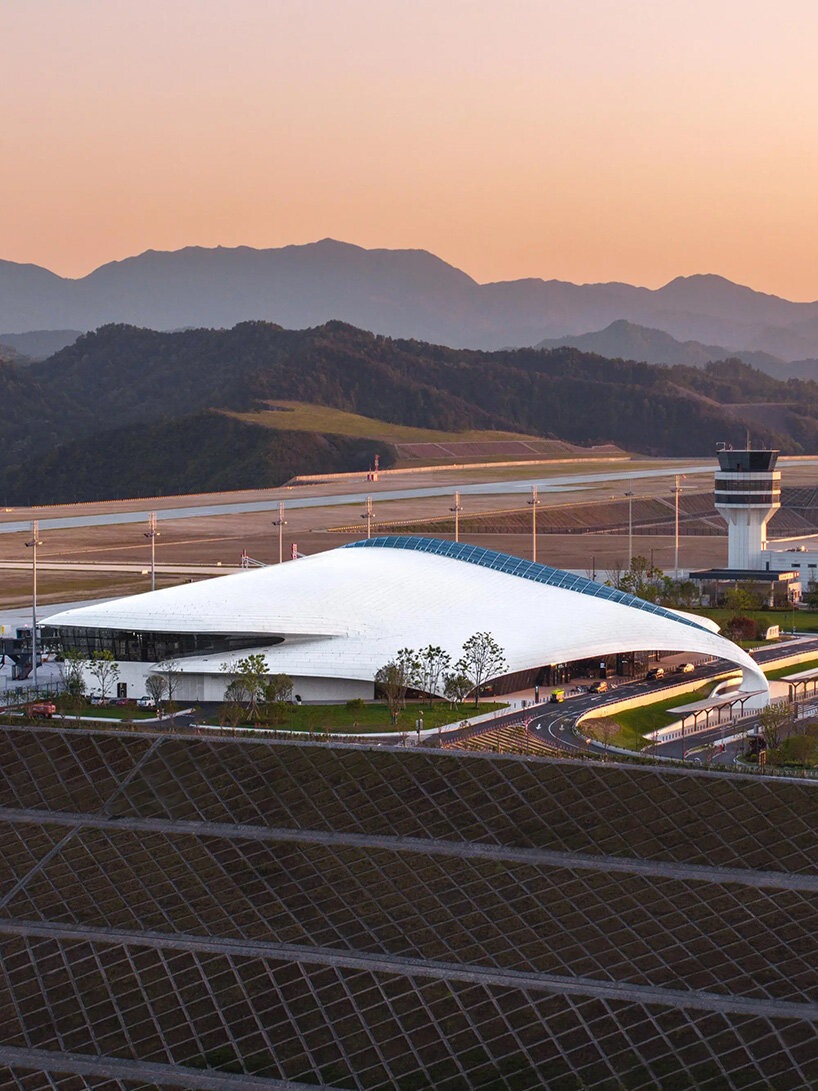
the roof is composed of lightweight aluminum panels
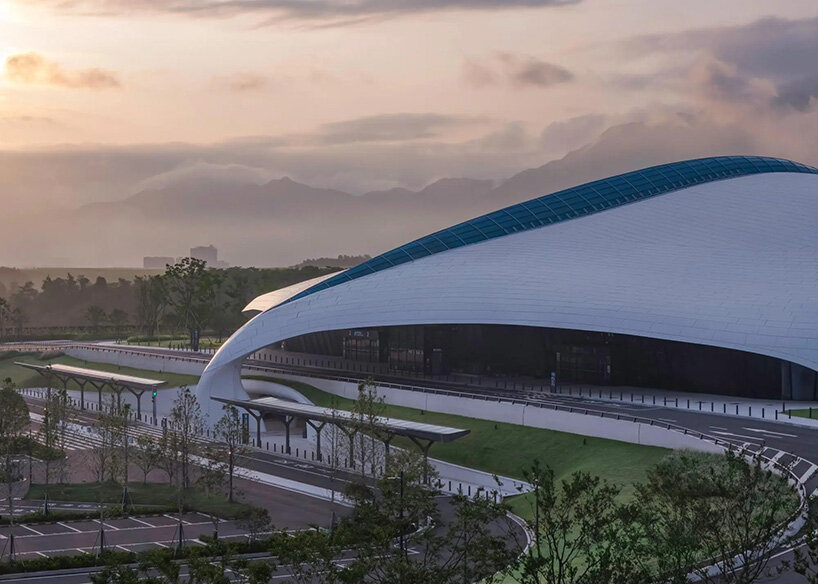
a dramatic cantilever frames the entrance