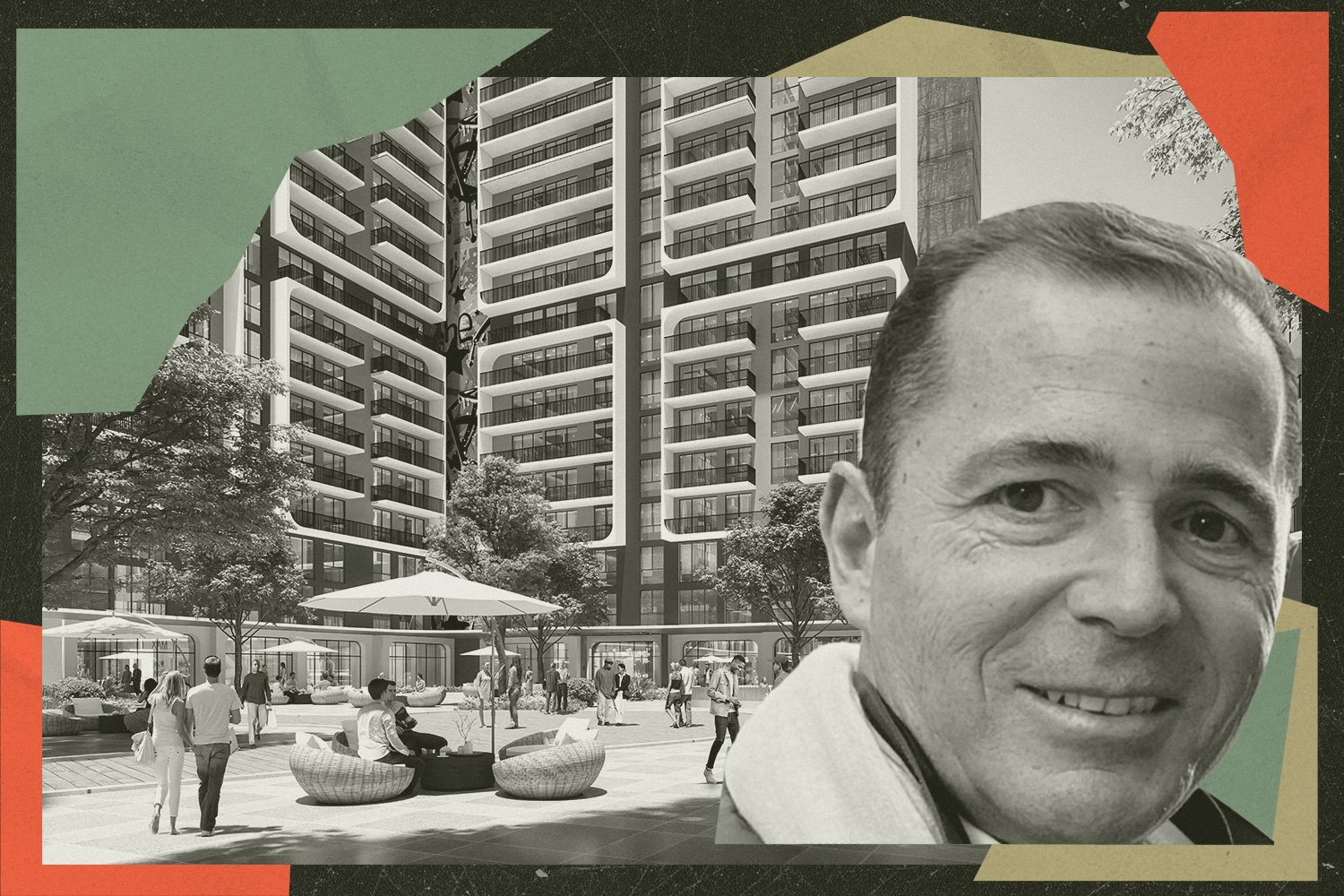

The past several years have proved challenging for developer Brian Tuttle.
In December 2023, as the maturity date loomed on three loans totaling $38.4 million—each secured by a Royal Palm Beach development site—Tuttle began searching for new lenders to refinance the debt and for equity partners to help jumpstart his 38-acre mixed-use project, Mainstreet at Tuttle.
However, Tuttle’s outreach was met with resistance. “Banks were saying that, because of rising interest rates, appraisals had to be adjusted downward sharply,” Tuttle told The Real Deal. “Which meant you needed to contribute more equity to move these deals forward.”
Potential investors, he said, were hoping for deep discounts. “Everyone was looking for a steal,” Tuttle explained. “So, when all the interest is in below-market deals, fair market opportunities get ignored. It was very frustrating.”
By July 2024, Fort Lauderdale-based Fuse Group, the lender, filed a foreclosure suit against two Tuttle-controlled entities holding the Royal Palm Beach site. That same month, Tuttle emailed his contractors, noting that he had met with over 200 groups in 14 months to secure equity for the project, but had been unsuccessful. In September, the Tuttle entities filed for Chapter 11 bankruptcy to halt a foreclosure auction after Fuse Group obtained a $47.4 million judgment over the summer.
Tuttle is far from alone. At least a dozen other developers across South Florida are facing similar struggles. Thirteen development sites in the tri-county area have ended up in bankruptcy court or are facing foreclosure, and industry experts warn this could be just the beginning. In 2024 alone, five development sites faced foreclosure, according to a TRD analysis.
South Florida’s pandemic-era real estate boom was thought to shield the region from the challenges plaguing the rest of the country’s commercial sector. Instead, increasing interest rates, soaring construction and land costs, and more cautious equity investors have created a wave of stalled projects and mounting distress. A growing number of local developers are now grappling with lenders unwilling to continue “extending and pretending.”
“There’s more in the pipeline,” said Josh Rubens, a shareholder at Miami law firm Kluger Kaplan, speaking to TRD. “Extensions over the last 12 to 24 months are coming to an end, and you’ll see more headlines as those maturities come due in the next six to 12 months.”
Loans due after pandemic boom
During the surge of migration to Florida during the pandemic, developers scrambled to acquire sites and launch new apartment towers, condo-hotels, offices, and mixed-use projects, betting that rents and property values would continue to rise and that floating-rate debt could be refinanced before higher rates kicked in.
That strategy unraveled when the Federal Reserve raised interest rates and, according to lenders, construction costs jumped roughly 30 percent over just a few years. Projects that seemed like guaranteed wins in 2021 and 2022 are now yielding thin or even negative returns after factoring in higher borrowing and construction costs, making it much harder to secure new construction or bridge loans.
“Florida—and especially South Florida—still has strong demand,” said Brett Forman, whose Fort Lauderdale-based Forman Capital has financed development throughout the state. “But the explosive growth spurred by Covid led some developers to get overextended or perhaps too aggressive.”
He notes that a “huge amount of debt” is set to mature through this year and 2026, much of it tied to land or early-stage deals that never advanced to full construction financing.
A common thread among the distressed sites is the prevalence of short-term bridge loans—typically lasting 12 to 36 months, sometimes with six- or 12-month extension options—which have already exhausted multiple reprieves. These loans were intended to bridge a project through the entitlement or early predevelopment phase and onto a less expensive construction loan or a sale. Instead, developers find themselves stalled as interest accrues at double-digit rates.
“When you recalculate the numbers at a higher interest rate and with construction costs up 30 percent, the deals just don’t pencil out anymore,” said Holly MacDonald-Korth of Coral Gables-based KDM Financial, speaking to TRD. “[Developers] are struggling to get new loans for deals that, on paper, no longer deliver the returns they expected.”
This scenario is playing out at several sites in Miami and Fort Lauderdale. For example, Forman Capital is seeking to foreclose on a planned condo-hotel project in Miami’s Arts & Entertainment District after the borrower allegedly defaulted on an $8.3 million bridge loan that matured in August. The lender claims it is owed default interest and fees, in addition to the principal.
The project’s former manager, high-rise developer Dan Kodsi, said he is no longer involved, highlighting how quickly capital arrangements can change when a bridge lender’s timeline expires. Both Forman and Joseph Pardo, the attorney for the site’s owner, declined to comment on the foreclosure proceedings.
Private lenders putting the squeeze
Most of the developers behind the 13 distressed sites are dealing with private lenders who have lost patience. In several recent cases, foreclosure lawsuits have escalated into contentious legal battles, with developers filing last-minute bankruptcy petitions or appeals in an effort to delay proceedings.
For instance, in Aventura, Rok Lending acquired a 1.6-acre medical office development site at a foreclosure auction, paying $477,800 after winning a $19.9 million judgment related to a $15 million loan it issued in 2023. Developer Marlon Gomez tried to delay the sale through appeals and bankruptcy filings, but all were denied. While these tactics bought him some time, they did not change the outcome.
Meanwhile, on the Miami River, a receiver is marketing a 1.8-acre site for the planned Miami River Cove project for $18 million. This planned 40-townhome development, also linked to Gomez, is the subject of a foreclosure suit from a Fiorentino Family Office affiliate, which alleges default on a $10 million loan and accuses the borrowing entity of using fraudulent documents to secure the debt. Gomez and his partners deny any wrongdoing, and Gomez did not respond to requests for comment.
Forman noted that bankruptcy filings and countersuits by borrowers are largely attempts to buy time, as they hope refinancing and capital conditions will improve. “It’s a way of partially delaying the inevitable,” he said.
Lenders, in turn, are increasingly pushing back. For example, Fuse Group—the lender for the Mainstreet at Tuttle project in Royal Palm Beach—asked the bankruptcy court to dismiss the developer’s Chapter 11 filing, claiming Tuttle intended to use it solely to delay foreclosure. An evidentiary hearing is scheduled for Jan. 20 to Jan. 22, according to court records. Rubens, the lender’s attorney, also represents Fuse Group and declined to comment on the case.
At the same time, the Tuttle entities have submitted a reorganization plan