The modular residential block integrates gardens into its form
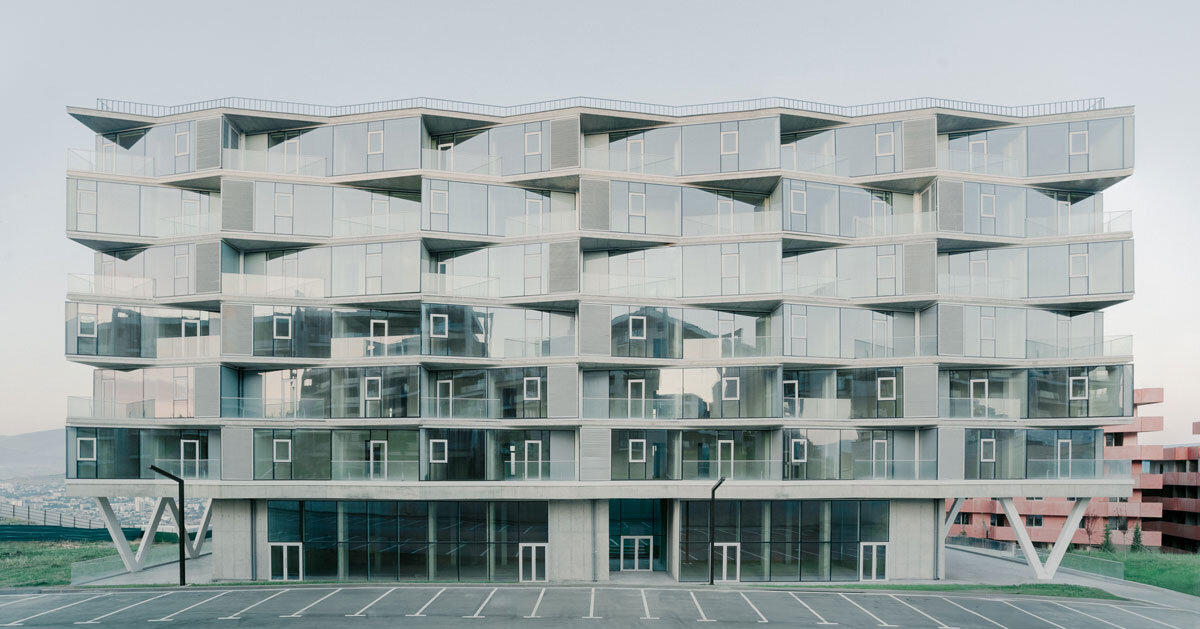
By Lucy Gardenhouse Architects of Invention One is seven storeyed Residents The building is designed using a theoretically modular framework in which all components, although not full volume modules, are offset fabrications. An unusual construction method is introduced in this approach Georgiawhere offsite production is limited. The design references James Wine’s “Elevation of Houses” and Brodsky and Itkin’s “Columbarium Habitable”, which adopted the idea of stacked houses with integrated gardens. The room modules alternate between oval and rectangular geometries, creating a vertical rhythm in the gridded The facade. As an adaptation of the original concept of the winery, the building incorporates the size of a veranda to support outdoor planting. The scheme proposes a type of vertical living in which individual units incorporate spatial characteristics most associated with suburban housing, including access to daylight, outdoor space and cross-ventilation.
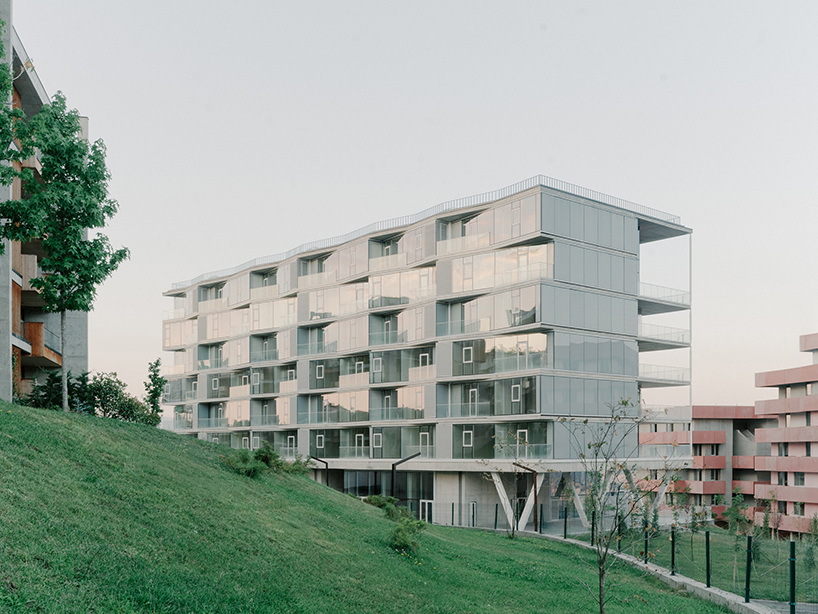
The project is located northwest of Tbilisi in Sabartalu district, on a sloped site near Lassi Lake with city views. The broader master plan includes individual houses as well as the residential buildings of Position Inventions, Ricardo Buffle, and United Nations Studio. Lacy Garden House has 42 units over seven residential floors, with ground-level commercial space and below-grade parking. The building is divided vertically into three blocks. Each block has a staircase and lift core offering two apartments per landing. Standard floor units offer views to both east and west, while upper floors accommodate duplex apartments. The orientation of the building provides panoramic views towards the city and the surrounding hills, and the dual aspect configuration supports natural light and air flow. The facade employs alternating flat and curved surfaces, creating a geometrically precise structure that varies according to lighting conditions.
All photos by Gregory Sokolinski
Inventive architects reinterpret density and regulation
The project was developed Studio An architect of invention under a development regulation plan that established the allowable building envelope, including height, footprint and total volume. Within these parameters, the design strategy focused on reinterpreting the desired density through a stacked arrangement of modular ‘garden houses’, each with natural light, ventilation and access to outdoor space. A primary challenge was addressing fire safety regulations that stipulated that no escape core could serve more than 500 square meters per floor. This need informed the tripartite vertical division, resulting in three circulation cores with two units. This arrangement met regulatory constraints by limiting joint circulation for residents. The dual-aspect layout ensures constant views of the city and hills, while the semi-enclosed winter gardens, known as ‘glass rooms’, provide transitional spaces usable throughout the year. Extensive coordination with the developer led to the design of large balconies, which became a defining feature of the project. The building responds directly to the slope of the site, using the topography to hide the parking surface while raising the residential floor to improve views. The result is a modular structure shaped by regulatory, environmental and local considerations.
The Lacy Garden House uses a hybrid concrete and steel structural system. Three reinforced concrete cores provide stability and contain circulation and service passages. The floor plates use a triangular concrete waffle slab system that improves material utilization, improves load distribution, and increases thermal mass. The facade consists of double glazed panels within aluminum frames, interspersed with areas of exposed concrete. Use Back Paint Glass to select parts to hide structural elements or services. Balconies and terraces are finished with white marble slabs chosen for their durability and compatibility with the overall material palette. The project incorporates sustainable strategies through reliance on manufactured components, which reduce waste and time on site. The facade system supports energy efficiency by controlling solar gains, while the exposed concrete elements require minimal long-term maintenance. The overall architectural logic aims for stability, simplicity, and low operational demands, establishing a model for contemporary residential development in Georgia.
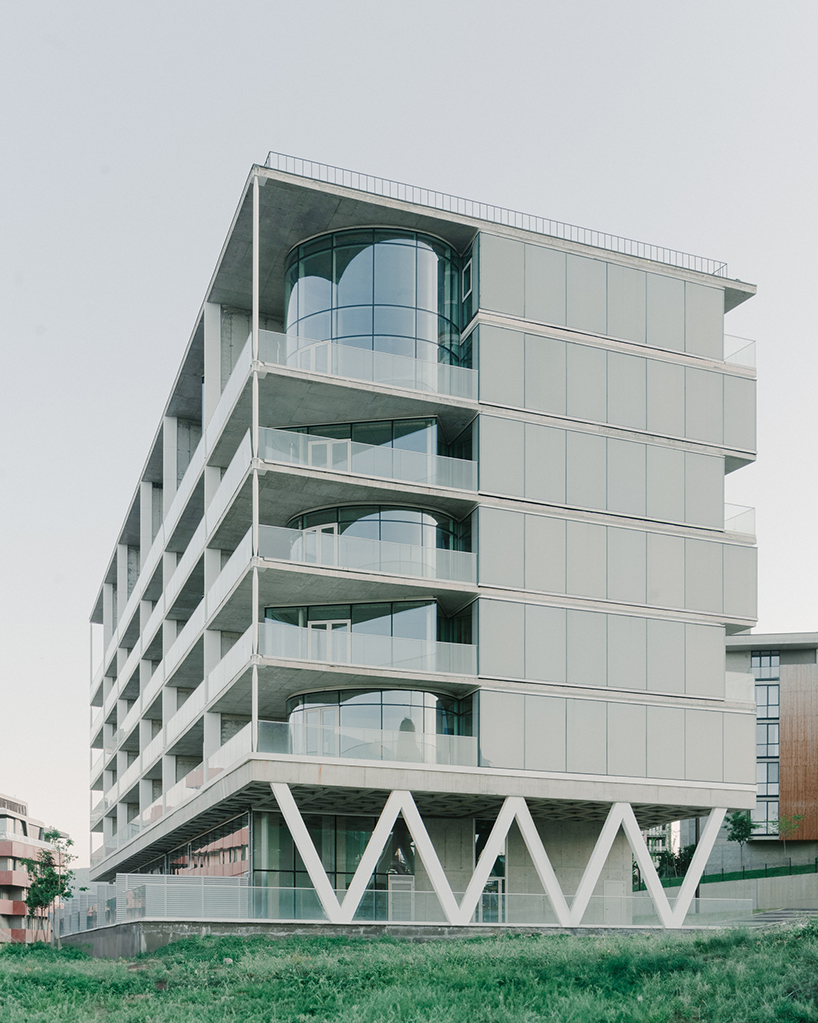
The Lacy Garden House uses a modular framework with components manufactured offsite
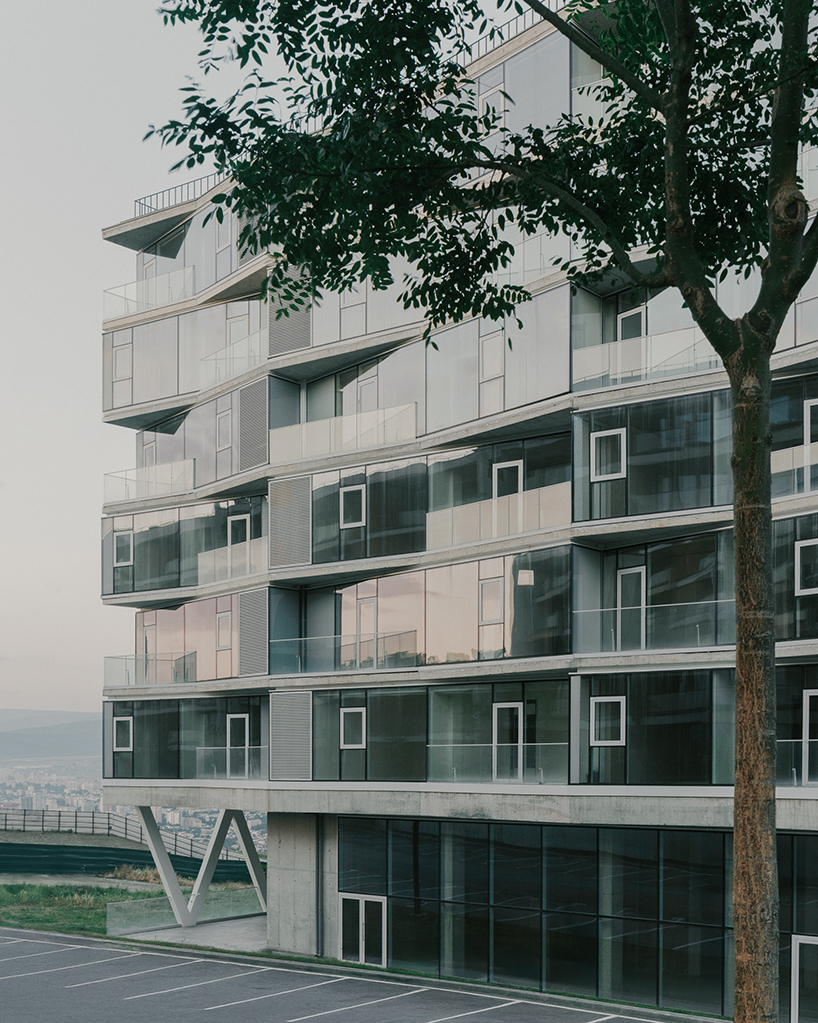
The building adapts the idea of terraced houses with integrated gardens