Wunderwerk builds Detached House on Tskneti’s forested slopes
Nestled on the forested hillsides of Tskneti, Georgia, the Detached House by Wunderwerk stands in a landscape long shaped by both physical and social forms of enclosure. Perched above a natural ravine, the house employs an architectural approach centered on openness. The design features a suspended concrete form, transparent living spaces on the ground floor, and a landscape that flows seamlessly through the site—creating a home where the surrounding forest is an essential part of the spatial experience.
The mountainous fringe around Tbilisi has served as a climatic buffer and a destination for recreation for centuries. Tskneti, situated on the eastern slope of the Trialeti Range, marks the transition from the urban grid to expanses of oak and pine forests. In the Soviet era, this area became a suburban retreat, noted for state-built sanatoria and regulated woodlands. Over time, private dachas established an exclusive social enclave for political and cultural elites, while broader public access remained restricted. After the 1990s, the district saw dramatic changes. Abandoned villas were taken over by internally displaced families, and new private homes appeared behind imposing concrete walls. Enclosure became a defining spatial feature, with boundaries serving less as architectural devices and more as territorial markers—altering the landscape and diminishing communal outdoor spaces. This trend deeply influenced local building practices, setting a norm for robust, opaque fencing. However, new municipal regulations are now seeking to counter this by promoting greater visual and spatial permeability throughout the area.
all images by Angus Leadley Brown
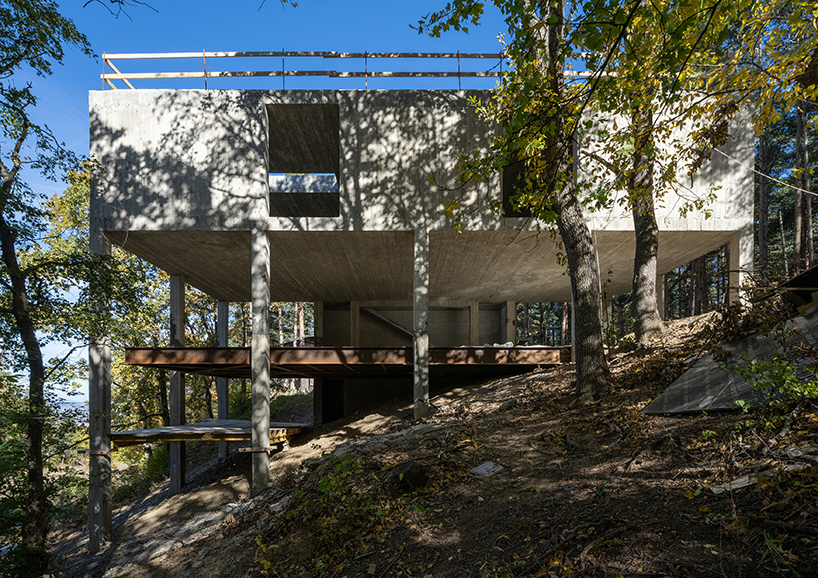
Tskneti house is elevated above steep terrain to minimise impact
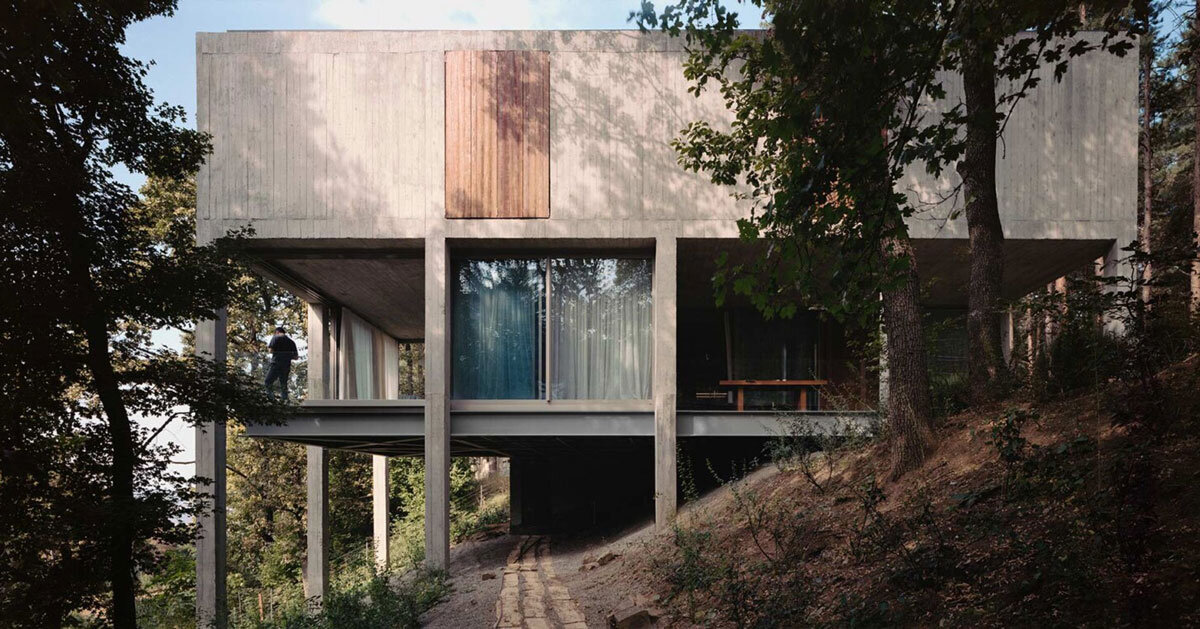
The design of the house offers a new perspective on boundaries in this context. Located at the southeastern edge of the settlement, the property sits beside a ravine that aids in the natural ventilation of both Tskneti and Tbilisi. The steep terrain had historically deterred development. The design process prioritized minimizing disruption to the landscape while preserving its ecological functions. The structure is raised above the slope, set within an existing clearing, and supported by tall concrete columns anchored into the bedrock. These columns support a solid concrete volume that contains the home’s private areas on the upper floor.
Beneath this, a suspended metal frame forms the base for the ground-floor platform, which houses an open-plan living area enclosed by continuous glazing. This transparency forges strong visual links to the forest outside. Wunderwerk collaborated with Studio Ruderal, a landscape design practice, to extend native plantings into the property, ensuring ecological continuity and removing the need for boundary walls. A spacious terrace acts as an intermediary zone, while a sliding corner façade allows for a flexible relationship between indoors and out. Upstairs, windows are carefully placed to frame selected views of the forest. Externally, the use of folding wooden shutters and timber-imprinted concrete establishes a material palette that will gradually blend with the natural surroundings. Inside, wooden elements reminiscent of shutters conceal functional features, reinforcing this approach. The house reimagines Tskneti’s conventional boundary wall as a suspended architectural form combined with an open ground level. Through this arrangement, the project proposes a spatial model that favors environmental continuity, ventilation, and visual openness, challenging the suburban tradition of enclosure.
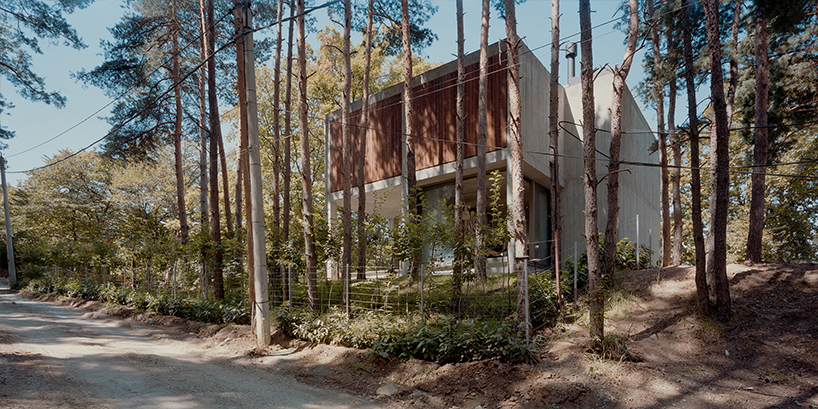
the house is set on the forested slopes of Tskneti
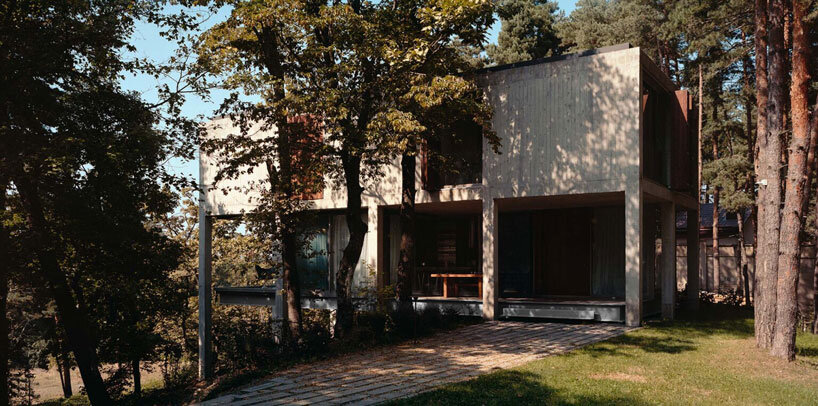
the building is positioned above a natural ravine
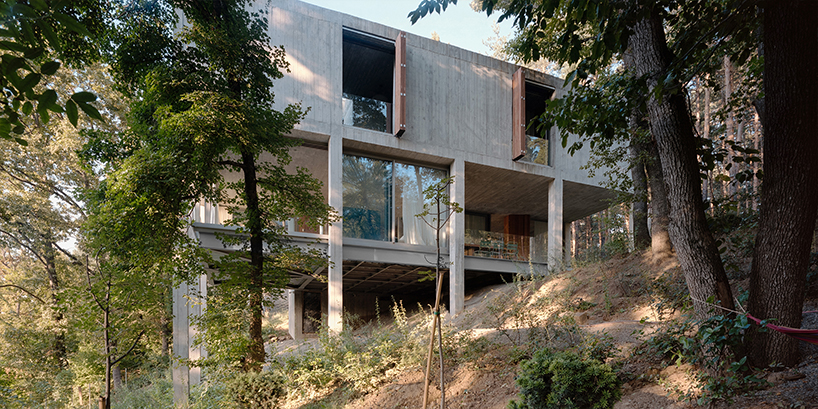
suspended concrete volume defines the upper level

transparent ground-floor spaces are connected to the forest