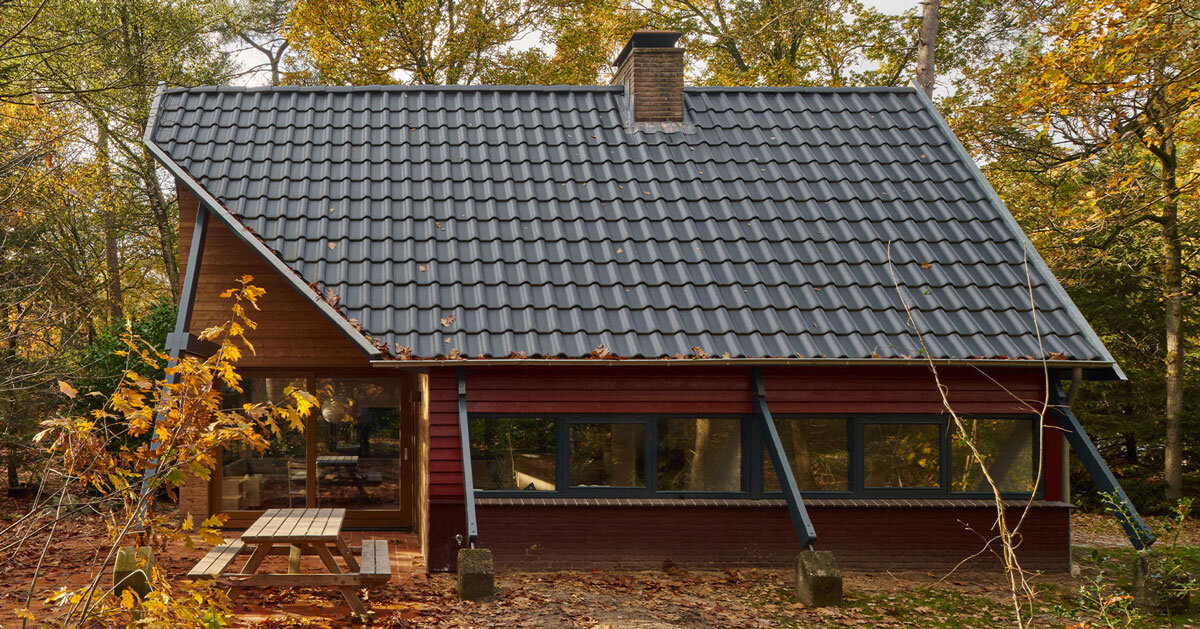
Kumiki Architects renovates 1984 holiday home in Herperduin
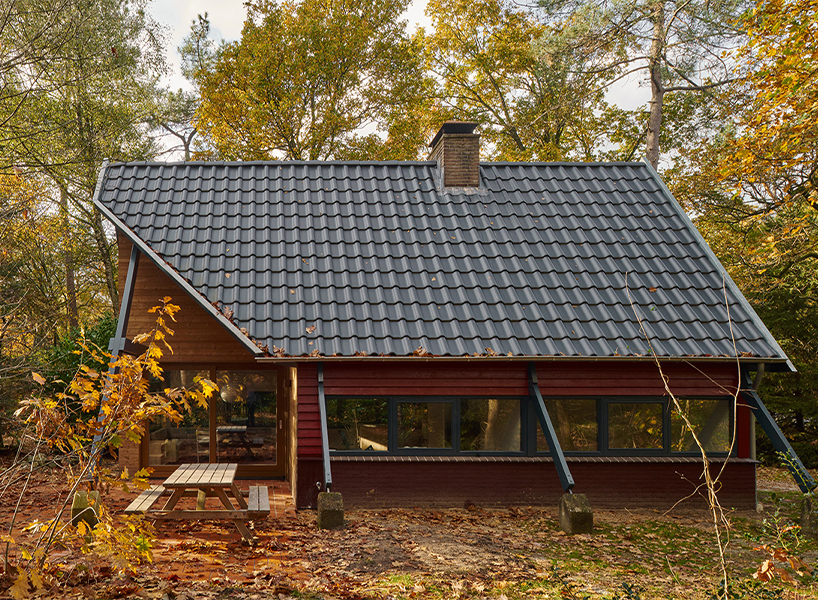
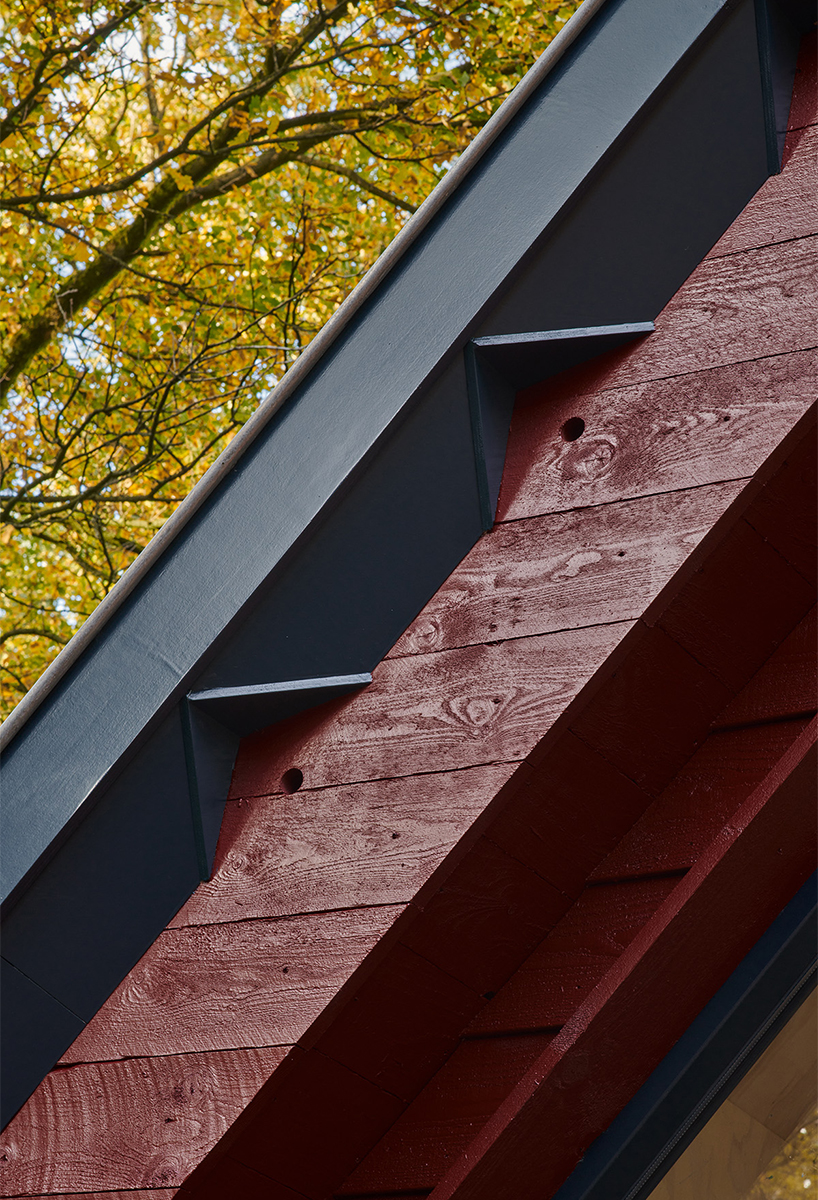
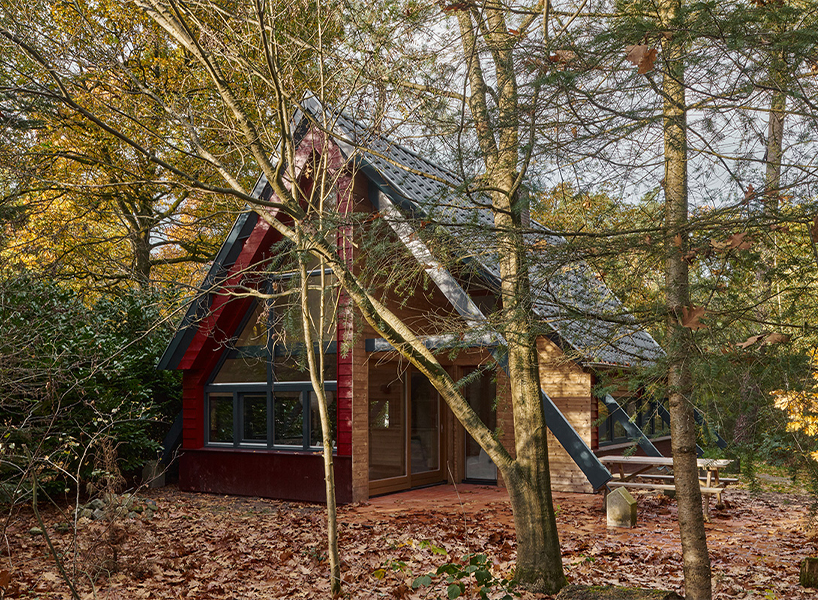
Kumiki Architecture has undertaken the extension and renovation of a distinctive A-frame holiday home built in 1984, located in the Netherlands. Nestled within a forest park near the Herperduin nature reserve—an area defined by its heathlands, ponds, and sand drifts—the residence has been reimagined as a tranquil retreat for a young family. Designed to offer a peaceful escape from urban life, the home fosters a deep connection with the surrounding natural environment. In collaboration with both the client and an ecologist, Kumiki Architecture developed a concept where architecture and ecology are seamlessly integrated. Central to the project is the idea of sharing the house with nature: when unoccupied, the home becomes a sanctuary for birds, bats, and other wildlife. Nesting boxes have been incorporated into the eaves, and a dedicated ‘bat hotel’ is featured in the facade. This ecological approach encourages biodiversity and provides the children with opportunities to learn about the rich life within and around the forest.
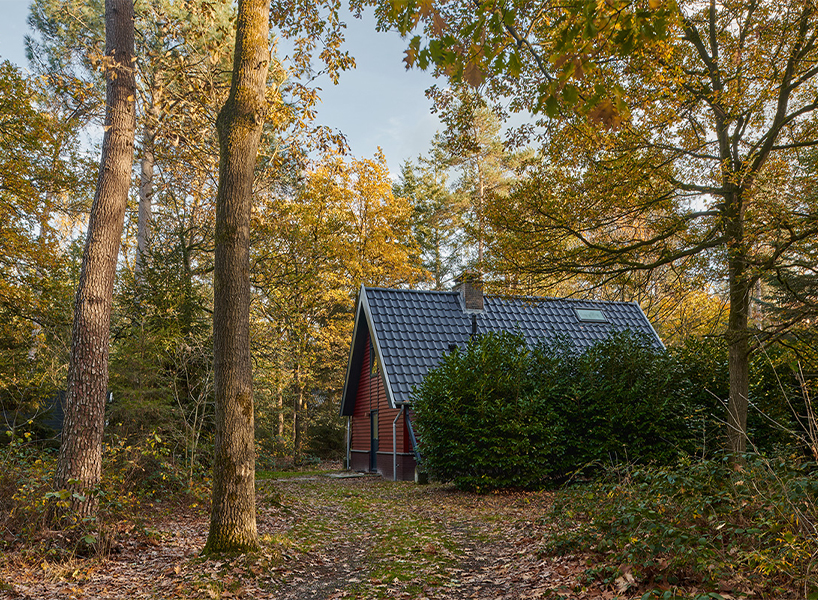
Renovation restores original A-frame with new angled roof
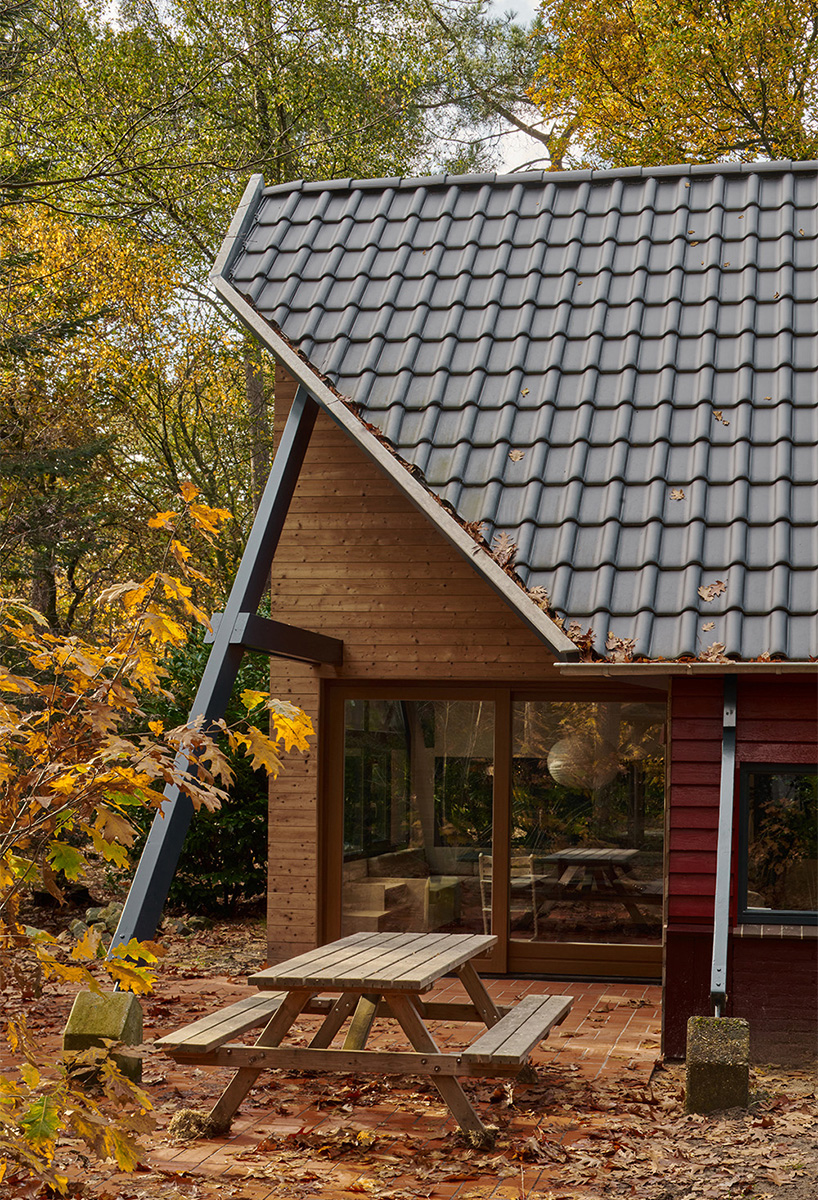
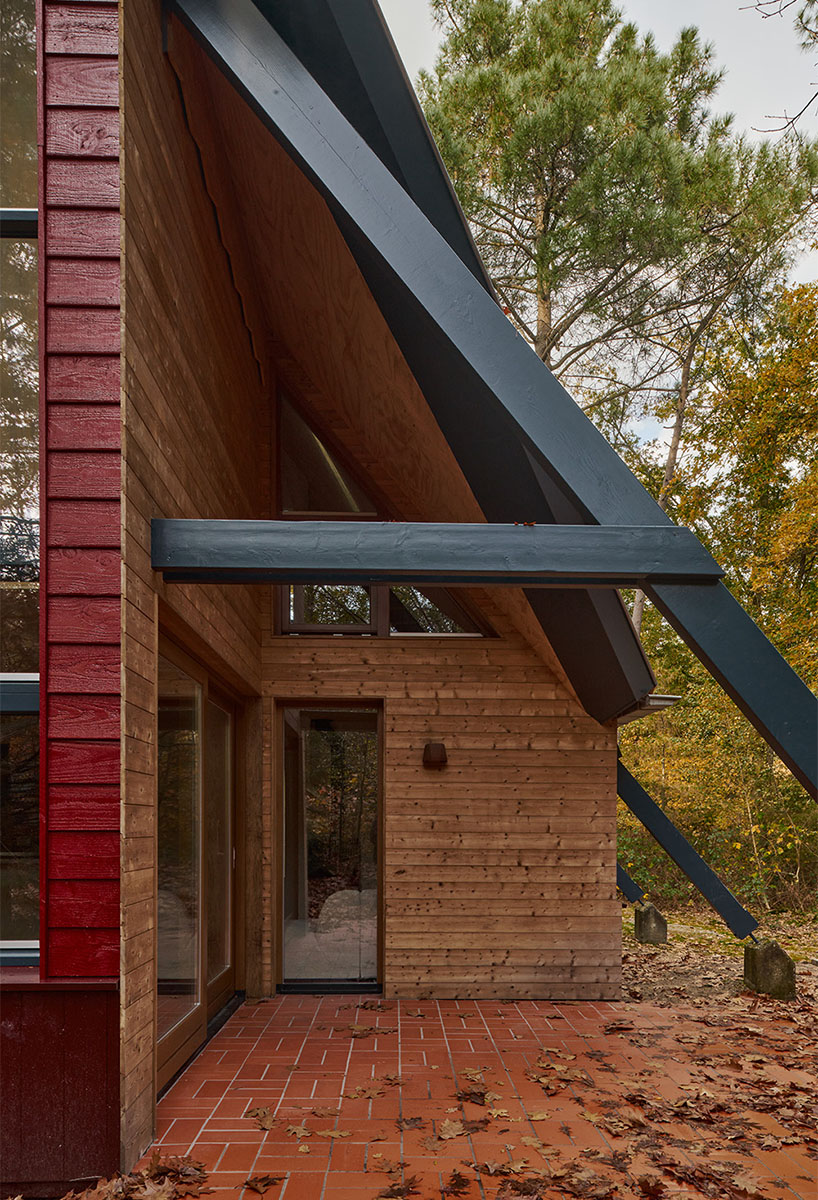
For the extension, Kumiki Architecture’s design team followed the logic of the existing A-frame, extending its rhythm over two floors. The design purposefully introduces a new architectural element at the terrace, where the roof is cut at an angle. This adjustment allows sunlight to penetrate deep within the house, while the generous overhang ensures shade and protection from rainfall and the heat of summer. The terrace cut-out is finished with contrasting materials, emphasizing the transition as the house opens toward the forest. New exterior colors, inspired by the earthy tones of the landscape, help the structure blend harmoniously with its surroundings. The renovated roof is insulated with wood fiber and topped with new tiles, offering a contemporary update that honors the holiday home’s original character.
Natural and rugged materials adorn the house’s interior
Inside, the sloping ceiling and expansive south-facing window fill the home with light, creating a bright and airy atmosphere. The use of natural, robust materials establishes a calm and relaxed living environment. Terracotta floor tiles extend seamlessly onto the terrace, softening the boundary between indoor and outdoor spaces. Upstairs, a cozy alcove bed for adults and a children’s room featuring a double bunk bed supported by tree branches playfully evoke the surrounding forest. Sustainable features such as a multi-year planting plan, rainwater harvesting, and the creation of habitats for local wildlife ensure that the holiday home actively supports the wider Herperduin ecosystem. The ecological approach now serves as a model for future renovations throughout the holiday park, cultivating a connected, green network. In this way, the house becomes not only a sanctuary for relaxation, but also a living example of regenerative design—where every improvement benefits both residents and the natural world.