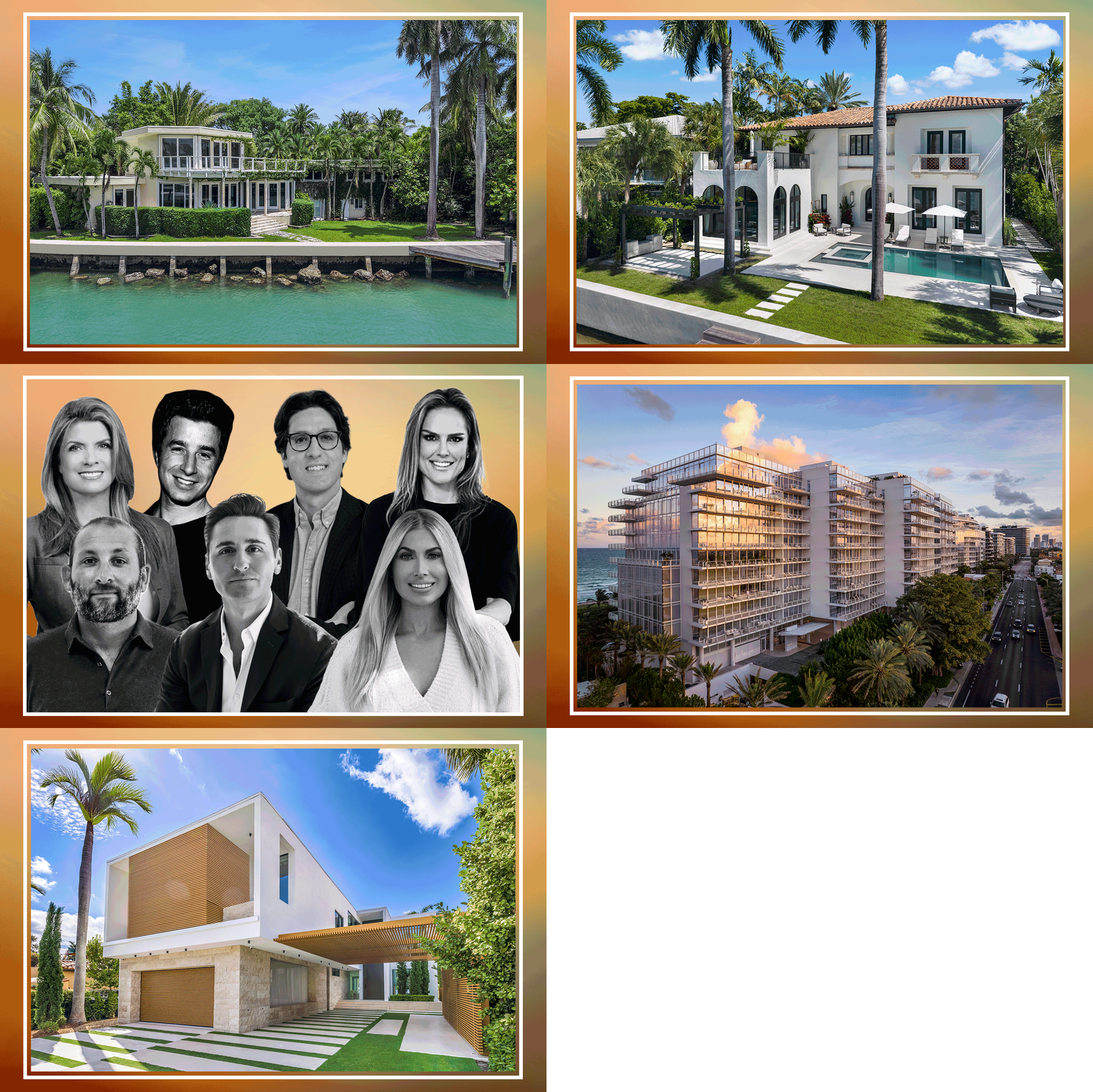

Gaia Real Estate has relocated its headquarters from New York to Miami, intensifying its focus on South Florida’s multifamily real estate market.
This transition follows a recent slowdown in the migration of out-of-state companies to South Florida, which had peaked during the three years after the pandemic. Gaia’s increased commitment to Miami coincides with a period of uncertainty in the region’s rental market.
According to the company’s statement, Gaia has established its Miami headquarters at 8163 Northeast Second Avenue after first opening an office there earlier this year. The firm is expanding its presence at the location, leasing a total of 5,000 square feet, with two additional leases set to begin early next year.
The building is located in the Little River neighborhood of Miami.
Gaia’s CEO, Danny Fishman, explained that the move brings the firm closer to its “key markets” and described Miami as having “the right momentum” for Gaia’s growth.
Founded in 2009 by Fishman and Ken Woolley, Gaia was previously headquartered in New York. Over the years, the company has invested more than $4 billion in residential properties, encompassing more than 20,000 units.
Gaia is not leaving New York entirely; it will maintain an office at Carnegie Hall Tower, as noted in the release. The company employs 35 staff members in New York and has 150 contracted employees working at its properties nationwide.
The new Miami office will launch with 10 employees in January, and all future hiring will be based in Miami. Some New York staff may relocate to Miami or split their time between both offices in hybrid roles.
In May, Gaia teamed up with Miami-based Moderno Development Group to initiate the first phase of a $300 million investment fund. The fund’s goal is to acquire, renovate, or rebuild single-family homes and townhomes in South Florida. Operating through the development and investment firm MILAS (Miami land and single-family), Gaia and Moderno intend to lease all new homes developed in the first phase.
Monthly rents for these homes will range from $4,000 to $7,000, according to Moderno CEO Doron Broman, who spoke with The Real Deal in May.
Moderno, which also operates out of 8163 Northeast Second Avenue, owns the building through an affiliate, public records show.
In addition to its partnership with Moderno, Gaia is also pursuing value-add multifamily investments and manages a fully discretionary real estate investment trust targeting new multifamily properties in the Sun Belt, including South Florida.
The REIT has invested about $300 million across more than 1,000 units in Houston, Orlando, and Nashville.
Over the past few years, apartment leasing activity in South Florida has slowed compared to the surge seen after the pandemic began. At that time, demand from newcomers—particularly from New York and California—drove record rent increases and unprecedented occupancy.
Developers responded by delivering a record 18,600 new units last year, surpassing the 15,000 net new leases, according to CoStar Group. This led to a slower pace of lease-ups, increased concessions, and a decline in rents, although multifamily construction remains robust.
For the year ending September 30, construction began on 14,515 apartments in South Florida, according to CoStar.
Despite these trends, Moderno and Gaia remain focused on single-family and townhome rentals—a segment that, as Broman noted in May, faces high demand but limited supply.
Gaia’s move to Miami signals that the flow of New York firms into South Florida may still have momentum. Between 2020 and 2022, many companies relocated to the region, attracted by Florida’s early lifting of pandemic restrictions and its business-friendly environment, leading to substantial office leasing. While the pace of this migration has since slowed, the trend has not come to a complete halt.
Read more

“In Miami’s favor”: Mamdani’s New York win a boon for South Florida, industry says

Development
South Florida
The Weekly Dirt: Mamdani effect takes center stage in Miami

Development
South Florida
“The world turned”: Why developers are selling South Florida multifamily sites