modern design by link-arc rises within china’s yunlu wetland
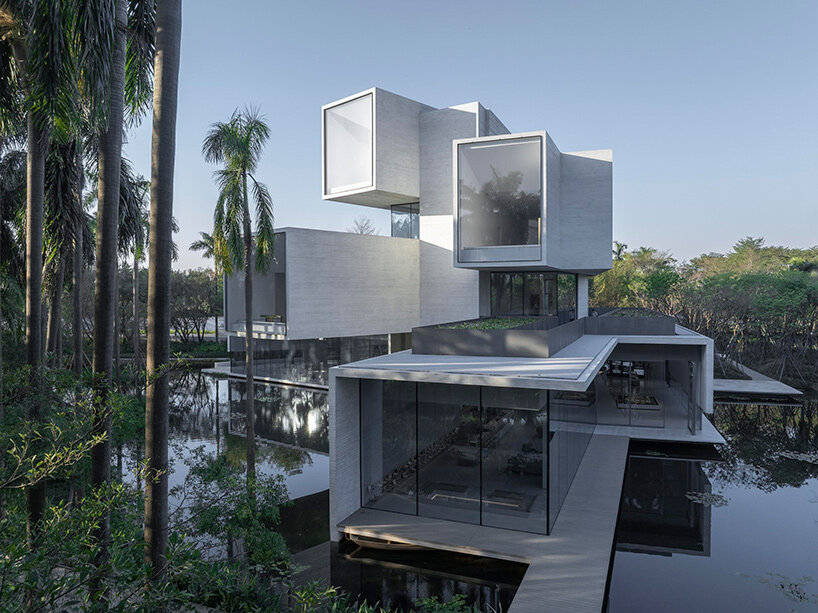
Situated alongside a natural habitat for thousands of herons, the Shunde Yunlu Wetland Museum, designed by Link-Arc, emerges from the lush vegetation of a wetland park in China.
This museum is positioned just beyond a grove of sequoia trees, set back from the park’s pathways and waterways to preserve a tranquil edge. A central water channel bisects the site, while the surrounding trees provide both enclosure and glimpses outward. Link-Arc has carefully oriented each level of the building to face openings in the tree canopy and the heron nesting sites across the water, seamlessly integrating the structure with its environment.
Within this protected landscape, the building unites a bird-watching tower with a wetland education center. The tall grasses and reflective water surfaces create a layered backdrop that envelops the stepped concrete volumes, allowing the museum to blend naturally into the park’s dense foliage.
images © Tian Fangfang
a stack of tubes to frame unique views
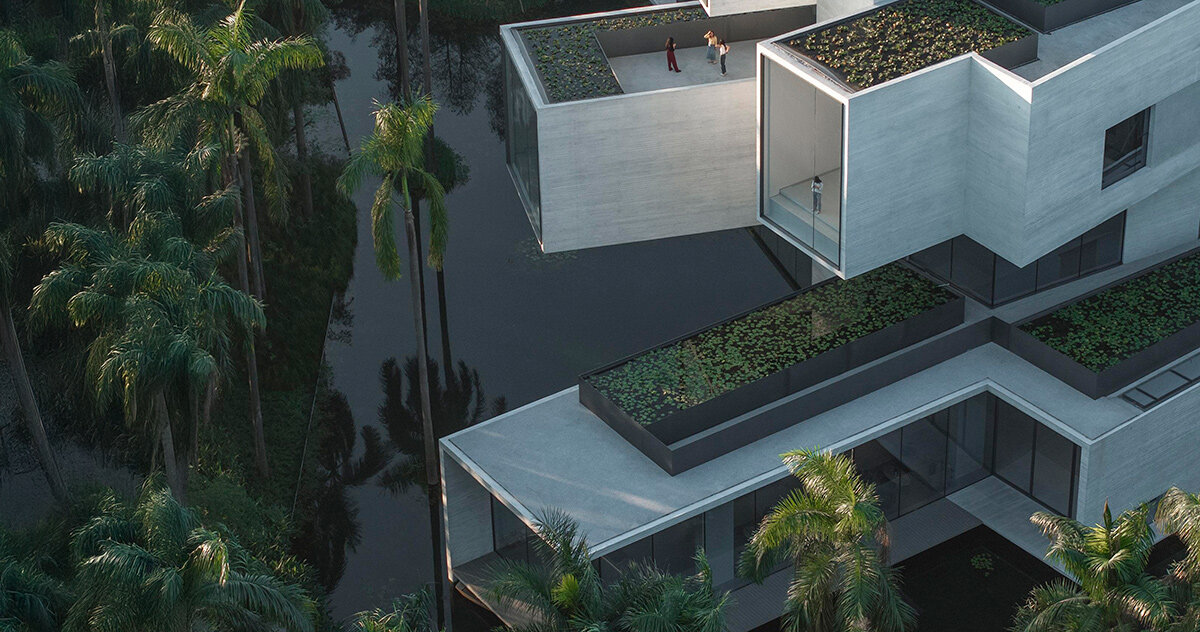
The Shunde Yunlu Wetland Museum is constructed from four stacked concrete ‘tubes,’ each rotated by the Link-Arc team to correspond with a different layer of the forest. The lower floors look out at the roots and trunks, while the upper levels are oriented toward the treetops and canopy. This careful rotation imbues the building’s form with a sense of motion, as each volume is strategically shifted to reveal a particular view.
Each tube acts as a structural box, with the sidewalls, roof, and floor working together to support the cantilevered ends. This clear structure lends the museum a sense of stability as it hovers above the wetland’s edge, where the water reaches close to its base.
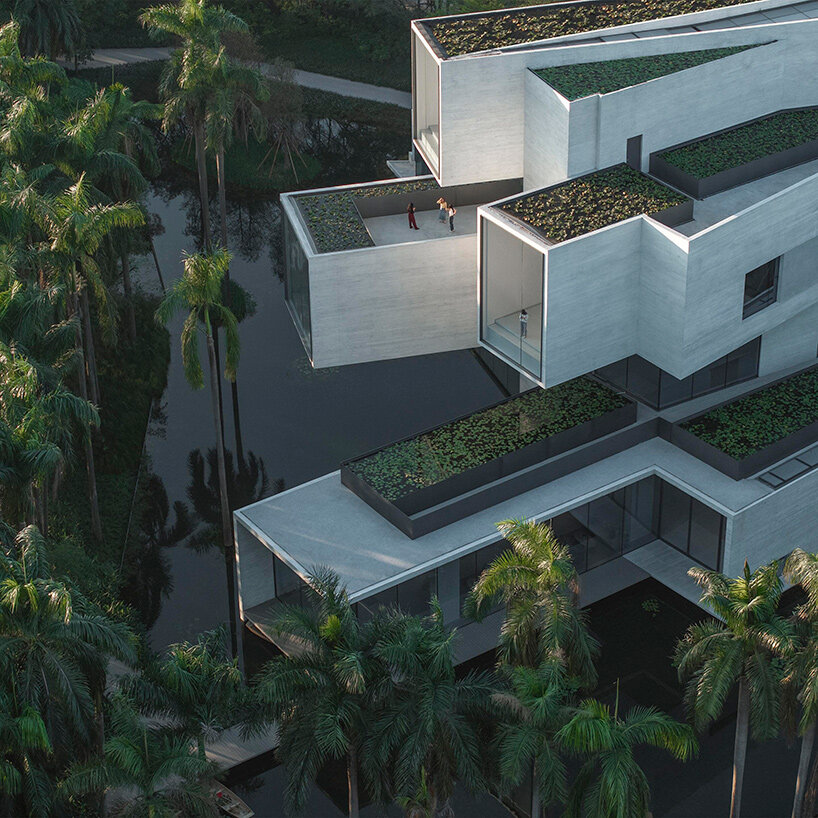
the museum sits within the Sequoia edge of the wetland park in Shunde
terraced rooftop lotus ponds
The exterior of the Shunde Museum is formed from cast-in-place concrete shaped with pine formwork, creating a subtle, wood-like grain on its surface. This texture softens the building’s profile and visually connects it to the vertical lines of the neighboring trees. The pale concrete reflects the changing daylight, allowing the museum to harmonize with the shifting hues of the surrounding forest.
Atop the building, a lotus pond adds another dimension of water to the overall design. This rooftop feature blends with the wetland landscape below, reducing the museum’s vertical prominence when viewed from the paths or across the pond. This design gesture reflects Link-Arc’s commitment to creating architecture that is sensitive to the habits of the nearby birds and the unique site ecology.
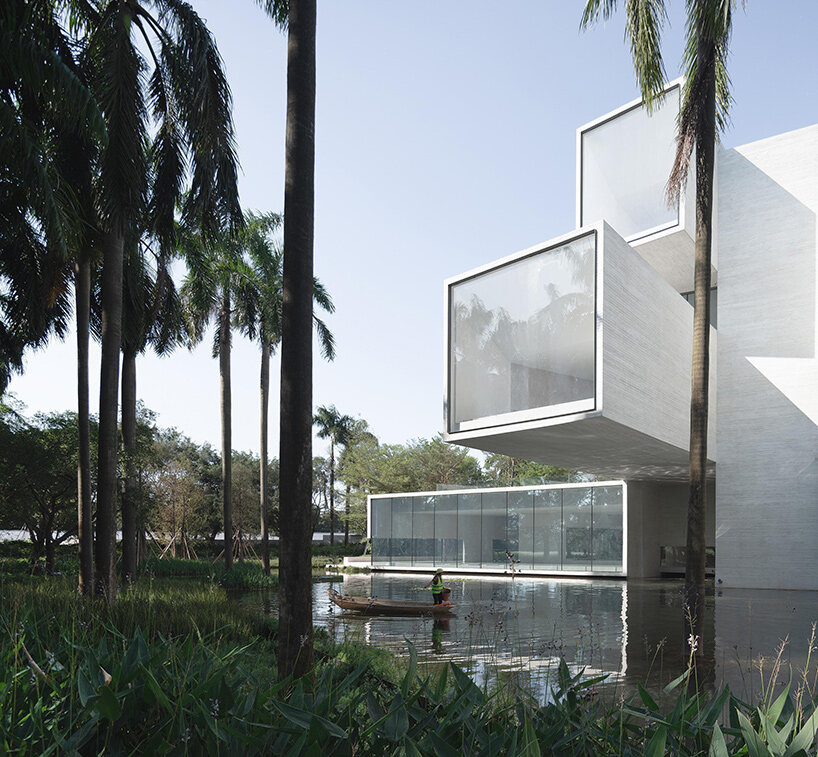
each level is rotated by Link-Arc to frame a distinct layer of the forest
complex, angled interiors
Inside, all four levels are linked by a soaring triangular atrium. Light pours in through skylights high above, filtered by deep concrete beams, and fills the interior with a soft, even glow. This diffused light enhances the neutral finishes and helps foster a tranquil atmosphere throughout the circulation spaces.
Stairs and landings wind around the edge of the atrium, offering layered viewpoints across several floors. From the intermediate levels, visitors can see three distinct framed openings at once, each highlighting a different segment of the forest canopy. Along the glass perimeters, interior spaces seem to float above the water, maintaining a continuous connection with the wetland environment outside.
Paths around the museum meander through dense plantings and clusters of tall trees, heightening the sense of immersion in the wetland. Portions of the structure are elevated, allowing water to flow beneath, while cantilevered sections create unique perspectives for reflection and observation.
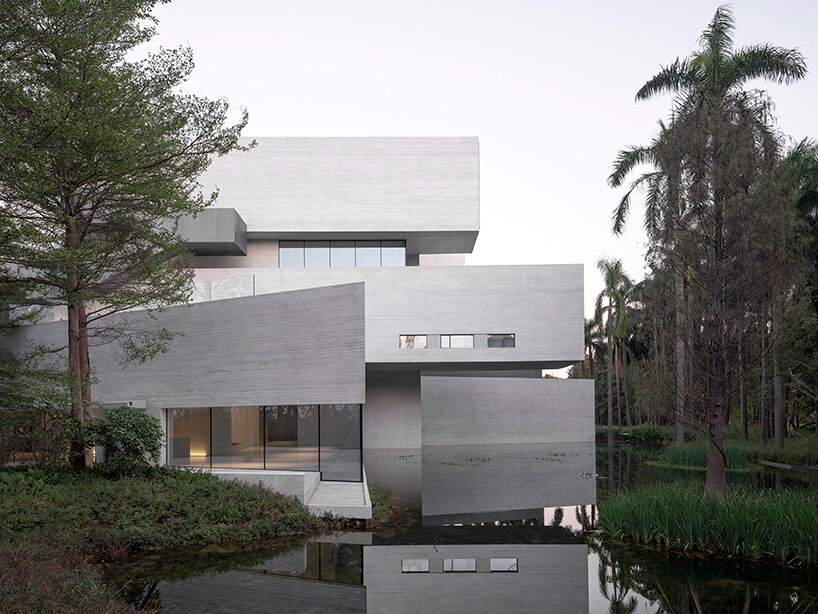
the concrete tubes create vantage points for observing herons
<img decoding="async" class="wp-image-1167821 size