kurosawa kawara-ten creates moss-clad roof for Waiting Area
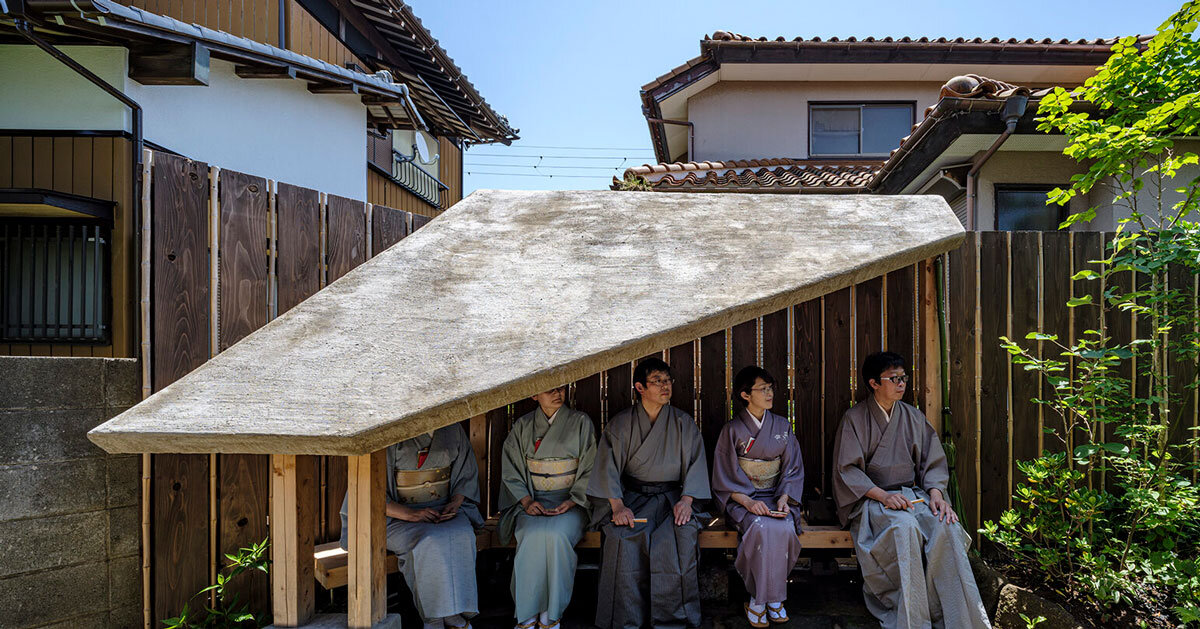
Nestled in Ichihara City, Chiba, Japan, the Sekiyuan Waiting Area serves as a modest shelter where guests pause briefly before entering the adjacent tea room. The structure was conceived and constructed by Kurosawa Kawara-ten alongside an architect and an artist, using a DIT (Do It Together) approach rather than relying on professional builders. This collaborative process explores the value of informal building methods in shaping contemporary architecture.
The design features a uniquely angled, single-slope roof supported at three distinct points. The roof is finished with mortar mixed with soil excavated from the site’s foundation, allowing the material to flow seamlessly over the gables and eaves for a harmonious look. No waterproofing was applied to the surface, intentionally enabling it to retain moisture and eventually foster a layer of moss. The roof’s lowest point is set at the rear, gently encouraging visitors to bow as they enter—an architectural nod to the etiquette of the tea ceremony, while subtly leveling the status among guests. Additionally, the roof’s diagonal opening guides movement and introduces a clear spatial direction through the alleyway.
all images by Masato Chiba
raw earth materials shape Sekiyuan teahouse’s Waiting Area
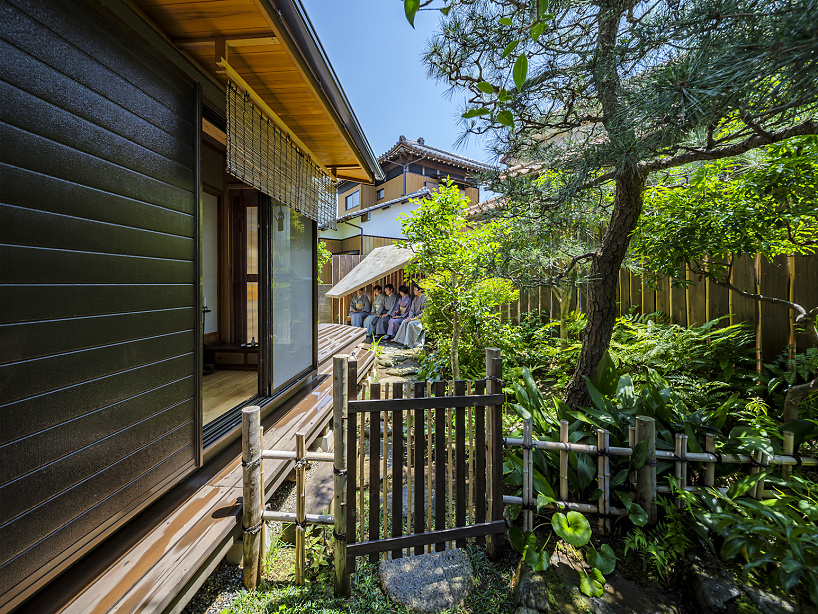
The project responds thoughtfully to the site’s existing garden arrangement. The landscaping, developed by Takeda-ya Sakuteiten, adds new pathways and a bench-like waiting zone constructed from irregular bricks and tiles. These interventions inspired the building’s informal character and its reinterpretation of traditional forms. Built without the involvement of professional contractors, the project uses its compact size and non-essential function to emphasize the importance of the construction process itself. Hands-on tasks like timber cutting, component carving, soil excavation, and mortar mixing become central, turning the act of building into an engaged and adaptive experience. The slightly suspended mortar-and-earth roof introduces a subtle sense of impermanence, sharpening visitors’ awareness and anticipation as they approach the tea room.
By utilizing simple materials and manual methods, the project reflects on the decreasing presence of amateur involvement in modern construction. It highlights how smaller, low-stakes structures can invite experimentation, flexibility, and personal agency in shaping spaces. The Sekiyuan Waiting Area by studio Kurosawa Kawara-ten frames this approach not as a longing for the past but as a way to renew communal practices and deepen our understanding of how built environments come to life.
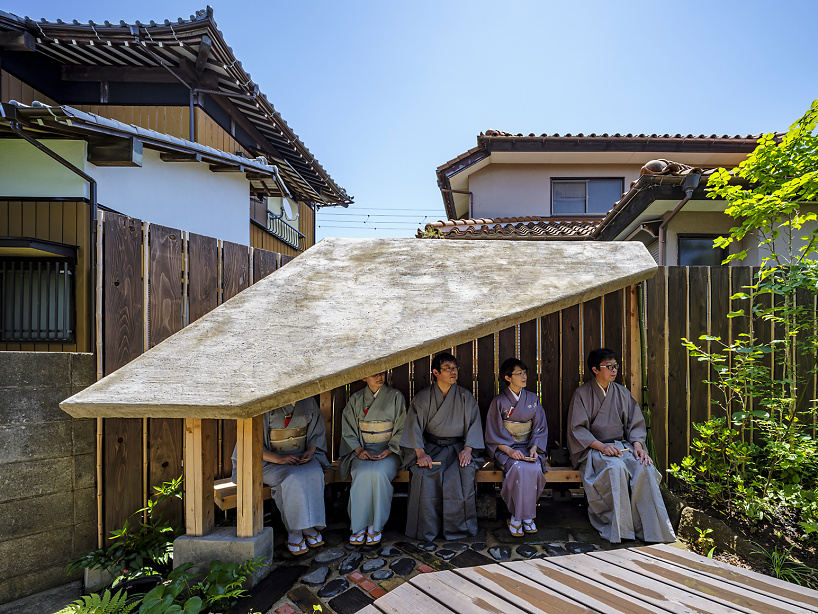
small waiting structure marking the approach to the Sekiyuan tea room
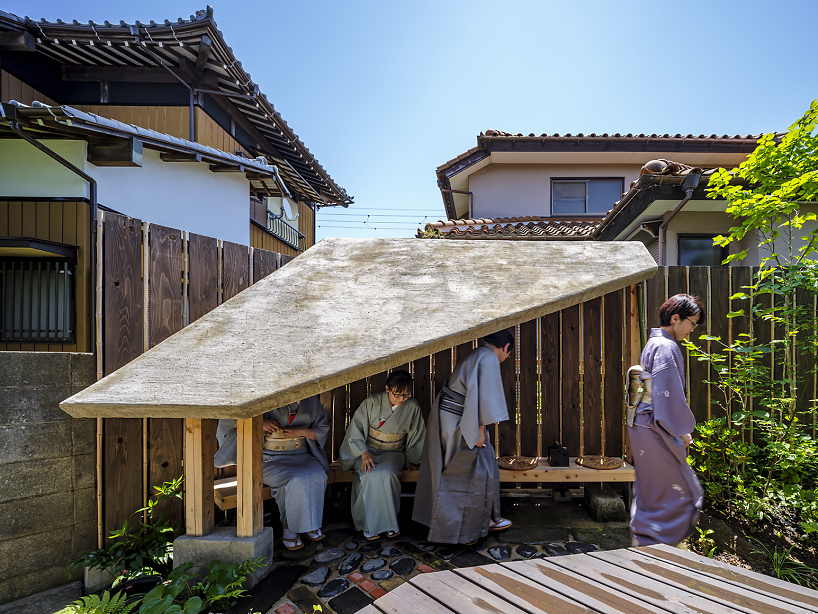
a single-slope roof supported at three key points