RCR sculpts a Dubai residence as a topographic network
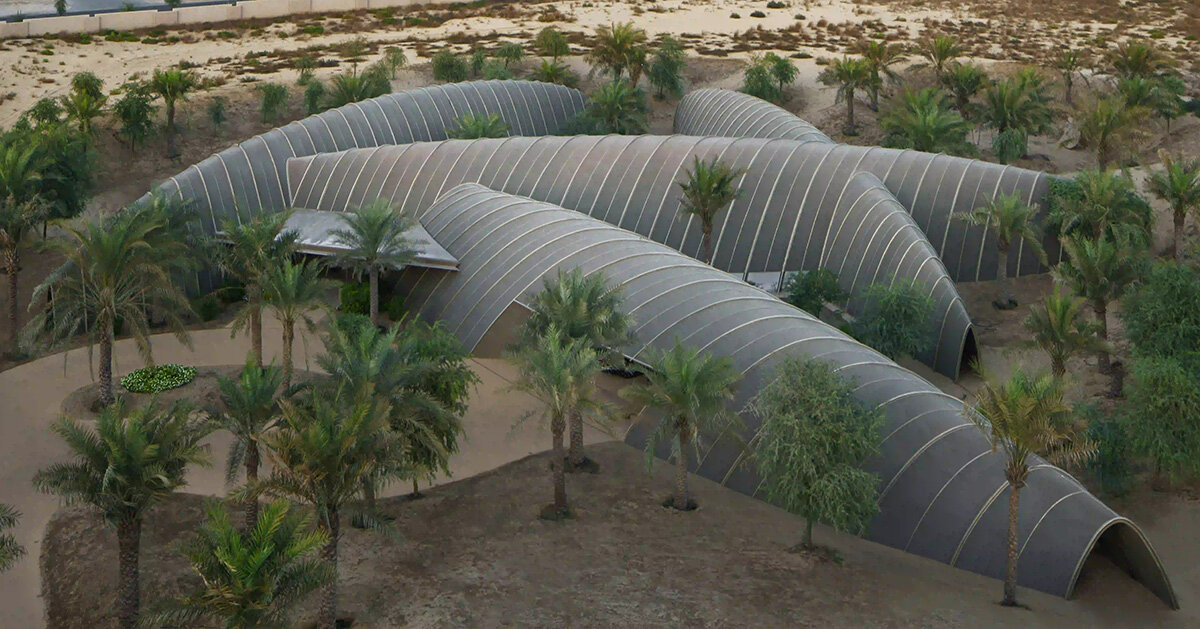
RCR Arquitectes has designed Alwah House, a 900-square-meter residence composed of a series of curved, shaded volumes that are partially embedded in the desert landscape on the outskirts of Dubai. Drawing inspiration from the natural forms of a flower and an oasis, the architects have carved a hollow into the sand to conserve water and support vegetation, establishing a microclimate where light, wind, shade, and filtered views shape the spatial experience. Viewed from above, the home appears as a cluster of ribbed shells gently rising among palm groves, while the interiors offer an exploration of non-orthogonal verticality and surprising spatial relationships.
Rather than displaying a single, unified façade, Alwah House is organized as an interconnected system of patios, passages, and enclosed rooms that wrap around an internal oasis. The surrounding topography is subtly sculpted to cradle these forms, moderating the desert heat and firmly rooting the architecture in its site.
images courtesy of RCR Arquitectes
Alwah House holds water, shade, and life
At the heart of RCR Arquitectes’ design is a sunken garden, creating a life-giving void within the desert context. Lush vegetation flourishes around a reflective pool, while the surrounding structures open selectively toward this oasis via slanted openings. The Spanish architects describe this central gesture as a crucible of life—a carefully controlled zone of moisture and greenery that contrasts with the arid environment outside. This micro-oasis generates a network of shade and moderates temperatures in the adjacent living areas.
On the exterior, the ribbed shells appear to emerge from the sands like petals in bloom. Their arrangement forms a sequence of shaded, canyon-like pathways that guide occupants from the harsh desert surroundings into cooler, protected interiors. As the volumes overlap, precisely spaced seams allow daylight to filter in, casting slender, dynamic shadows across the curved walls.

Alwah House is a cluster of ribbed, curved shells
Interiors shaped through non-orthogonal verticality
Inside, the house unfolds through a series of arched, slanted, and intersecting planes. RCR describes the interior as “an exploration of non-orthogonal verticality with unexpected relationships.” Arches create layered voids, angled perspectives, and moments where the structure feels almost sculpted from the earth. Soaring, tapering curves define spaces of compression and openness, while elongated clerestory windows bring in diffused natural light that grazes the surfaces throughout the day.
Rooms open at angles, revealing glimpses of the central oasis or secluded interior niches. Patios punctuate the layout, channeling air and light downward and forming outdoor spaces protected from direct sunlight. Circulation bends around these voids, at times narrowing into intimate passageways, and at other moments expanding into generous courtyards and communal halls. This interplay between seclusion and openness creates a rhythmic sequence of refuge and exposure, drawing on the traditions of desert architecture but expressed through a distinctly contemporary approach.
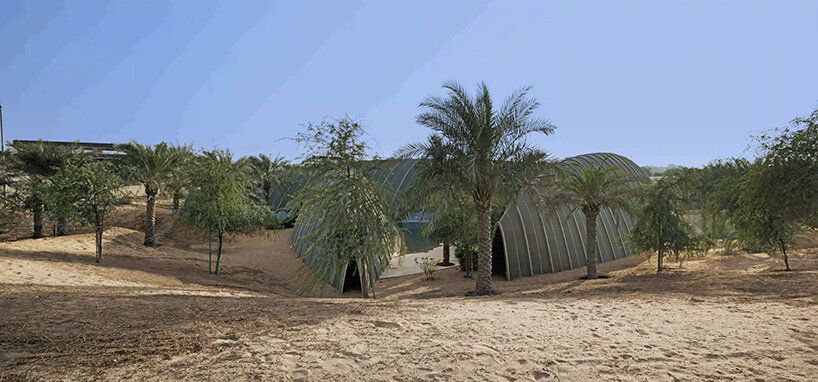
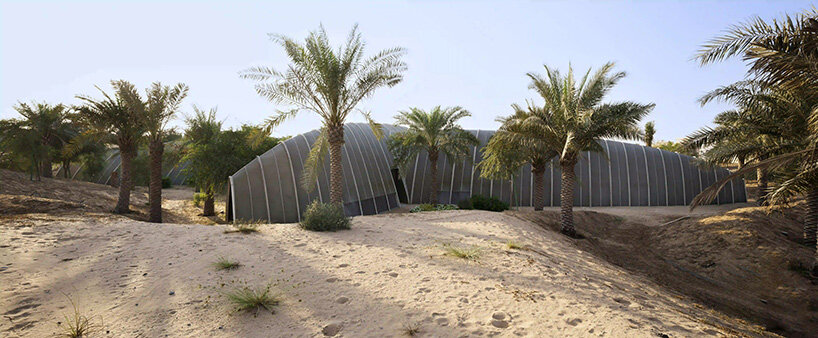
embedded in Dubai’s desert terrain
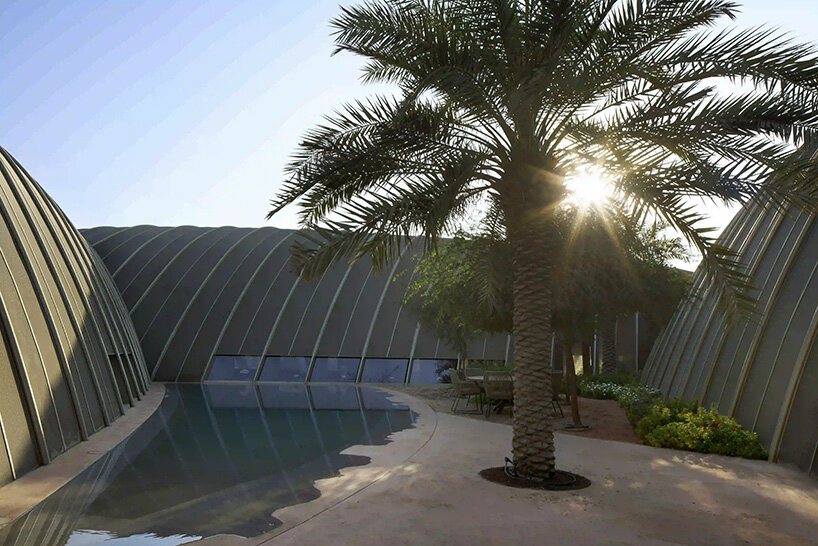
the curved rooflines rise subtly above the terrain
<img decoding="async" class="wp