the Louvre reveals the winners of its redesign competition
Nearly seven months after France’s Ministry of Culture revealed the five finalist teams competing to transform the Louvre Museum, the institution has officially selected its winning proposal. As part of the ambitious Louvre – Nouvelle Renaissance initiative (find designboom’s previous coverage here), STUDIOS Architecture and Selldorf Architects have been named laureates of the international Grande Colonnade competition, tasked with reimagining the museum’s eastern entrance and visitor experience nearly forty years after Ieoh Ming Pei’s iconic pyramid reshaped the Louvre.
Announced by French Minister of Culture Catherine Pégard, the winning team was selected from a shortlist that also included proposals by Diller Scofidio + Renfro, SANAA, Sou Fujimoto, and Amanda Levete Architects (AL_A). The jury praised the proposal for the quality of its architectural vision and its ‘sensitive urban, heritage, and landscape integration,’ citing its clarity of circulation, restrained intervention, vegetation strategy, and attention to visitor comfort and security.
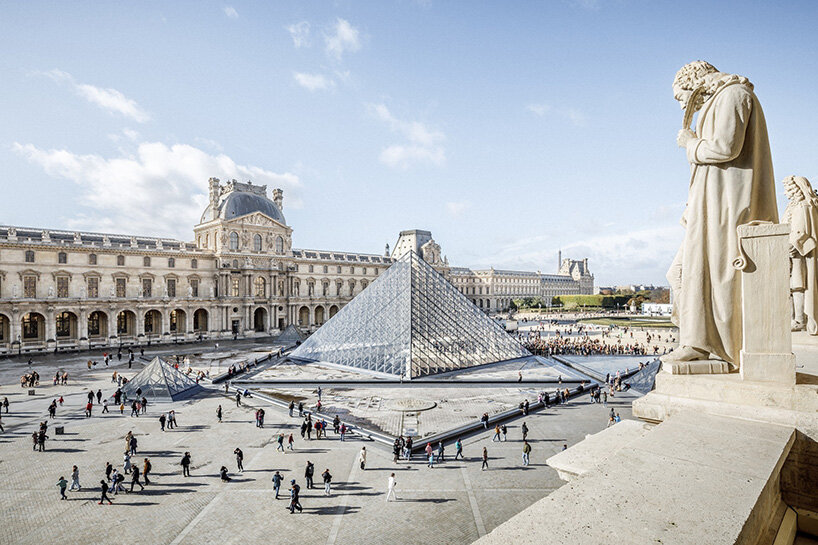
reimagining the most visited museum in the world | image courtesy of Musée du Louvre
reconnecting the Louvre with paris
The proposal focuses on reopening the Louvre’s historic eastern facade through the Grande Colonnade, restoring its relationship with the city while creating new public entrances and circulation routes designed to ease congestion at the pyramid. Structured around the museum’s historic east-west axis, the scheme introduces a sequence of landscaped public spaces stretching from Saint-Germain-l’Auxerrois toward the Colonnade and the Cour Carrée beyond. A large belvedere overlooking the Louvre facade and newly vegetated moats creates a contemplative public platform, while two symmetrical ramps descend gradually into the fossés below.
Partially sheltered within the stone retaining walls, these pathways guide visitors toward two new underground museum entrances located on the Seine and Rue de Rivoli sides of the palace. Integrated beneath the ramps, the architects introduce new dining, bookstore, and retail spaces accessible from the moat level, balancing planted areas with mineral surfaces to improve thermal comfort and create shaded public environments. The underground extension also connects visitors to new exhibition areas and a dedicated viewing route for the Mona Lisa, intended to redistribute the overwhelming visitor concentration currently focused on the Denon Wing.
the shortlist announced marks a milestone in Louvre’s transformation | image courtesy of Musée du Louvre
Nouvelle Renaissance reimagines the museum’s visitor experience
Announced by Emmanuel Macron in January 2025, Louvre – Nouvelle Renaissance represents a vast scientific, cultural, architectural, and environmental undertaking. The project envisions a renewal of the museum’s infrastructure and the creation of new spaces and access points that will redefine how visitors experience the Louvre.
The first component, titled Louvre – Grande Colonnade, focuses on creating new public entrances through the eastern section of the palace, restoring the original intent behind Louis XIV’s monumental facade.
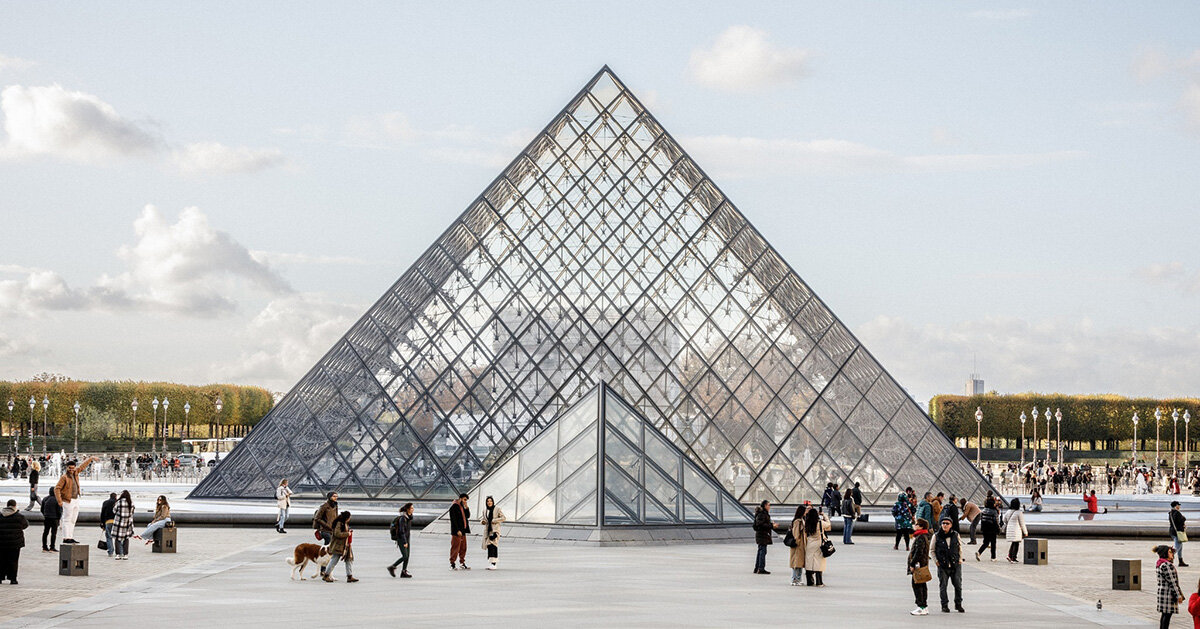
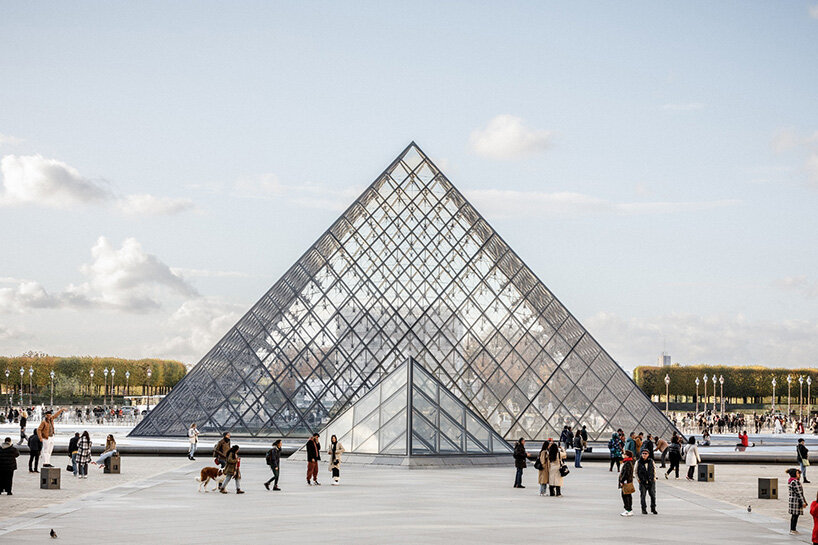
These new access points will ease congestion at I. M. Pei’s glass pyramid and improve circulation throughout the museum, while offering visitors a more comfortable and inclusive welcome. Beneath the Cour Carrée and the surrounding gardens, a new underground expansion will introduce an additional museum wing, including a dedicated gallery for the Mona Lisa. This so-called Parcours Joconde aims to recontextualize Leonardo da Vinci’s masterpiece and to redistribute the intense flow of visitors that currently converges on the Denon Wing.
A new grand exhibition hall will also be built, enabling the Louvre to host larger and more varied temporary shows and strengthening its role as a contemporary cultural venue. The broader aim is to reconnect the museum with its surrounding urban landscape, from the moats of the Grande Colonnade to the facades overlooking Place du Louvre.
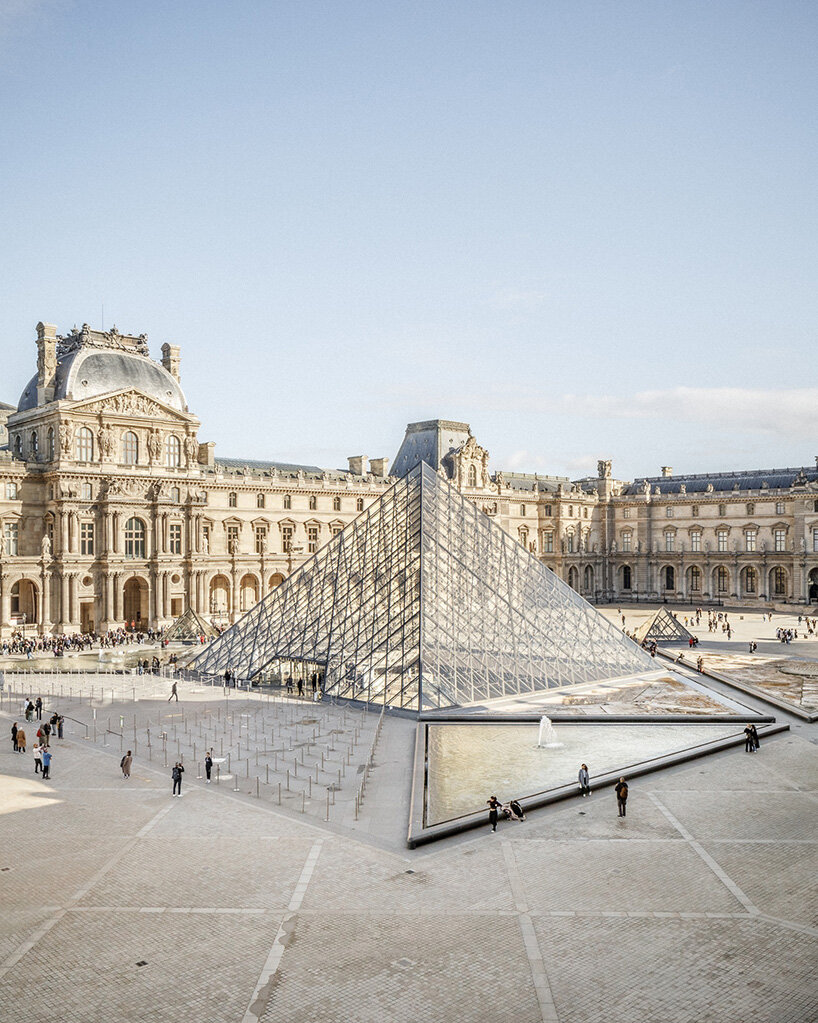
Nouvelle Renaissance represents a vast undertaking | image courtesy of Musée du Louvre
preserving heritage while building for the future
The second component, Louvre Demain, introduces a long-term masterplan for renovating the infrastructures and technical systems of the museum, ensuring that the monumental site meets 21st-century standards of sustainability and accessibility. The architectural interventions will be carried out under the supervision of François Chatillon, Chief Architect of Historical Monuments.
Through Louvre – Nouvelle Renaissance, the museum seeks to balance historic grandeur with contemporary needs, expanding the legacy of Pei’s Grand Louvre project of the 1980s and 1990s, which transformed the Cour Napoléon and Richelieu Wing but left the eastern facade largely untouched. The initiative sets out to complete that vision, reuniting the classical architecture of the palace with the city that surrounds it.

redefining how visitors experience the Louvre | image © Franck Bohbot

a new grand exhibition hall will also be built | image © Franck Bohbot
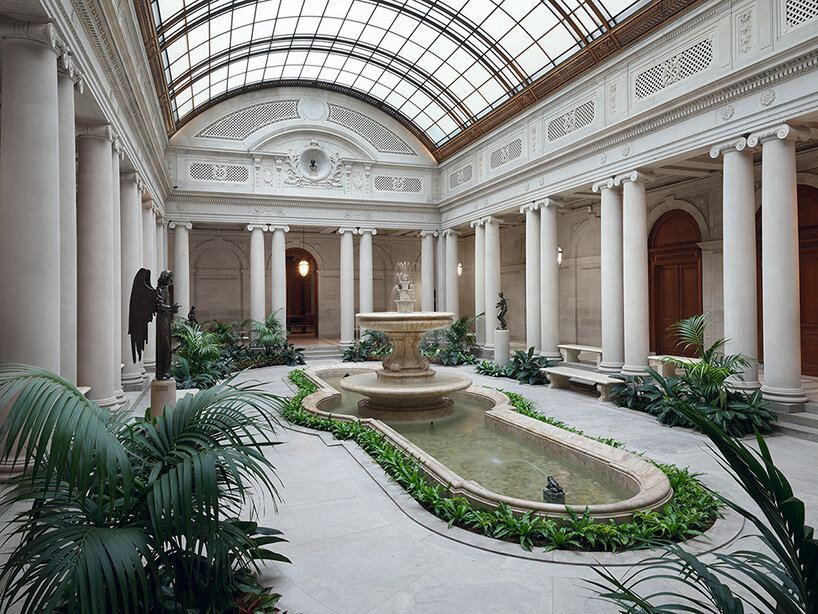
Garden Court, The Frick Collection, New York, led by Selldorf Architects | image © Joseph Coscia Jr.
project info:
name: Louvre – Nouvelle Renaissance
location: Musée du Louvre | @museelouvre, Paris, France
architect: STUDIOS Architecture | @studiosarchitecture with Selldorf Architects