Bureau Farm built the skate park and streetball court Alice Milliatt Farm
Located along a railway line at the end of the Avenue des Merces du Parc in Vincennes, Francejointly introduced by Bureau Pharma’s project Sports facilities Integrating urban wheeled subjects with a multi-purpose court. Positioned alongside the Vincennes ‘Dome’ swimming complex, the site represents the final phase of a wider Restoration of former railway land. Initially earmarked for a pedestrian bridge, the plot remained unused until the PEMB Authority assigned it for a sports program serving the neighborhood.
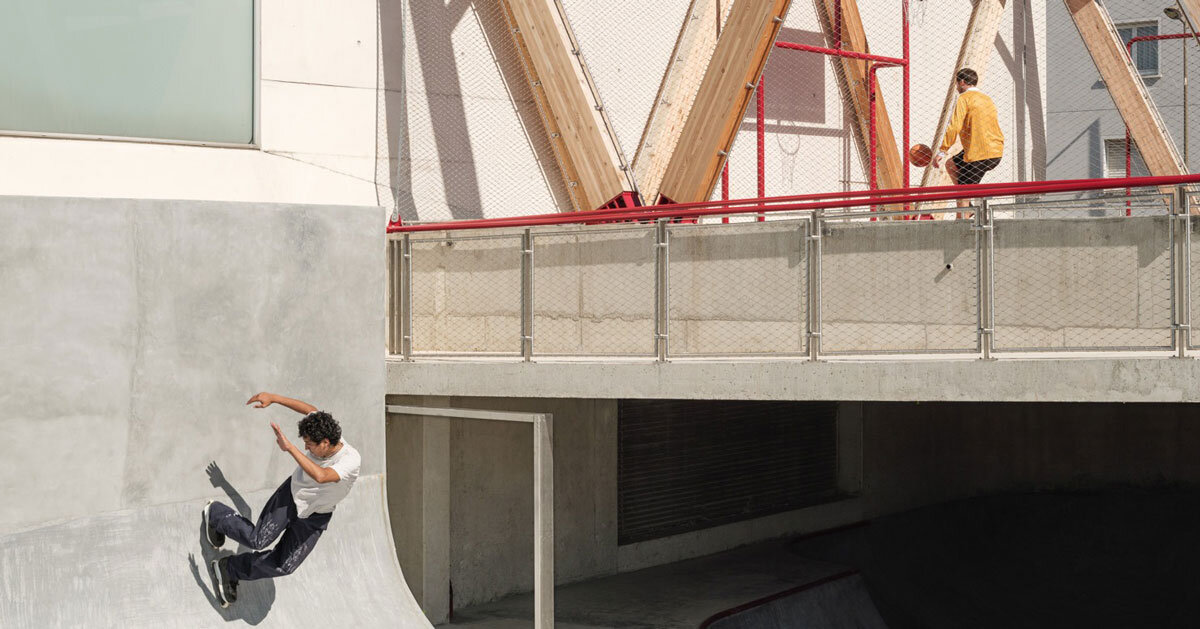
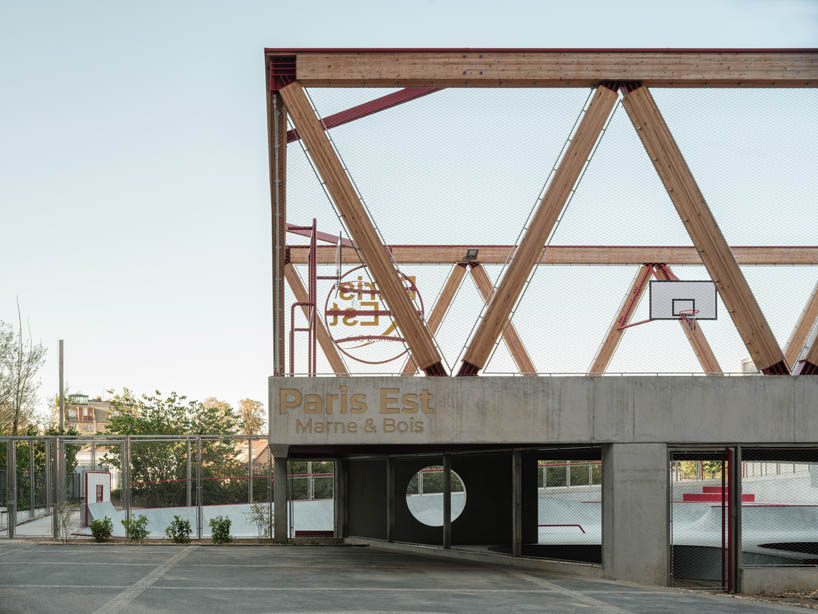
The primary design challenge was to incorporate three distinct functions within the limited footprint while maintaining harmony with the surrounding urban context. The answer is structured through three spatial strategies. First, the sports court is attached to the existing building frontages, completing the urban continuity of the street. Raised three meters above the ground, it creates an open area of shelter below. Second, a perimeter ramp provides universal access to the elevated court and defines a one-wheeled sports circuit to integrate features for roller skating, Skateboardingand BMX riding. Under the upper platform, a safe bowl, unusual in the area, allows for year-round use. Third, the building setback creates space for a rain garden, improving environmental performance and supporting on-site water management.
All photos by Jaime Maloney
An integrated ramp connects the skate park and the cantilevered court
The site constraints required the vertical stacking of two programs: a multi-sports court above and a skate park below. This arrangement creates a special local condition, including shelter. The only element visible from the cul-de-sac, the elevated court extends the street frontage and forms a cantilever that signals the facility’s identity and entry. By design Architectural practice Bureau Form aims to create a functional yet adaptable environment, where lines, slopes and volumes support a range of uses, from intense physical activity to relaxation or viewing. Features such as low walls, stepped platforms and ramps provide opportunities for self-circulation, gathering and informal occupancy. These elements allow the facility to accommodate different modes and usage patterns over time.
The project also connects to Vincennes’ network of local associations involved in cultural and sporting activities, providing an additional venue for daily participation and social events. This relationship embeds the facility in its immediate social context rather than treating it as a stand-alone structure. Access requirements are addressed by a permanent ramp, avoiding the need for an external lift. The path connects the ground level to the court while integrating skate park elements into its geometry. Along the climb, users encounter various configurations: guard rails that act as coping bars, holes for rest points, and surfaces that support the rider. The gradual rise offers views of both the multi-sports court and the skate park below. Beyond its technical components, the project contributes to the organization of public space by establishing clear pathways, shared spaces and collective activity areas. Through these strategies, the facility supports mixed use, overlap between different user groups, and flexible occupancy patterns in an urban setting.
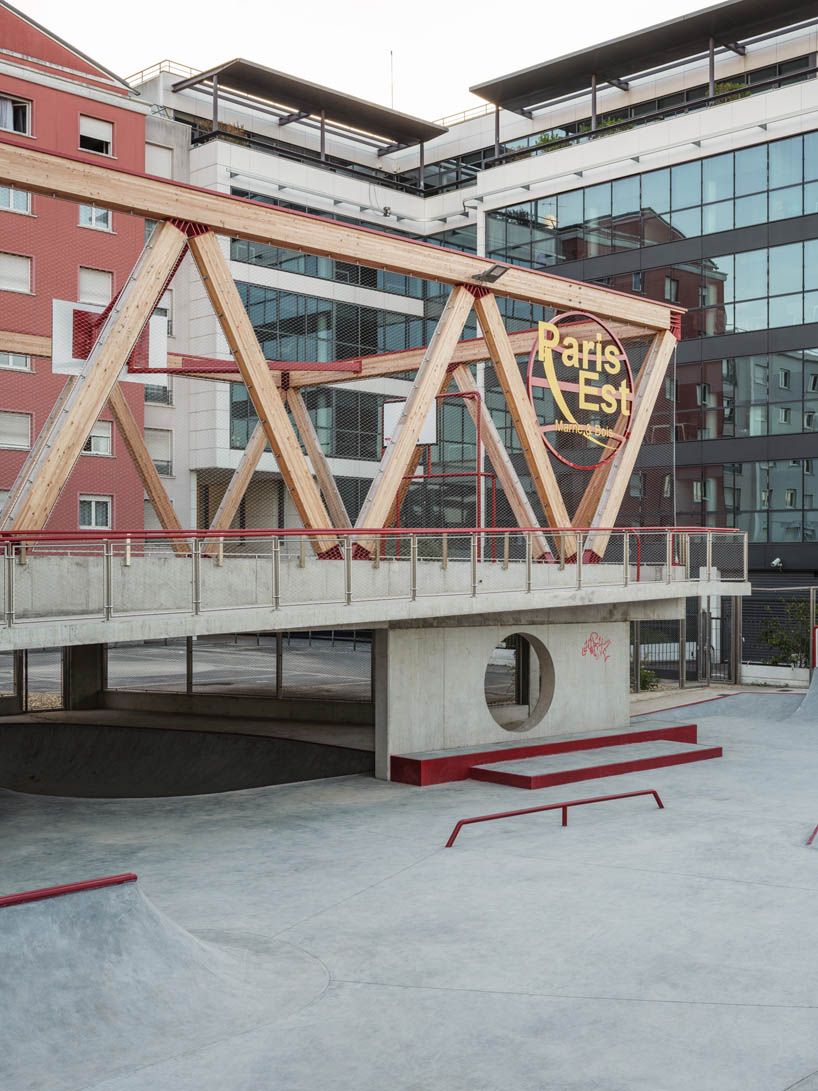
Shared wheeled sports and multi-purpose court at Vincennes
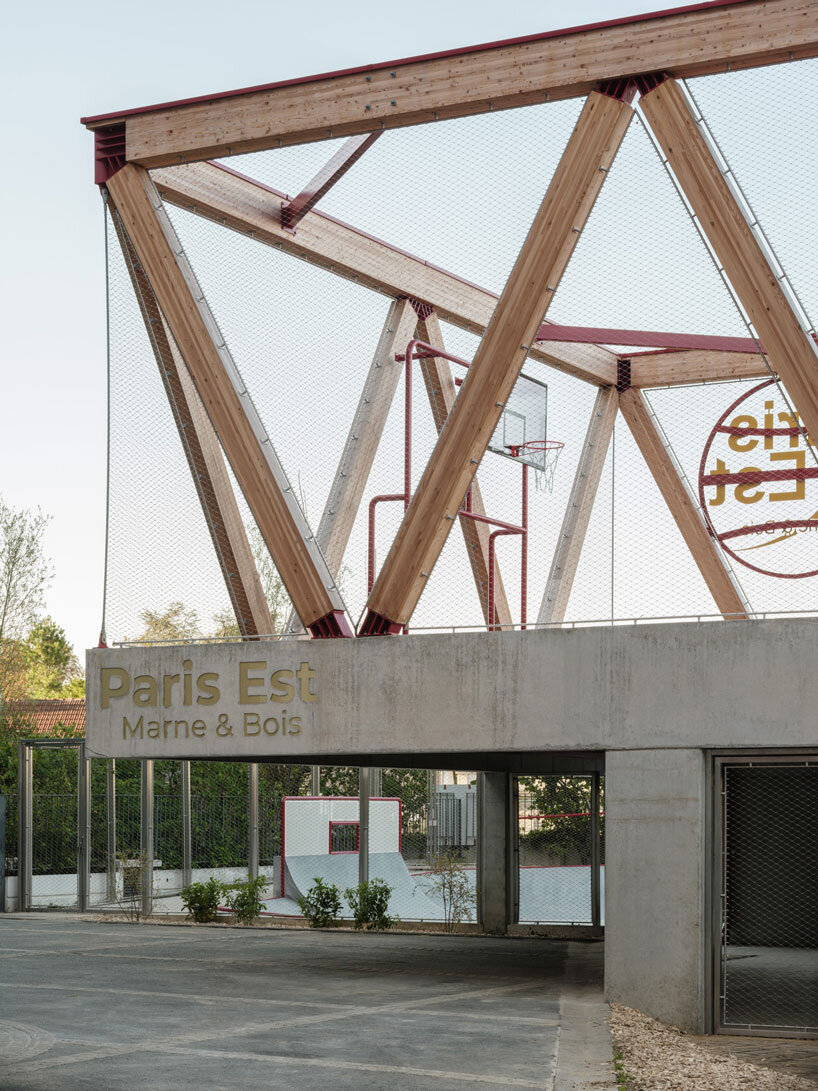
The facility sits along the railway line