
STOCK PHOTO
Florida’s homeowners associations have become ground zero for two converging trends: some of the highest costs in the country and growing discontent with how they are run.
Florida has more than 50,000 community associations — more than any state except California — and an estimated 45% of homes are part of HOA-governed communities, according to the Foundation for Community Association Research.
Those costs are increasingly significant. HOA homes now make up 64.6% of listings in Florida, and the state dominates the nation’s most expensive metro areas for HOA fees, with seven of the top 10, according to Realtor.com.
While HOA fees are rising nationwide, Florida’s are increasing sharply due to unique factors: climate-related insurance costs and legislative reforms requiring condominium associations to build reserves following the 2021 Surfside condo collapse.
“Florida is a clear outlier when it comes to HOA costs,” said Joel Berner, senior economist at Realtor.com. “Between rising insurance premiums and stricter safety and reserve requirements, many associations are facing higher operating expenses that ultimately get passed on to homeowners.”
A Realtor.com report shows South Florida’s HOAs are among the most expensive in the country.
Miami-Fort Lauderdale-West Palm Beach tops the list, with a $425,000 median listing price for an HOA home and a $617 median HOA fee. The fee accounts for 26.9% of the monthly mortgage payment — the highest rate nationwide.

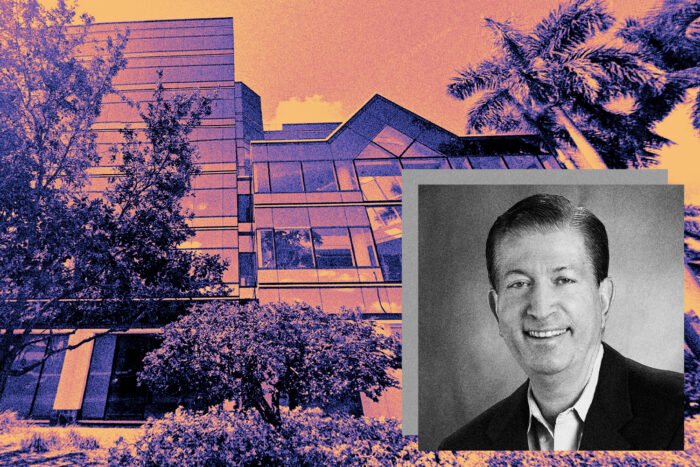
Blair White is a licensed Realtor with John R. Wood Christie’s International Real Estate. -COURTESY PHOTO
Naples-Marco Island ranks third, with a $648,000 median home price and a $711 median HOA fee.
Cape Coral-Fort Myers ranks fourth, with a $450,000 median home price and a $475 median HOA fee.
Other Florida metros on the list include Panama City (second), Port St. Lucie (fifth), North Port-Bradenton-Sarasota (seventh) and Vero Beach (ninth).
Blair White, a Realtor specializing in the Naples market, said while amenities — such as resort-style pools, fitness centers, golf and concierge services — are an important factor in HOA and condo fees, the “biggest drivers today are insurance costs, reserve requirements and ongoing maintenance to ensure long-term structural integrity and longevity of these properties.”
White said his Naples clients typically will accept high fees in exchange for what an HOA offers.
“A large portion of our clientele owns second, third or even fourth homes. The last thing they want is the burden of maintenance,” he said. “They are willing to pay for convenience, security and a turnkey lifestyle. Naples is one of the most affluent markets in North America, and our homeowners expect a certain level of quality and service. They understand that lifestyle comes at a cost, and they are comfortable with that tradeoff.”
Beth Rappaport, vice president of business development for Campbell Property Management in Boynton Beach, said HOA amenities are often provided through long-term contracts — such as landscaping, TV and internet — that drive up monthly dues. Property values are also a key factor.
“The real estate values in Palm Beach are incredibly high,” she said. “There is no such thing as affordable housing in Palm Beach County anymore. Most people couldn’t afford to buy the home that they’re presently living in at today’s rates. And so all of those things go hand in hand with what it costs to operate the association.”
HOA fees are increasingly part of the cost of buying a home. According to Realtor.com, nearly 44% of homes for sale nationwide in 2025 carry HOA fees, up from 34.3% in 2019.
The median HOA fee reached $135 in 2025, up from $125 in 2024 and $108 in 2019.

HOA Fee Chart. -REALTOR.COM
“HOAs are no longer confined to condos or brand-new developments,” Berner said. “The HOA-heavy construction boom earlier in the decade is now filtering into the existing-home market, and many of those newer communities were built with shared amenities, private roads and common spaces that require ongoing maintenance. At the same time, rising insurance costs, stricter building safety standards, and higher labor and material prices are pushing associations to raise dues, making monthly HOA fees a much more common — and more costly — feature of homeownership than they were even a few years ago.”
HOA homes are typically newer, larger and more expensive:
- The average HOA home was built in 1998, compared with 1968 for non-HOA homes.
- Single-family homes with HOA fees have a median size of 2,306 square feet and a median price of $216.76 per square foot. Non-HOA homes have a median size of 1,818 square feet and a median price of $205.10 per square foot.
- The median price for a home with an HOA is $450,000, compared with $374,900 for a home without one.
Legislative session: ‘Much ado about nothing’
With HOA costs among the highest in the country, residents are increasingly questioning not just what they pay, but who makes the decisions.
Several bills aimed at HOA reform were introduced during the recent state legislative session, but little materialized that would give residents hope of relief.

Beth Rappaport is vice president of business development for Campbell Property Management in Boynton Beach. -COURTESY PHOTO
“It was much ado about nothing,” said Rappaport, also a representative for the Community Associations Institute’s legislative arm, the Florida Legislative Alliance. “It was a session filled with attention-getting headlines, and at the end of the session, there really wasn’t much that came to fruition.”
The most significant proposed measure was House Bill 657, which would have allowed homeowners to terminate their HOA. Depending on how an HOA is structured, dissolution could shift the burden of maintenance to local governments, special districts or a master association.
While the bill passed the House, no companion measure advanced in the Senate.
Rappaport said the bill failed to gain support, in part, because of redundancy.
“There are already ways in place for people to dissolve their HOA,” she said. “And the bill probably would have created more problems than it solved, because there were a lot of questions that weren’t answered — like, if you have private roads and you dissolve your HOA, who now owns and maintains those roads?”
Many municipalities — already facing the possibility of Florida repealing property taxes — don’t want to assume that burden.
“It was just really bad timing,” Rappaport said.
Rep. Juan Carlos Porras, R-Miami-Dade, introduced the bill in response to a corruption scandal at the Hammocks, a massive Miami-Dade community where board members and associates were accused of siphoning millions of dollars through fake vendor contracts.
The bill also would have allowed HOA disputes to bypass mediation and go directly to court. Circuit courts would have been required to create community association programs.
Rappaport said that would have created unnecessary and costly steps, as most judges would likely still order mediation.
“So you’ll end up in the same place as you would have been, but now you’ve just spent a lot more money,” she said. “And then, of course, the local judicial circuits really didn’t have an appetite for creating a new division.”
Rappaport said CAI-FLA had hoped little would happen this session, giving the industry time to “catch its breath” after a wave of new requirements in recent years.
“I do believe that it’s a small but loud minority,” she said of residents pushing for sweeping reforms. “Living in an HOA is a choice. And people choose to live in HOAs for certain reasons, and I think that most people generally are very happy with that choice.”
New condo lending rules: higher fees?

STOCK PHOTO
While state lawmakers did little to address concerns from some HOA residents, mortgage giants Fannie Mae and Freddie Mac in March announced new requirements pushing condo associations to increase reserves, proposing to raise the baseline funding requirement from 10% to 15% of annual budgets — a 50% increase.
Rappaport said the change will likely result in higher fees.
“This now mandates that associations follow the highest recommended funding level, and so this is going to be really hard for people,” she said. “Not just people on a fixed income, but anyone, because more money will have to be collected and placed in reserves.”
In the wake of the Surfside collapse, both entities tightened lending standards, making it harder for buyers to obtain mortgages in buildings with deferred maintenance, insufficient reserves or pending repairs.
“In some cases, reserve requirements are also influencing condo fees,” White said. “Rather than issuing a special assessment, some communities are choosing to increase monthly fees to bring budgets in line with new requirements and ensure buildings are properly funded and maintained over time.”
Fees are rising faster on the condo side due to higher insurance premiums — especially for coastal properties — and a stronger focus on structural integrity and long-term maintenance tied to new inspection laws.
“This has led associations to be more proactive in planning for future repairs,” he said.
White said concerns about rising fees and reform do not appear to be influencing buying decisions.
“Most of our clients are looking for a hands-off ownership experience with amenities at their fingertips,” he said. “Their priority is ease and convenience, not involvement in governance. At this level, time is the most valuable asset, and they are willing to pay to protect it.”