Line+ Unveils the Multi-Functional Chinching Globular Center
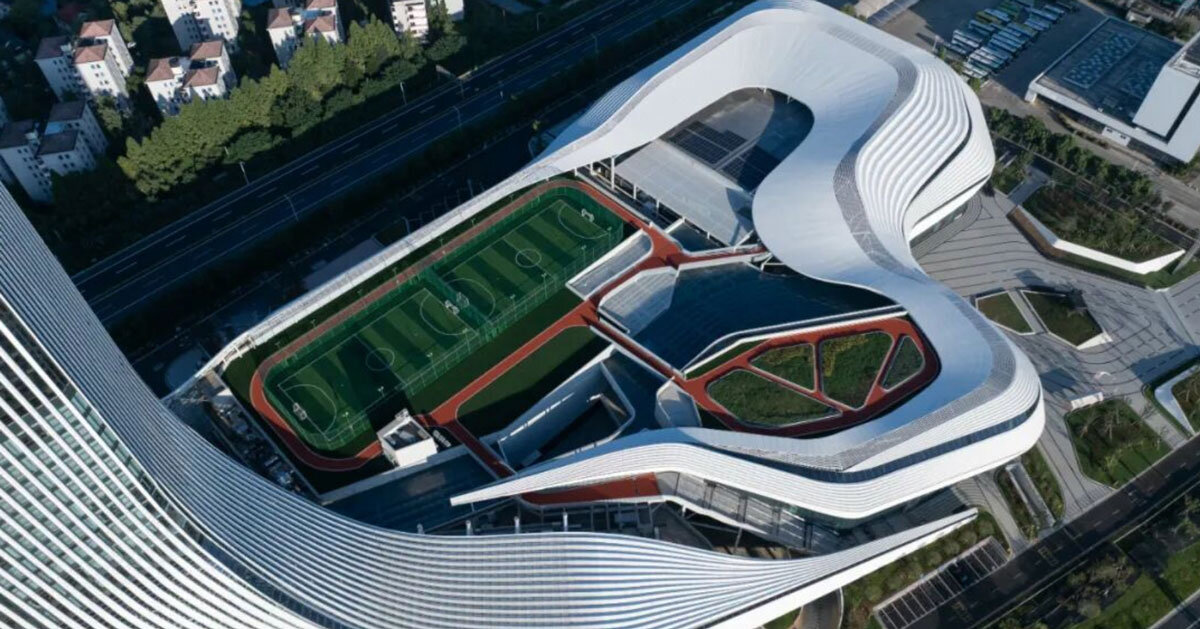
Xinjiang Global Center in Jiang Province, Chinadesigned by Dr. Zhou Pedong and team Line+ Studiohas been completed and opened to the public. As one of the province’s key ‘4+1’ mega projects, the facility is envisioned as not only a traditional event-driven Stadium But as a mixed-use ‘sports mall’ that connects Athleticfor , for , for , . commercialand public programs within the same operational framework. The building meets the professional standards of international competitions while serving as a year-round activity hub for local residents.
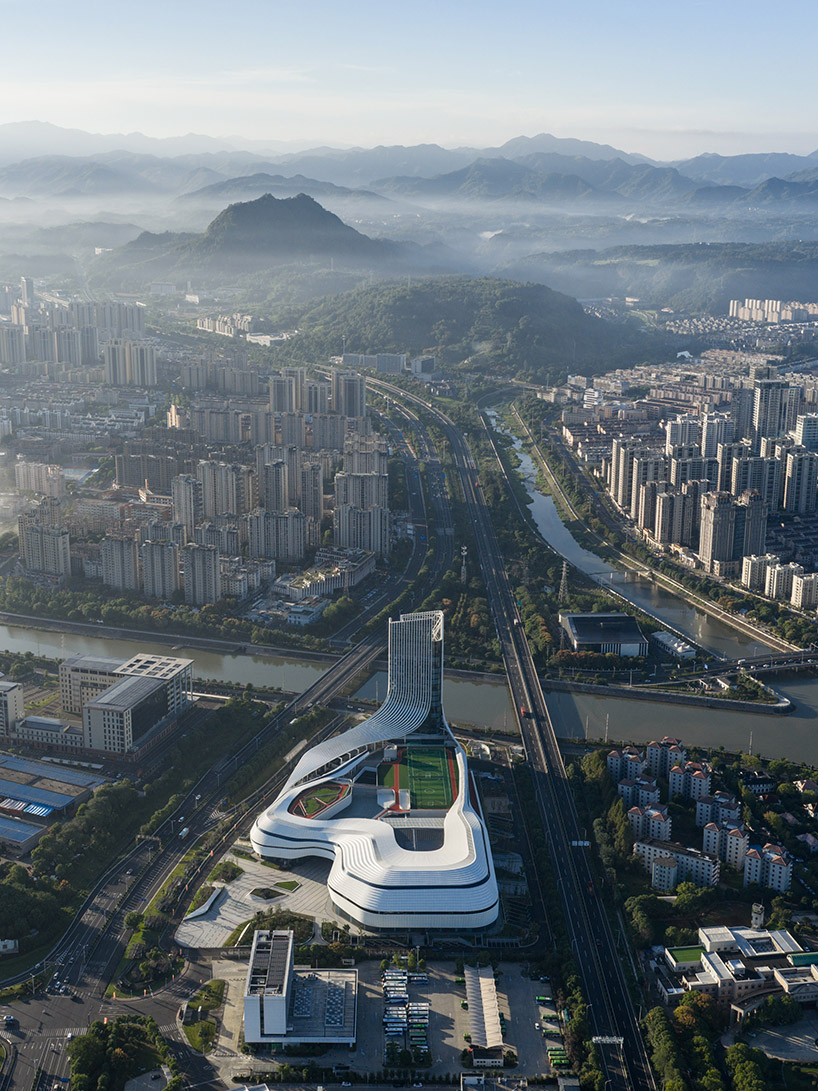
Standing along the northern development axis of Xincheng near the new high-speed rail station, the project occupies a site previously reserved for infrastructure and is surrounded by former industrial buildings. The design revitalizes the area by introducing a 120,000 square meter complex that supports professional events and everyday community use. Given the scale of the project, comparable to the city’s major sports venues, the design strategy goes beyond hosting competitions to establishing a sustainable operational model for the city.
The ‘sports mall’ model addresses common challenges in venue utilization, particularly in county-level cities where irregular program cycles can lead to high operating pressures. The design integrates exhibition functions around dining, retail, entertainment, hospitality, and sports as core programs. This allows the facility to support large-scale events while maintaining consistent foot traffic and public engagement throughout the day.
All photos by Chin Eleven Studio, Line+
Define functional stacking and flexible planning layouts
Architectural team Organized spatial layouts in Line+ Studio following three interrelated principles. First, the design prioritizes normalization, ensuring that spaces support daily fitness, leisure and regular public use rather than relying solely on large events. It is underpinned by a functional mix in which commercial and social programs complement the athletic facilities and address the gap in surrounding civic amenities. Finally, this strategy enables a high degree of operational flexibility, allowing the building to transform between professional competitions, large public events, performances and everyday civic activities.
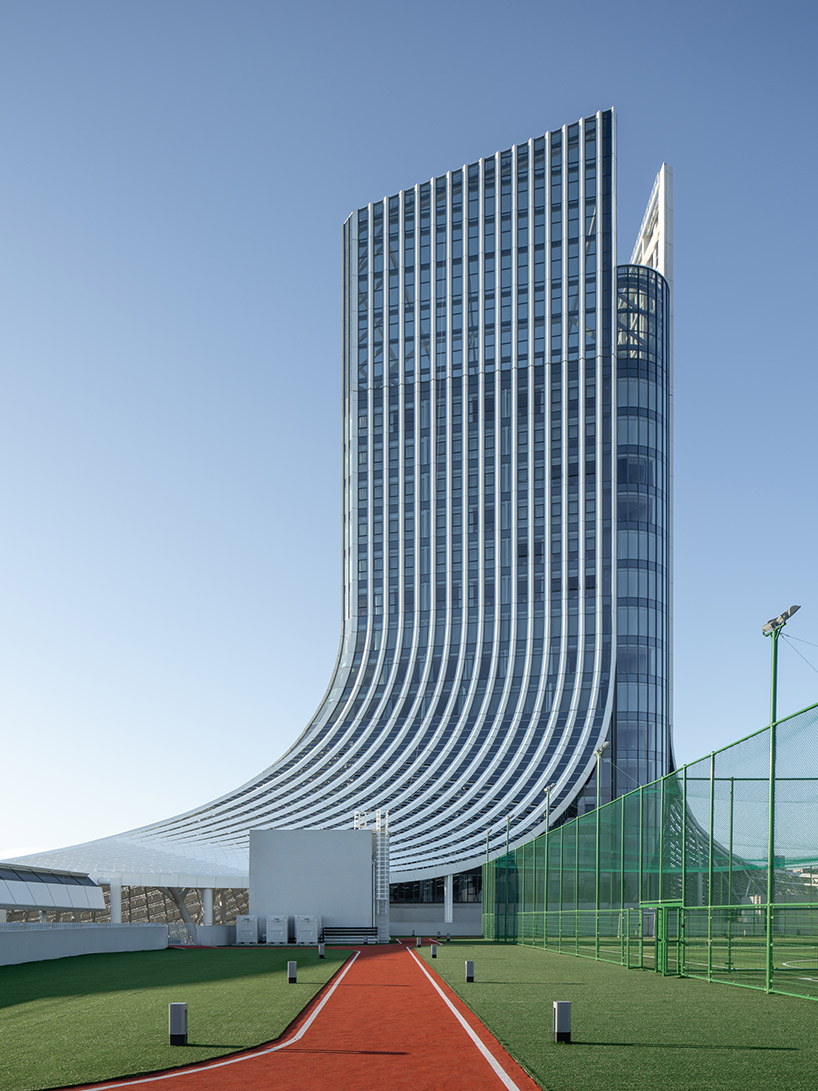
A compact site requires dense functional stacking. The facility includes a 5,000-seat gymnasium, multiple small ball training halls, commercial spaces, a ballroom, and a 19-story athlete hotel. A new vehicular ramp connects the national highway directly to the site, while internal circulation separates hotel, logistics, event and public flows. A central public access zone to the north connects directly to the gymnasium, training halls and plaza. The hotel occupies a quiet south bank facing the river. Five large volumes, the main gymnasium, the smaller ball hall, the training hall, and the hotel, serve as an urban street entered through a central atrium. Retail and dining elements line this axis, connecting the north and south entrances and ensuring constant activity.
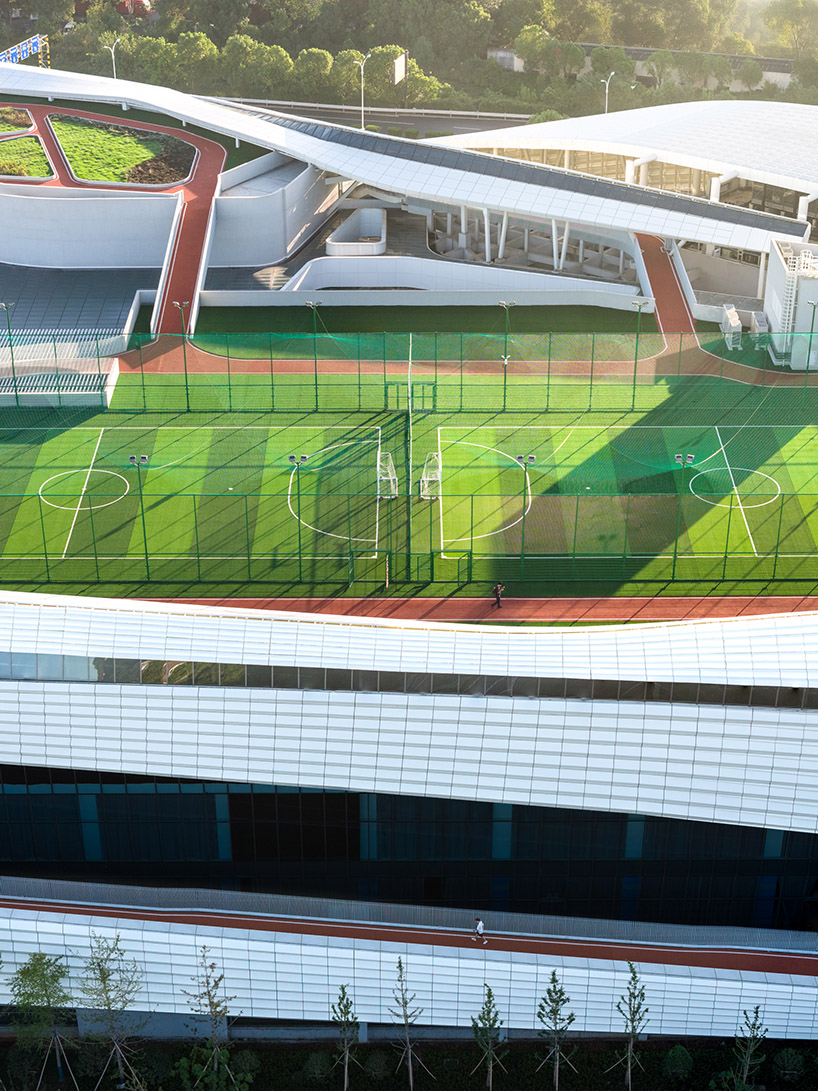
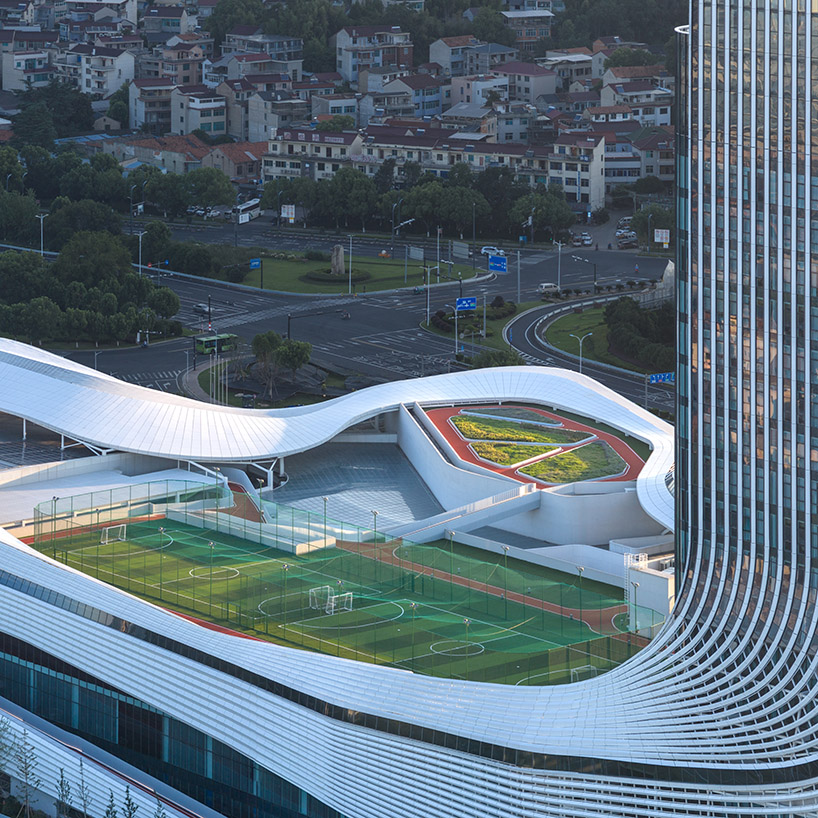
As different sports demand clear, distinct heights and floor layouts, the design adopts a ‘flexible grid’ system that enables each hall to be reconfigured for multiple event types. The main gymnasium, which measures approximately 16,000 square feet, can be converted to host 12 badminton courts, three basketball courts, 14 table tennis courts, or a single tennis court, and includes 5,000 retractable seats. The 7,900 square meter training hall has space for 24 badminton courts or two tennis courts and includes a basement-level gym and four-lane pool. A dedicated 6,100 square meter table tennis hall offers dual height spaces for both table tennis and badminton training. Binding the entire complex together, a continuous roof spans all volumes and is programmed with a football field, running track, and viewing platform, accessible at all hours through a network of external ramps.
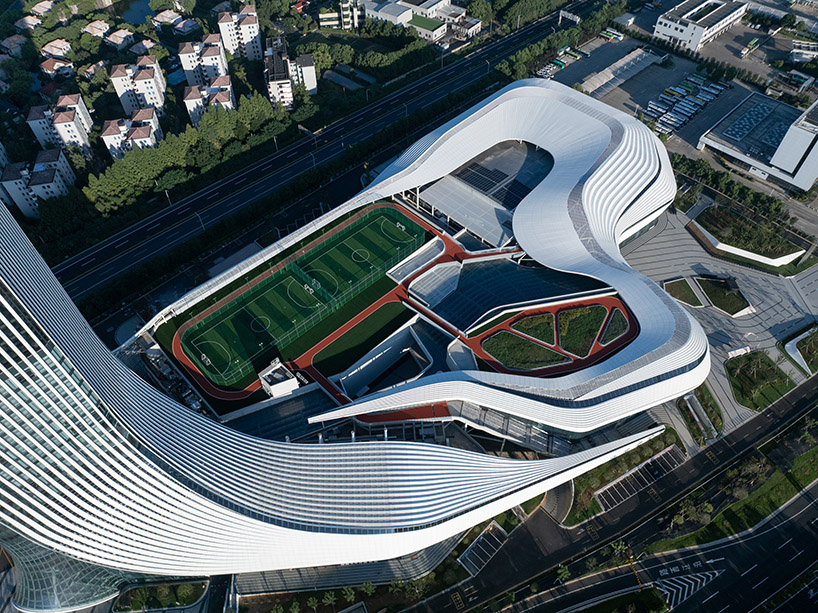
Architecture inspired by the landscape anchors the sports hub of Xincheng
The architectural expression refers to the landscape character of the region, drawing from the shape of the mountain and the movement of water. A continuous massaging strategy and horizontal rhythm define the waterfront interface, while the hotel tower forms a new vertical marker on the city’s northern skyline. Perforated aluminum panels and metal grills create different lighting conditions during the day and create a luminous presence at night. Massive trusses and a frame-core-tube structural system allow for flexible interior volume while maintaining architectural efficiency. The main gymnasium covers an area of 75.9 m. The training hall spans 30–36.5 m, depending on program requirements.
Since opening, the Xinjiang Global Center has hosted major domestic competitions, including the China Badminton Masters and the National Table Tennis Championships, and will host an international snooker event in 2025. The center supports a regular schedule of weekly and monthly events, with attendance exceeding 220,000 and reported significant economic impact. Combining sports, leisure and commercial functions under one roof, the project functions as a permanent urban system rather than an event-specific venue. It demonstrates a scalable model for cities seeking to integrate competitive sports infrastructure with broader urban development goals.
https://www.youtube.com/watch?v=U84ndihfn7y