‘waterhouse’ nestled among Quebec’s ferns and wildflowers
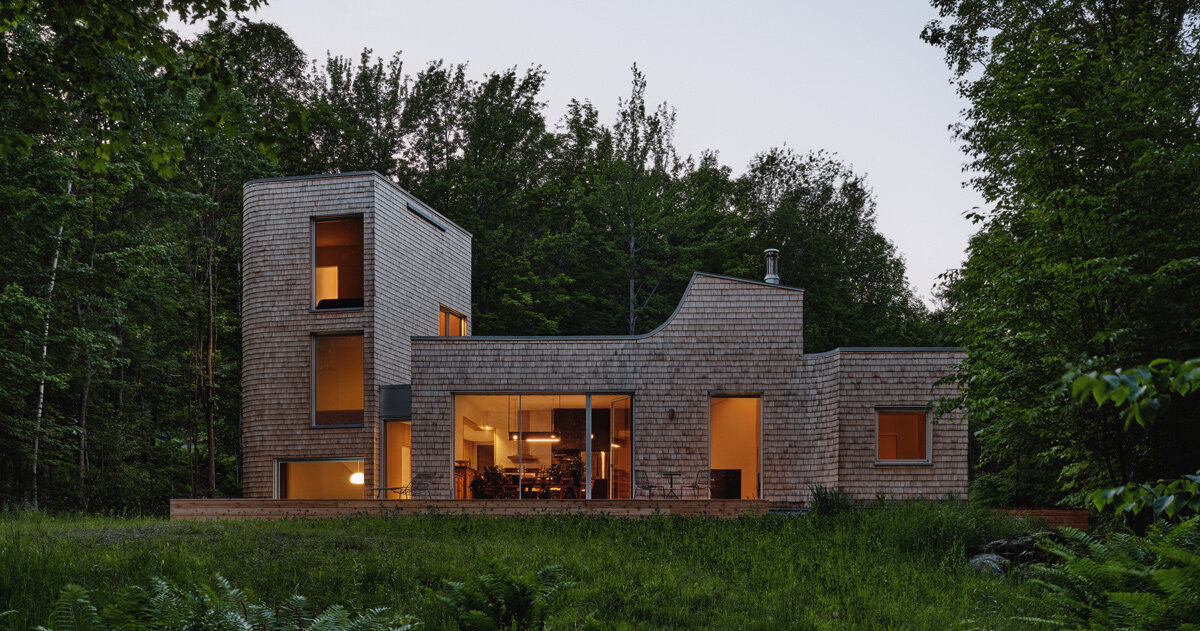
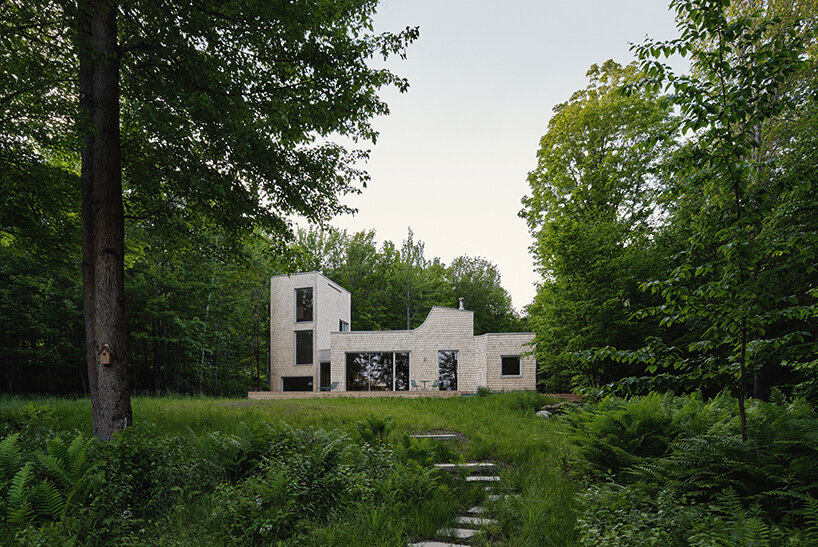
Quebec-based architecture firms Oyama and Julia Manaças Architecte have realized the Waterhouse project within a forest clearing in Canada. This residence is conceived as a thoughtfully arranged cluster of three distinct volumes, each responding to its specific function and the natural contours of the site.
During the team’s initial site visit, they were struck by the lush presence of ferns, wildflowers, scattered boulders, and undulating terrain. These elements became foundational to the home’s design approach. The early planning was guided by a desire to create a single-family dwelling that would comfortably support daily living for one resident while also welcoming family and guests for extended stays.
images © Alex Lesage
Oyama and Julia Manaças’ cluster of volumes
Julia Manaças Architecte and Oyama have orchestrated the Waterhouse’s collection of forms so that the first element encountered from the road is the solid, windowless wall of the Atelier. Inside, a pyramidal ceiling crowns a workshop and winter parking area, with a mezzanine above dedicated to storage. This geometry creates a quiet, grounded façade along the approach to the entry.
To the right, a Tower rises across three floors, each level containing a guest bedroom and bathroom. The lowest floor is partially embedded in the earth, offering an office with a unique perspective at ground level. A footbridge connects this tower to the roof terrace situated atop the Great Room.
Waterhouse’s three volumes define a clearing in Sutton’s forest landscape
three shingle-clad forms in harmony
The Great Room serves as the home’s vibrant core. Positioned to face due south, it is bathed in sunlight and oriented toward the most scenic aspects of the site. A thickened interior wall houses the fireplace, storage spaces, and ventilation, while also setting a clear boundary between communal areas and the private master suite.
Together, these three volumes create a carefully balanced ensemble. Each is sized in proportion to its role, yet all contribute to a cohesive spatial experience. The layout encourages natural movement through a sequence of thresholds and transitions, rather than following a single linear path.
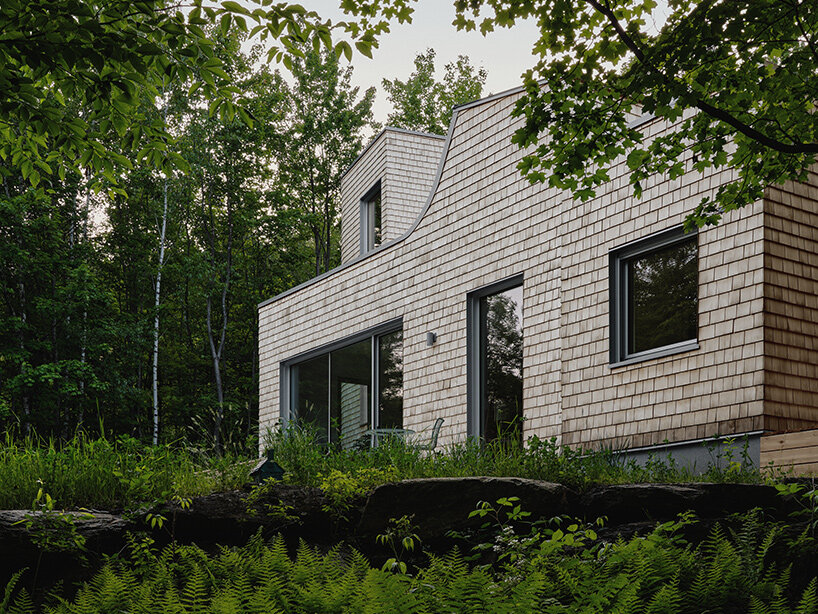
A single material—cedar shingles—unifies the exterior, lending visual consistency to the differing shapes. This regional material softens the volumes’ edges and provides a continuous textural surface that adapts elegantly to the changing geometry.
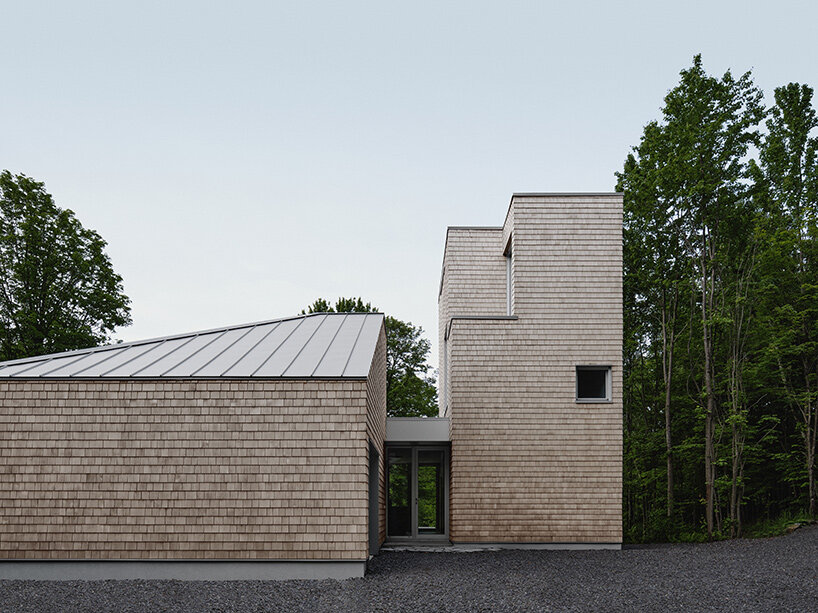
Oyama and Julia Manaças Architecte craft a design that responds intimately to its landscape
courtyard-focused interiors
An internal courtyard forms in the space between the volumes, with oak cladding extending the timber palette indoors. This creates a protected, transitional zone for circulation. One entrance welcomes visitors through a narrow passageway between the Atelier and Tower, while at the opposite end a deck invites long views across the clearing.
Abundant glazing on three sides brings natural light deep into the central hall, which also accommodates a vestibule, laundry, WC, and communal sink. The green roof above further integrates the structure with its vegetated surroundings, reinforcing the project’s sensitive relationship with its environment.
Inside, generous sightlines transition into more intimate, framed views as one moves between the different volumes. From outside, the composition shifts depending on the vantage point, transforming from a distinct cluster of sculptural forms to a collection that mirrors the land’s natural contours.
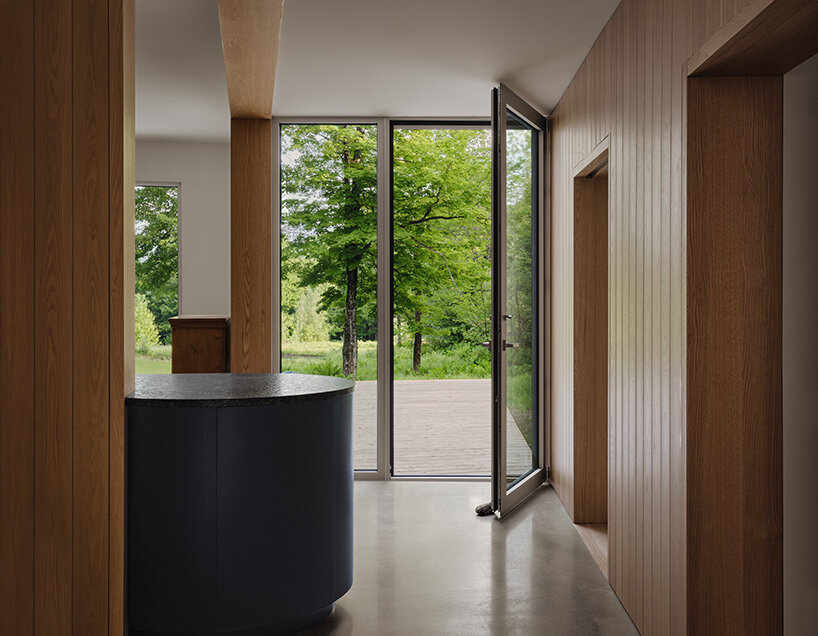
the south-facing Great Room is filled with light and features expansive views
<img decoding="async" class="wp-image-1168666 size-full lazyload" bad-src="data:image/gif;base64,R0lGODlhAQABAIAAAAAAAP///yH5BAEAAAAALAAAAAABAAEAAAIBRAA7