Traditional Korean Spatial Principles Inform HO-UN Residence
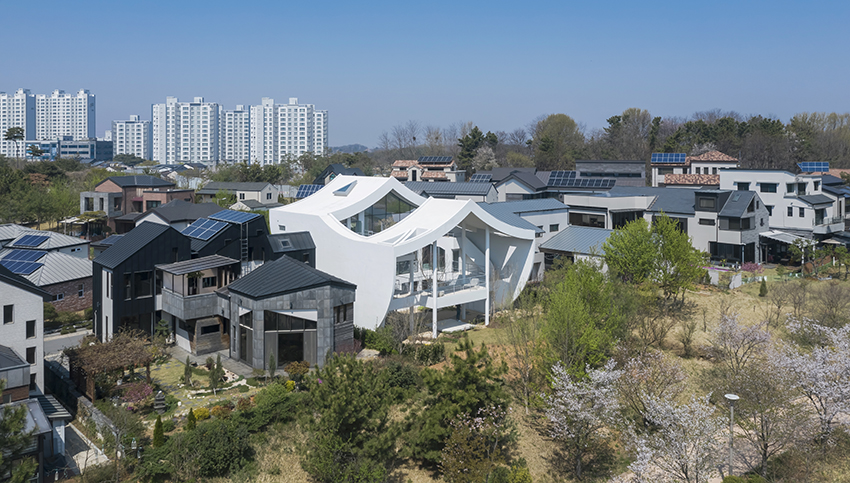
HO-UN is a private lakeside residence designed by the Seoul-based firm IROJE KHM Architects, situated in Jeonju, South Korea. Nestled beside a lakeside park in a newly developed residential area, the home commands a prominent location in a city celebrated for its deep historical and cultural heritage. Positioned at the heart of the neighborhood, the site enjoys direct views of the lake while remaining closely connected to the urban fabric.
This project was envisioned as a tranquil residential haven, balancing the proximity of city life with the serenity of nature. The architectural approach creates a spatial atmosphere that emphasizes privacy while selectively opening up views to the surrounding landscape. The residence is crafted to serve both as a sanctuary and as a structure that interacts meaningfully with its environment. Drawing inspiration from traditional Korean architecture, IROJE KHM Architects reinterpret classic elements through a modern lens. Instead of simply replicating historical forms, the design translates core spatial concepts and distinctive features into a contemporary residential format. This methodology honors Jeonju’s cultural context while accommodating the needs of today’s homeowners.
all images by Sergio Pirrone
IROJE KHM Architects Designs Courtyard-Centered Living Space
At the heart of the architectural concept is the ‘Gate of Life,’ inspired by the traditional Korean Numaru element. This feature acts as a framed passage, mediating the transition between indoors and outdoors. Serving as a boundary, filter, and visual anchor, the gate frames vistas of the lake and city while carefully regulating openness and privacy. It becomes a spatial threshold linking the inward-facing courtyard to the wider landscape. Outdoor spaces are arranged around a central courtyard, a modern interpretation of the traditional Madang. Enclosed on three sides, this courtyard acts as an intermediary between the interior and the natural surroundings. It introduces abundant natural light, ventilation, and visual openness, acting both as a spatial buffer and a central feature in the home’s design.
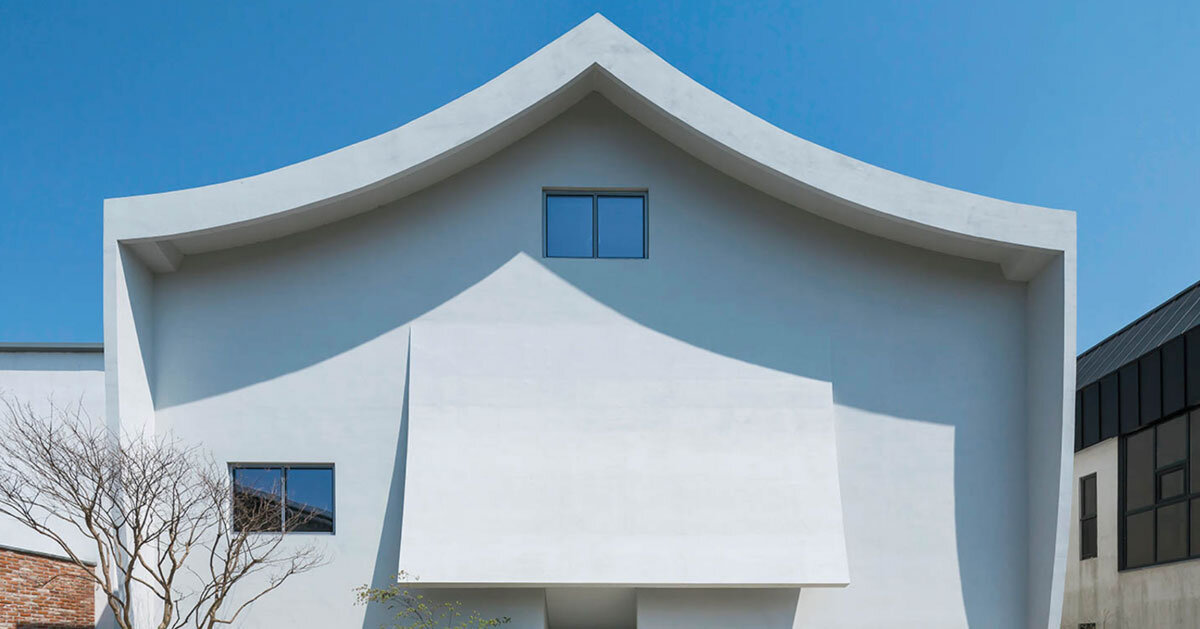
The distinctive roof silhouette draws inspiration from the upward movement characteristic of traditional Korean architecture. The simplified, curved A-type eave roof is reimagined in a modern context, shaping the building’s profile and expressing its cultural roots through form rather than ornamentation. The name HO-UN, meaning ‘cloud over the lake,’ was chosen by IROJE KHM Architects to reflect the home’s spatial philosophy. Inside, a family room is situated above the main living area, designed as a cloud-like form that introduces a vertical dynamic to the communal spaces—further connecting the residence to its lakeside setting.
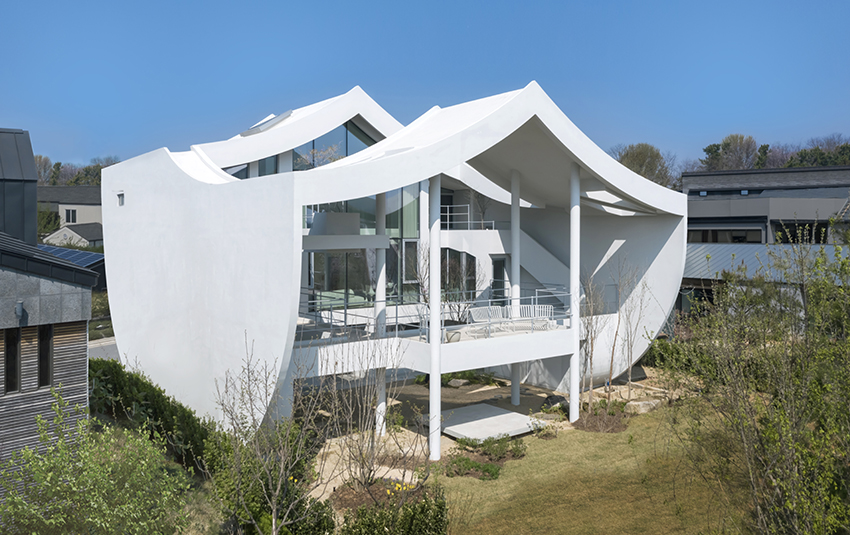
HO-UN is a private lakeside residence designed by IROJE KHM Architects in Jeonju, South Korea
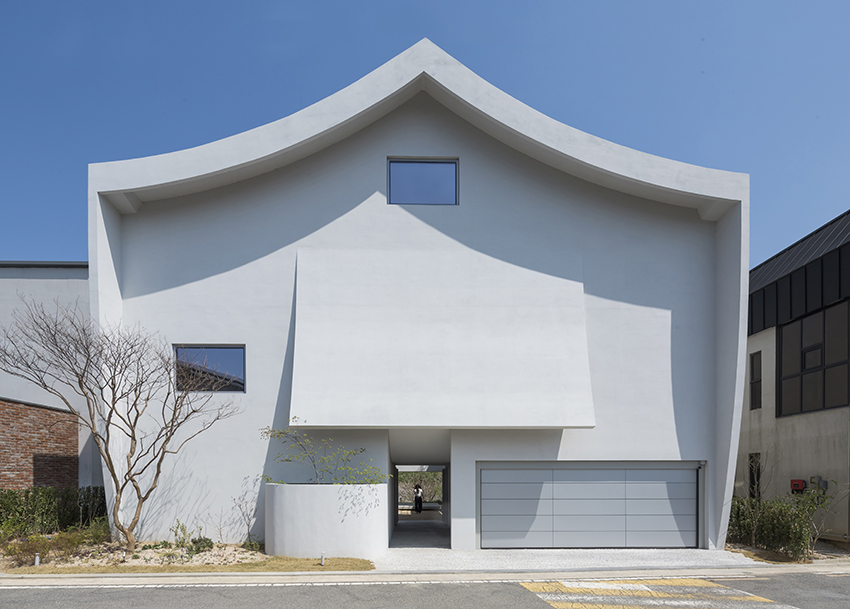
the roof form references upward movement found in traditional Korean architecture