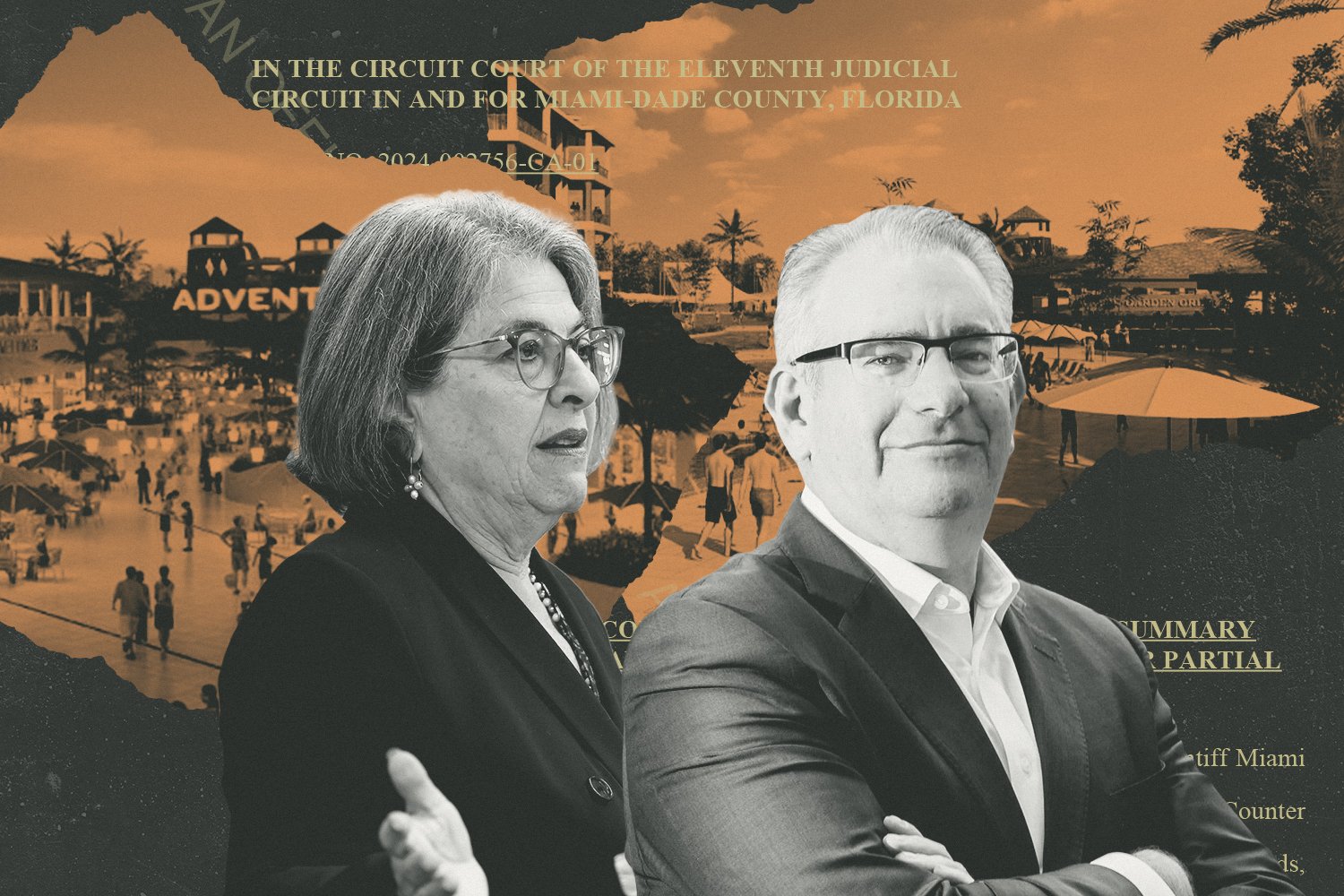
A controversial mixed-use water park project near Zoo Miami that’s been in the works for over a decade has collapsed, after a judge voided the development site lease.
The developers –– Paul M. Lambert, Bernard Zyscovich and Michael Diaz Jr. –– working through the entity Miami Wilds LLC planned a water park, a 200-key hotel and between 15,000 and 20,000 square feet of commercial and dining space on a 27.5-acre site they had leased from the county, according to Lambert. Miami Wilds was to revamp and manage another 38.5 acres of parking lots to be shared between the development and Zoo Miami, he said.
Lambert leads Miami-based real estate and economic advisory firm Lambert Advisory, although the company isn’t involved in Miami Wilds. Zyscovich is an architect who designed the Miami Wilds hotel but not the water park. Diaz is an attorney.
For the better part of the past half decade the project was tied up in lawsuits, partly stemming from conservationists’ pushback against building out the site they alleged is home to endangered species. The land is part of the Richmond Pine Rockland tract, considered one of the largest and most biodiverse pine rockland habitats outside Everglades National Park.
In one suit, Miami-Dade sought to nix a lease and development agreement for the site, arguing a federal court ruling reinstated a prohibition against commercial development on the land.
On Thursday, Miami-Dade Circuit Court Judge Javier Enriquez sided with the county on rescinding the lease. Enriquez wrote in his order that the lease was rooted in a mistake on the part of both Miami-Dade and Miami Wilds. The judge ordered the county to refund Miami Wilds the nearly $256,880 in rent it already had paid within 30 days, and shot down Miami Wilds’ arguments that the county had waived its rights to rescission of the lease and that the deal was protected under a force majeure clause in the lease agreement.
The litigation previously had prompted accusations by Miami Wilds that the county’s suit to nix the lease was politically motivated to protect Miami-Dade Mayor Daniella Levine Cava’s 2024 reelection bid by appeasing some of the activists “who make up her base,” which the mayor’s spokesperson at the time denied. Levine Cava won reelection in 2024.
In a statement Friday, she hailed Enriquez’s recent order, saying it “affirms the county’s responsibilities to uphold the public interest.”
“This ruling allows us to continue protecting our natural resources, honoring our legal commitments, and ensuring responsible stewardship of county property,” Levine Cava added in her statement.
Lambert said the developers are evaluating their next steps and didn’t provide further comment.
Miami Wilds first won a county solicitation to develop the property in 2013, at the time planning a larger 100-plus acre project with a theme park in partnership with 20th Century Studios. After the U.S. Fish and Wildlife Service indicated it might include some species as endangered, 20th Century exited the project, and Miami Wilds and the county reworked the project to its smaller scale, Lambert previously told The Real Deal.
The development site is part of thousands of acres of land the federal government transferred to Miami-Dade in 1975 and 1984, though the conveyance came with restrictions that forbade the selling or leasing the land unless to another government to ensure the tract remains a public park, court filings say. To get around this, the county and the National Park Service agreed in 2011 to lift these restrictions from a 67-acre portion of the tract and instead impose the same restrictions on about 164 county-owned acres at West Kendall District Park, according to court filings.
Although this allowed the county to start negotiations for the lease with Miami Wilds, an amendment to the 2011 Miami-Dade/National Park Service agreement still was needed in order to accommodate the specific boundaries for the mixed-use water park project. The federal park service and the county signed this amendment in 2022, and the county and Miami Wilds signed the land lease in the summer of that year, court filings say.
A slew of environmental groups, including the Center for Biological Diversity and Bat Conservation International, then sued the federal government in early 2023, challenging the validity of the 2022 amendment that released land development restrictions and allowed for the Miami Wilds project lease. The conservationists won their case, with the federal court in December 2023 voiding the 2022 amendment, court records show.
As a result, Miami-Dade sued Miami Wilds in early 2024, seeking to nix the lease and citing the federal order that voided the necessary county-National Park Service amendment. Miami Wilds countersued the county.
“Unbeknownst to the county and Miami Wilds, NPS [National Park Service], in executing the 2022 amendment … failed to follow applicable federal law,” Enriquez wrote in his Thursday order.
In siding with the county, Enriquez pointed out that the county didn’t know the necessary 2022 amendment was invalid until after it signed a lease for the land with Miami Wilds.
“The undisputed material facts establish a material mutual mistake between the parties as to the validity of the 2022 amendment … and the county’s ability to lease the premises to Miami Wilds,” Enriquez wrote.
A third lawsuit over the project was filed in 2022 by conservation nonprofits against Miami-Dade, alleging it illegally allowed the project to proceed without a referendum to the voters, according to the complaint. Court records show that in 2024 the conservation groups voluntarily dismissed an appeal they had filed in the case.
Read more

Development
South Florida
Lennar, partners revive plan for 7K-plus homes, 1.4M sf of commercial space outside Miami-Dade’s UDB

Development
South Florida
Veto: Miami-Dade mayor blocks controversial industrial project outside UDB

Protest against boat show planned at Marine Stadium

Development
South Florida
RCI Marine, Suntex’s $80M marina redev plans head to Miami voters