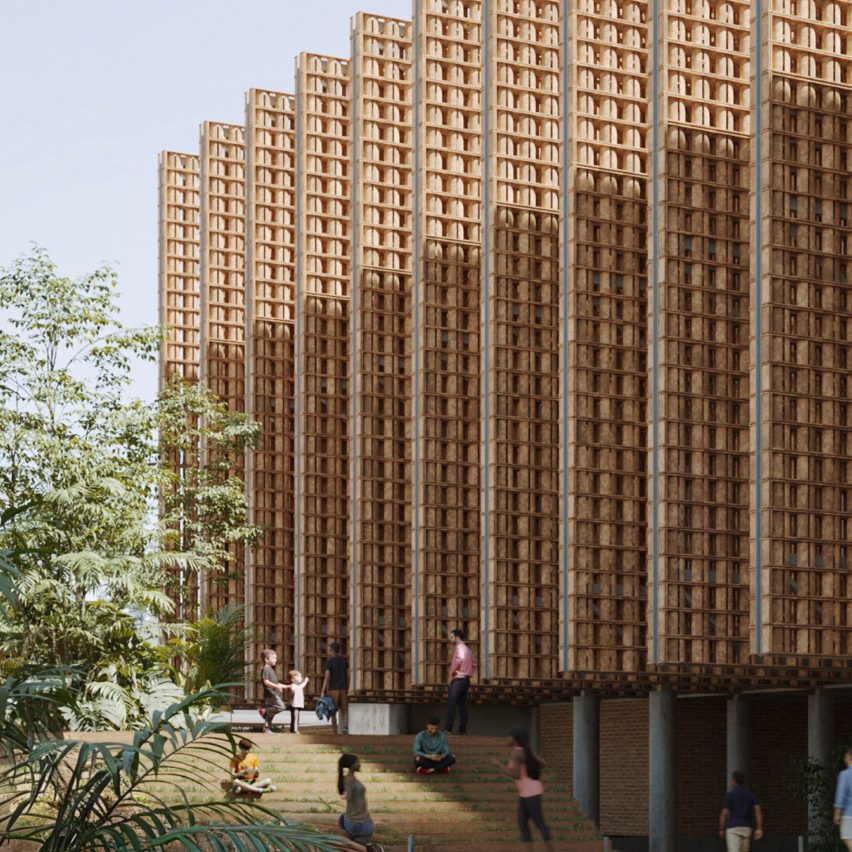
Mexico City-based studios TO and Palma have designed an extension for Museo de Arte Contemporáneo de Panamá in Panama, informed by the country’s status as a place of exchange.
The expansion concept centres activity around a shaded plaza area, rejoining the thresholds of Panama City’s downtown commercial core with its adjacent residential Boca La Caja neighbourhood in a direct gesture that ties the impetus for art exhibitions to climatic considerations and the public identity.
“Rather than relying on historical references, the architecture responds to cultural patterns that continue to shape everyday life in Panama,” Palma co-founder Diego Escamilla told Dezeen.
“The proposal is conceived as a cultural and climatic infrastructure for Panama City. Rather than treating the museum as an isolated object, we envisioned it as a civic platform capable of strengthening the relationship between the city, the neighborhood, and the waterfront,” Escamilla said, referencing Panama as a place of exchange.
“In this sense, Panamanian identity is expressed not through representation, but through performance: the way the building responds to climate, fosters community, and creates spaces for collective cultural life.”
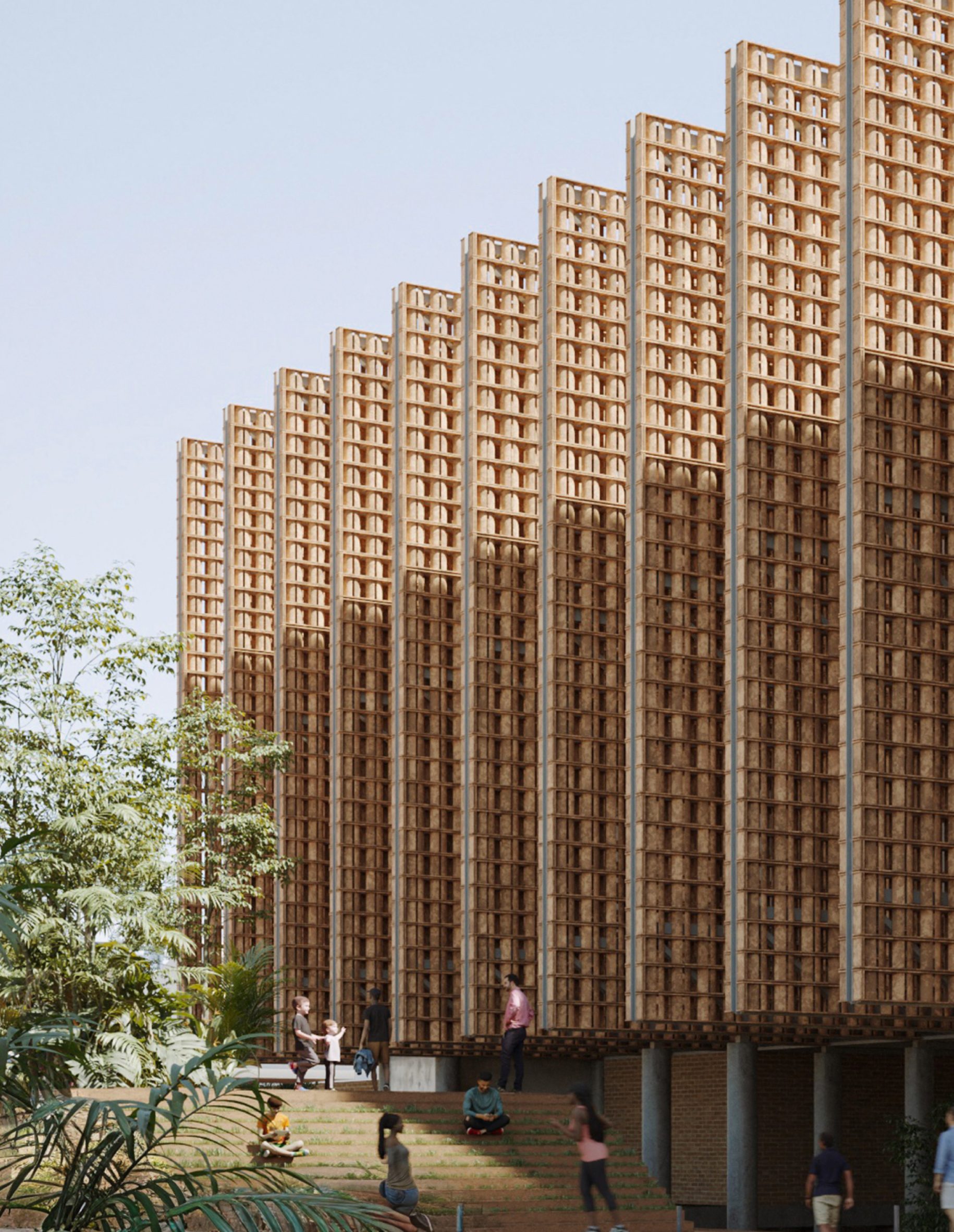
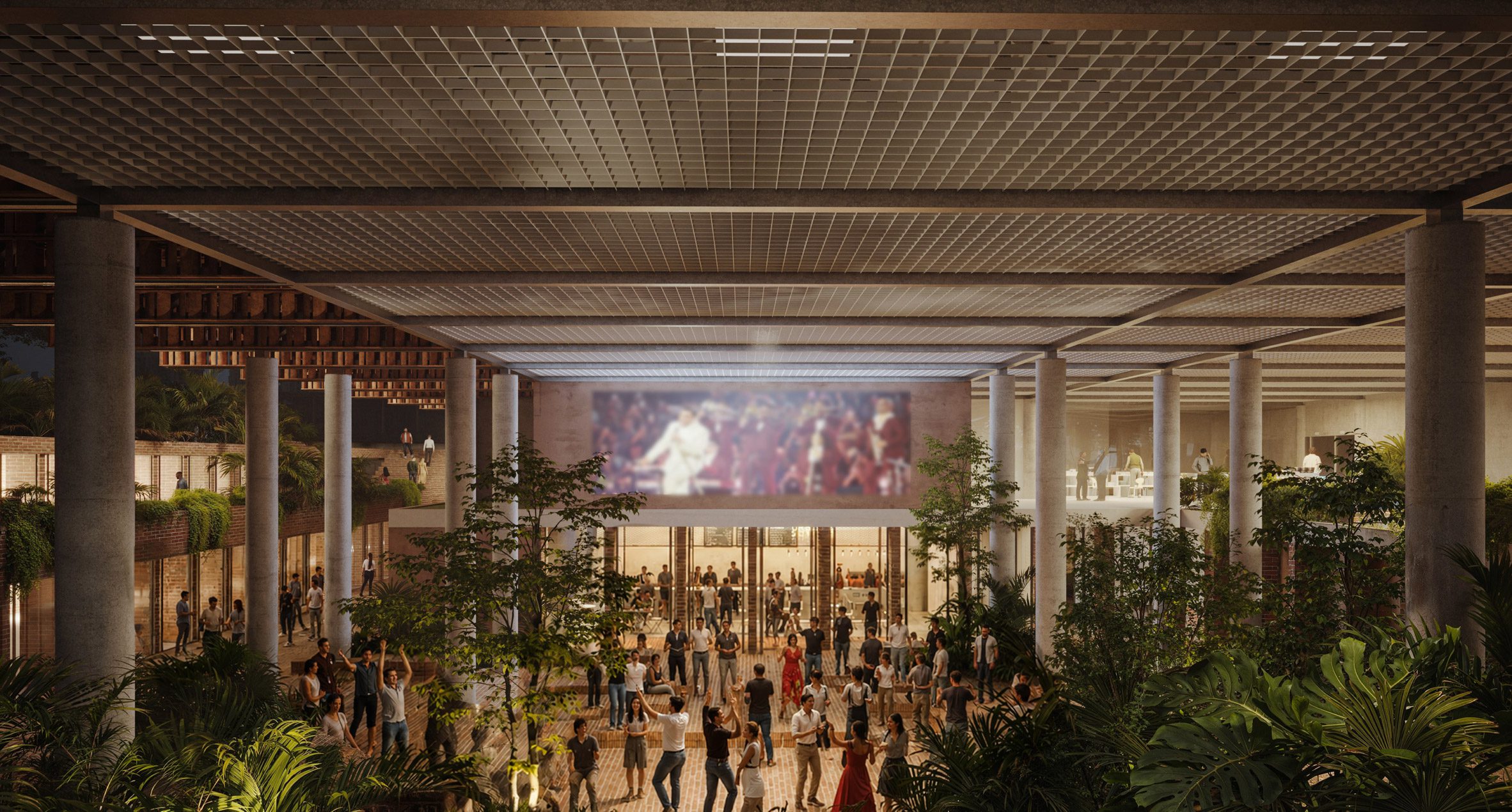
Programmatically, this includes a flexible plaza area with native vegetation and urban furniture whose activities are famed by porticoed commercial areas that are arranged into terraces.
Public use of the excavated plaza area, which includes an events hall and café space, is extended into the lobby of a porous and welcoming ground floor repatriation.
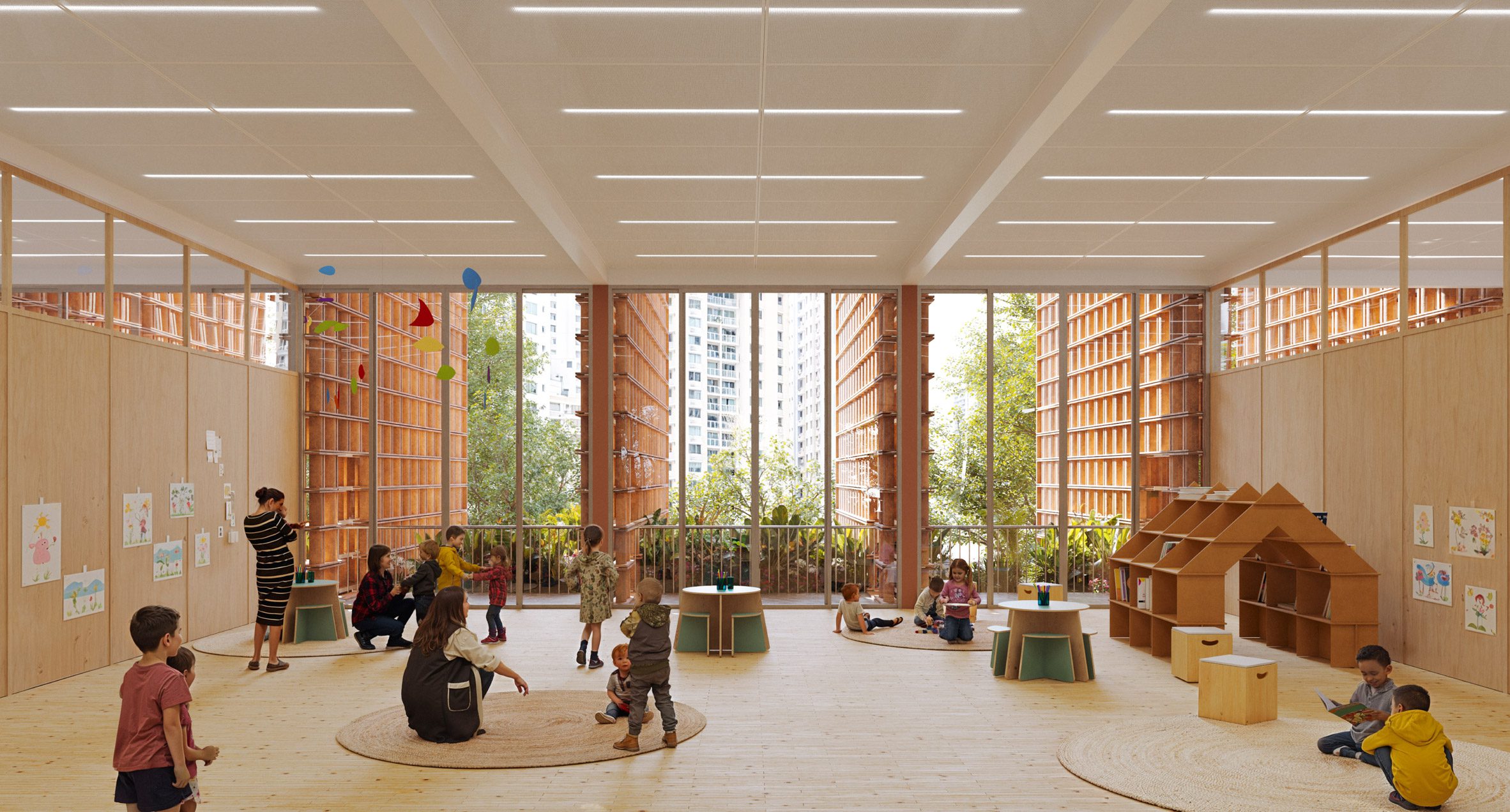
The plan, selected through competition, responds to the need for independent circulation and staff privacy with a divided first floor, placing museum offices, a storage vault, service areas, and a freight lift to one side, and a public wing with a library-like archive, children’s room, print workshop and meeting spaces to the other, both finished with vegetated balconies.
The final floor is designed as a free-plan exhibition level – up to seven galleries can be enabled thanks to its spatial geometry and the use of large structural spans.
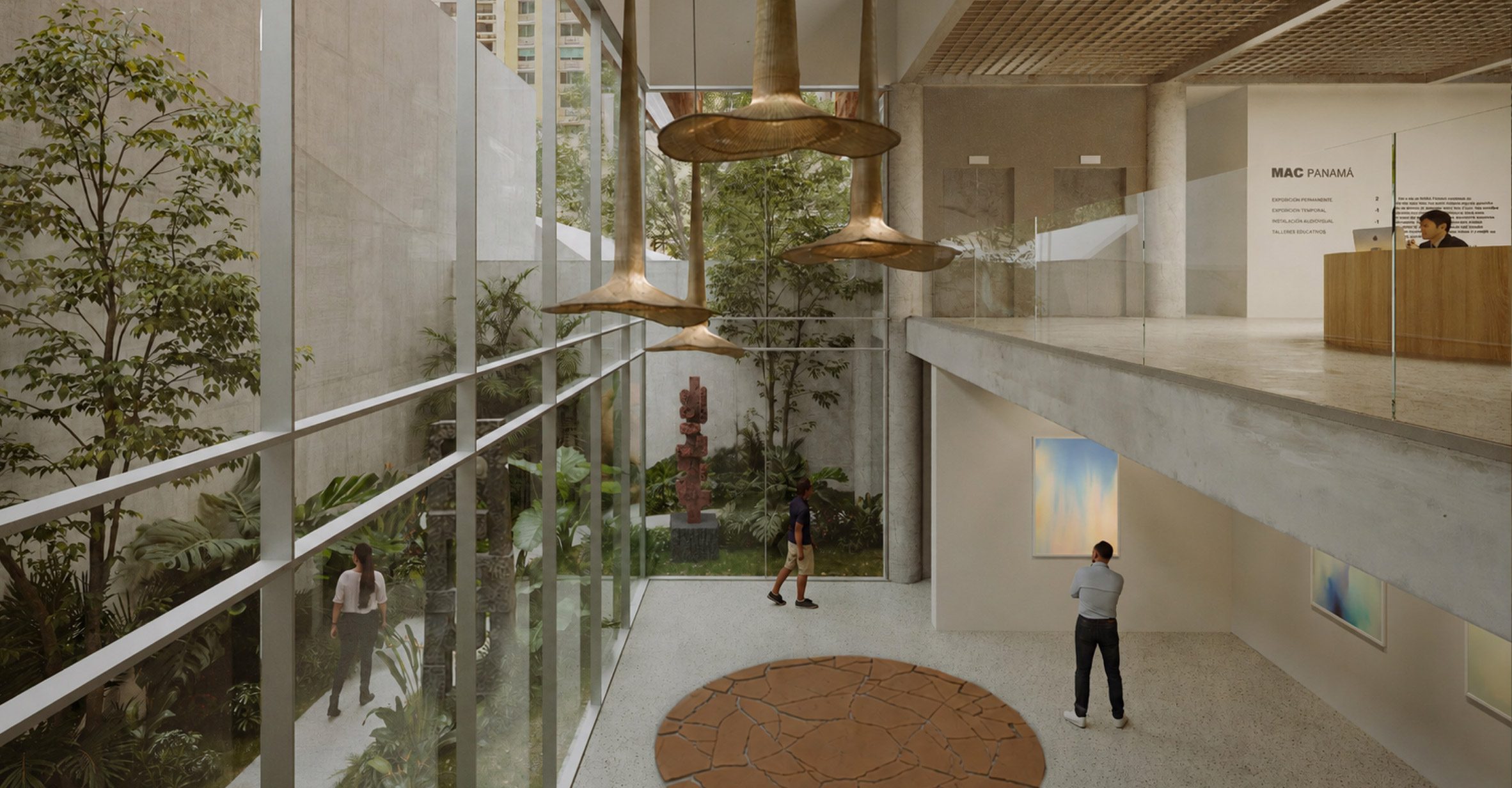
An additional gallery space will connect directly to the main lobby and the ground-floor events area through a triple-height volume and sculptural courtyard.
The circulation plan includes a sculptural public staircase.
Outside, the building’s facade will be finished with a ceramic lattice screen pattern that controls the infusion of daylight into the building.
“Balance was achieved by allowing the museum’s technical and curatorial requirements to shape the institution from within, while the environmental and urban conditions of Panama shaped its architectural expression from the outside,” said Escamilla.
TO, which counts as one of four architectural studios involved in Colectivo C733, was instrumental in the group’s adaptive reuse of an 18th-century port building into a museum for the Pacific coastal community of San Blas in Nayarit, Mexico.
Elsewhere in the region, Palma recently delivered a Brutalist-inspired hotel design with Seattle architecture studio Hybrid.
The imagery is courtesy of Palma and TO.
The post TO and Palma design museum as "climatic infrastructure for Panama City" appeared first on Dezeen.