
At the southern boundary of Miami-Dade County’s developed landscape, where neighborhoods of single-family homes give way to open stretches of land, a 90-acre parcel stands out. This expanse in south Miami-Dade is clearly divided by purpose: one section is cultivated with crops like soybeans, another supports a palm tree farm, a third is dedicated to avocado trees, and a fourth operates as a plant nursery.
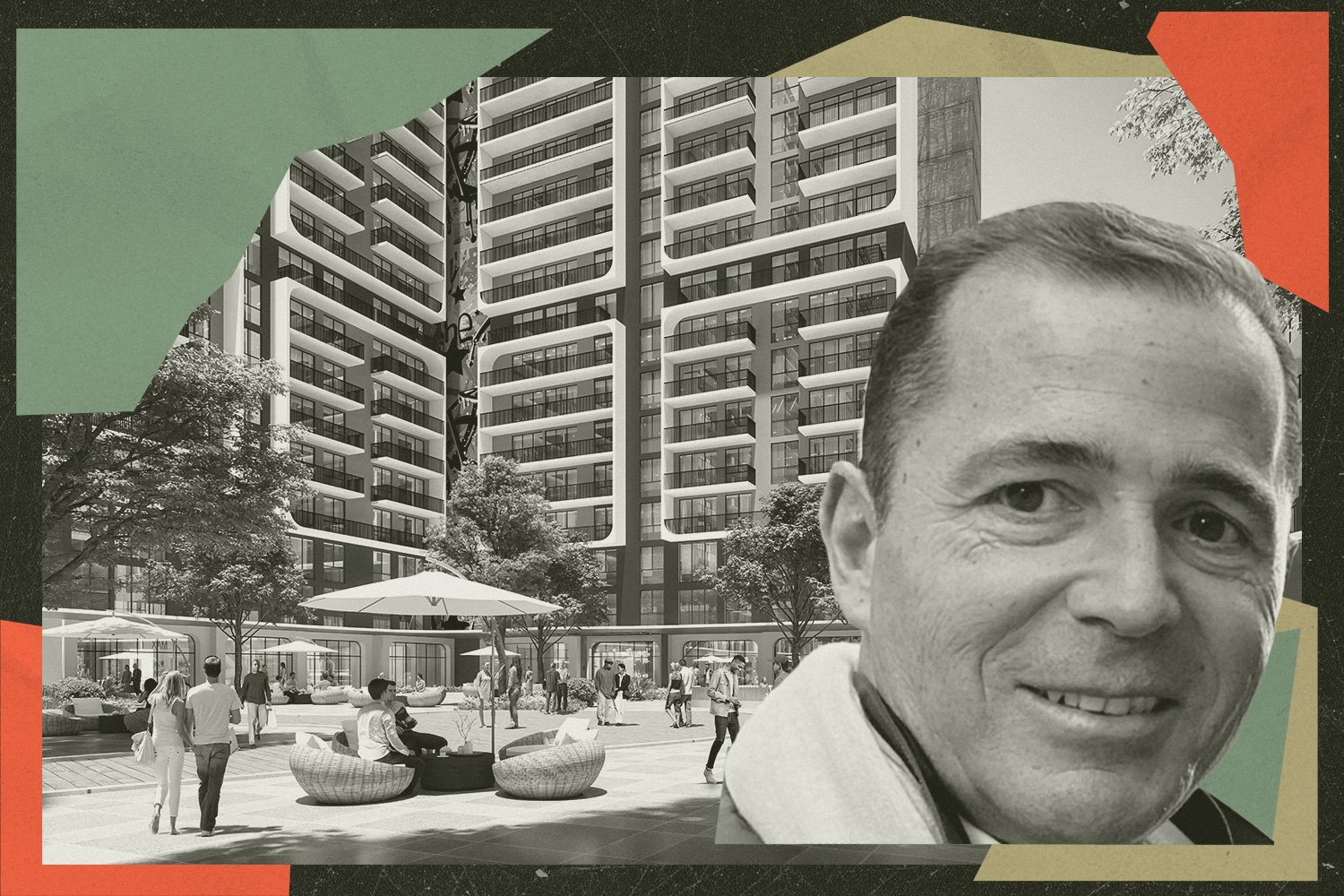
Developers Salim and Kamil Chraibi envision transforming this property with approximately 500 townhomes and 76 spacious single-family residences along its edges. All homes will be priced at workforce levels, and 20 percent of the units will be set aside for families earning no more than 140 percent of Miami-Dade’s median income of $87,200.
“We are building barn-style townhomes that reflect the area’s agricultural heritage,” Salim explained, referencing renderings that show façades with steep, metal roofs reminiscent of classic barns.
This project reflects the Chraibi brothers’ specialty: creating workforce housing tailored for south Miami-Dade.
Bluenest Development, the Miami-based company Salim started in 2018 and joined by his younger brother Kamil a year later, has capitalized on the availability of less expensive land in the southern county and the significant demand for homes below market prices.
They are not alone in this approach. In recent years, as demand surged with newcomers moving in, many developers have targeted south Dade—the last major area for new housing in the county—but Bluenest has surged ahead of many of its peers.
“They’re very aggressive and follow through on their commitments. They’ve established a strong reputation in a short time,” said Jason Bass, who was part of a group that sold a 20-acre development site in Homestead to Bluenest last year. “In my experience, Bluenest never asks for extra time to close on land or for significant concessions.”
The numbers illustrate their rapid progress. According to the firm, Bluenest’s portfolio is concentrated in the county’s southern region, with 1,000 homes completed and about 3,000 more in planning or construction phases.
As South Florida shifted to a buyer’s market in the past year, the Chraibis’ focus on workforce buyers has shielded them from much of the slowdown, since demand for affordable homes remains consistently high.
“It seemed like everybody was willing to build high-end mansions; $10-, $15-, $20 million homes. But then when you looked at the median income, I was wondering where all of these people were living.”
However, they still face the economic challenges common to developers, such as higher costs for materials and labor, and rising interest rates. There are also ongoing questions about the future of south Miami-Dade—a region with farmland, strip malls, and neighborhoods stretching toward the Everglades but without Miami’s ocean views, iconic architecture, or vibrant nightlife.
Despite these obstacles, Bluenest is ramping up. By the third quarter of next year, they expect to finish about 400 homes and begin construction on nearly 600 more, Salim said, adding that their ambitions are even greater.
“Our goal by 2028,” he stated, “is to start delivering a thousand homes a year.”
It’s a bold objective. In the competitive real estate industry, those who scale quickly are often industry insiders—usually inheriting established companies in South Florida or having access to substantial investor networks. Others who begin without such connections typically rely on wealthy backers.
As newcomers to South Florida, the Chraibi brothers started with none of those advantages, yet in less than ten years have become leading non-institutional workforce housing developers in south Miami-Dade.
Zero to 4,000
Salim, 36, and Kamil, 31, are new to South Florida but come from a real estate background. Raised in Casablanca, Morocco, they often accompanied their mother, architect and land broker Nadia Daoudi, to job sites. Their grandmother was active in developing homes and apartment buildings in the city during the 1960s.
“My grandmother always encouraged us to go into real estate—‘Stick to the rock,’ she’d say,” Salim recalled. “We were always drawn to real estate, so the transition felt natural.”
Although they initially moved to South Florida to pursue other careers—Salim to play collegiate golf at Johnson & Wales University, aspiring to go professional, and Kamil to study tech at Florida International University—they were struck by the region’s housing shortage.
“It seemed like everyone was building luxury mansions for $10, $15, or $20 million, but when you considered the median income, it was unclear where most people could actually live,” Salim said. “We quickly realized there was tremendous demand—homes would be listed for only a few days before going under contract.”
Between 2018 and 2020, they completed their first standalone homes and duplexes, including five properties in Brownsville and West Little River in Miami-Dade, and Liberty City in Miami, all on lots they purchased for a combined $183,100, according to records.
Securing construction loans proved difficult. Salim approached London Financial, a family-run firm in Key Biscayne that typically doesn’t provide loans under $1 million. Nonetheless, Bluenest received a $650,000 loan for its first group of homes in 2018, records show.
Ed London, manager at London Financial, said he had a “gut feeling” about Salim after meeting him for lunch.
“He struck me as a go-getter with real ambition,” London said. “You can tell when someone truly understands the business.”
The brothers attribute their rapid growth to consistently delivering on promises and their unique perspective. They believe their immigrant background has helped them recognize opportunities in the U.S.
“What we’ve accomplished here would be nearly impossible anywhere else,” Salim said. “There’s a large market, buyers are out there, and there’s access to capital.”
Those who have worked with the Chraibis often describe them as “workaholics” and “upstanding businessmen.”
But their success is also about community involvement. While many foreign developers in South Florida rely on investors from their home countries, the Chraibis—whose father, Khalid Chraibi, passed away when they were young—experienced “financial hardship” growing up. They started with some support from “friends and family,” but have primarily built investor relationships with local family offices and high-net-worth individuals in South Florida.
Recently, Salim has appeared on local podcasts to discuss his focus on workforce housing—a topic that resonates as Miami-Dade grapples with an affordability crisis.
Their efforts have gained recognition. While Lennar, a Miami-based homebuilder founded over 70 years ago, dominates residential development in south Miami-Dade—thanks to its financial strength and backing from investors like Warren Buffett and extensive land holdings—every land use attorney and developer interviewed for this story was familiar with the Chraibi brothers and recognized them as significant players in the area.