
At a party in Ibiza, Alex Sapir exuded happiness.
It was six months before he and his partner, Leila Ben Khalifa, would welcome their daughter. That July 2023 evening, they were surrounded by friends, models, and Burning Man devotees dressed in fringe and crowns.
By all appearances, Sapir was unconcerned with his shrinking real estate holdings that night. In a now-deleted Instagram photo, Ben Khalifa grins, her head turned toward Sapir, who wears a block-printed cardigan tunic and a subdued smile.
“My heart is full of joy and gratitude remembering this magical night,” Ben Khalifa wrote when she posted photos from the event a month later.
Sapir, however, had been contending with challenges for years—most notably a divorce from his wife, Yanina (filed three years earlier and still unresolved), tax issues, and family disputes within the business he inherited from his father, Tamir Sapir, a Georgian immigrant who famously went from taxi driver to owner of Manhattan landmarks like 11 Madison Avenue, 100 Church Street, and 50 Murray Street.
At the time of the Ibiza party, Alex seemed to be forging a new direction, splitting his time between Paris with Ben Khalifa and Miami, where he celebrated the successful sellout of his Arte Surfside luxury condo project. High-profile early residents like Ivanka Trump and Jared Kushner helped attract buyers, and all the units sold. In New York, his long-term tenant at 2 Broadway, an office building purchased by his father in 1995, was locked in with the Metropolitan Transit Authority until 2048.
But new complications soon emerged. Sapir is now selling three of his last remaining properties in New York and South Florida, raising doubts about whether the family’s real estate legacy will continue beyond his generation.
Sapir declined to be interviewed for this article, offering only a short statement through a spokesperson. He remains embroiled in his highly disputed divorce, and sources say he has separated from Ben Khalifa, who has since altered her Instagram profile—changing captions and removing photos of Sapir—to downplay their relationship.
Two of the properties—the Nomo Soho at 9 Crosby Street and a development site in Miami—are owned by his troubled firm, Sapir Corp, which faces $155 million in claims from Israeli bondholders. He has also sold a significant asset, 260 Madison Avenue, previously held by the 35-year-old Sapir Organization.
For now, Sapir retains ownership of the neighboring 261 Madison, which may be converted to condos.
Hospitality play
The slow collapse of Sapir Corp has been years in the making, with the unraveling centered at the Nomo Soho hotel’s ivy-covered entrance.
In 2015, Sapir and fashion executive Gerard Guez acquired the 264-room boutique hotel at a foreclosure auction for $200 million, paying a premium for a coveted property in a hot neighborhood. Initially, the move appeared astute; by 2017, Israeli stock filings valued the hotel at $246.3 million. A year later, Sapir bought out most of Guez’s stake, bringing Sapir Corp’s ownership to 99 percent. Goldman Sachs refinanced the property in 2019 with a $115 million loan.
But fortunes quickly shifted.
The onset of Covid devastated the hotel, plunging occupancy to just 1.9 percent in April 2020. Sapir had to inject his own capital to keep the business afloat, but made no investments in improvements, and the property’s condition declined. Its value dropped to $179 million. In 2022, Sapir secured an $89 million Israeli bond-market loan, replacing the previous Goldman Sachs mortgage.
Debts continued to rise and the hotel remained unprofitable. Sapir Corp slashed management fees and quietly attempted to sell the hotel last year, but a buyer never materialized.
“They actually injected a huge amount in the company and its assets.”
This past summer, the company scrambled for extensions as debts came due. Sapir pledged to contribute $14 million of his own funds to delay the maturity date. However, as the July 1 deadline neared, he informed bondholders he could not make the payment, prompting a default.
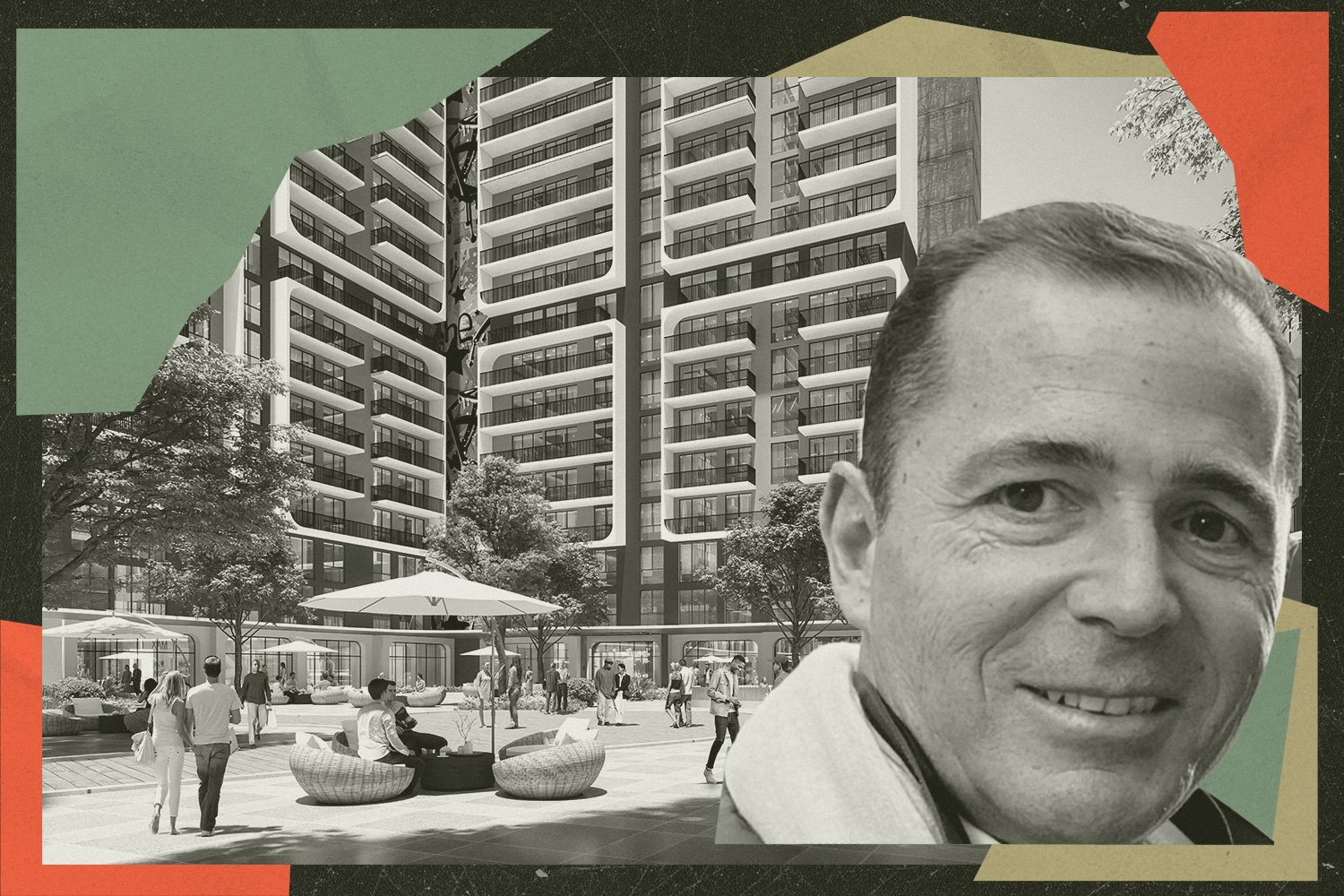
Sapir Corp entered insolvency, informing a Tel Aviv court it could no longer meet bond payments or cover basic operations. All directors resigned, and several trustees are now overseeing the company’s wind-down. Only two assets remain: the Nomo Soho and a 1.5-acre development site in Miami’s Edgewater, listed for $41 million (though Sapir stated the asking price is closer to $50 million).
“They actually injected a huge amount in the company and its assets,” said Alon Binyamini, one of the trustees. “It’s not a typical insolvent company where the controlling shareholder takes money out. That’s not the case here. It was the opposite.”
Sapir Corp has placed Nomo Soho into bankruptcy and will conduct a court-supervised auction to address its $155 million debt across two Israeli bond series. Israeli hospitality chain Dan Hotels is lined up to buy the property for $125 million. If no higher offers arise, Dan Hotels will become the new owner of what was once viewed as the flagship of Sapir’s portfolio.
“Facing ongoing market challenges and the slow recovery from two years of Covid, during which the property was supported with significant equity, we chose a process that is most likely to result in full payment to bondholders,” a Sapir spokesperson stated.
Liquidation, however, may not mark the end of Sapir’s troubles. Bondholders could still pursue him personally for the $14 million he pledged.
Twin trophies
Just south of Grand Central, 260 and 261 Madison Avenue stand as parallel glass-and-metal towers—longtime trophy assets for the Sapir family, though the company has periodically struggled with their combined 1 million square feet of office space.
Now, Alex is letting go of one. Tamir Sapir acquired both buildings in 1997.
In October, Sapir Organization reached a deal to sell the 22-story, 570,000-square-foot 260 Madison Avenue to Jonathan Bennett’s AmTrustRE for $270 million.
S